

Blog
How UV Protection Glasses Help Maintain Long-Term Eye Health

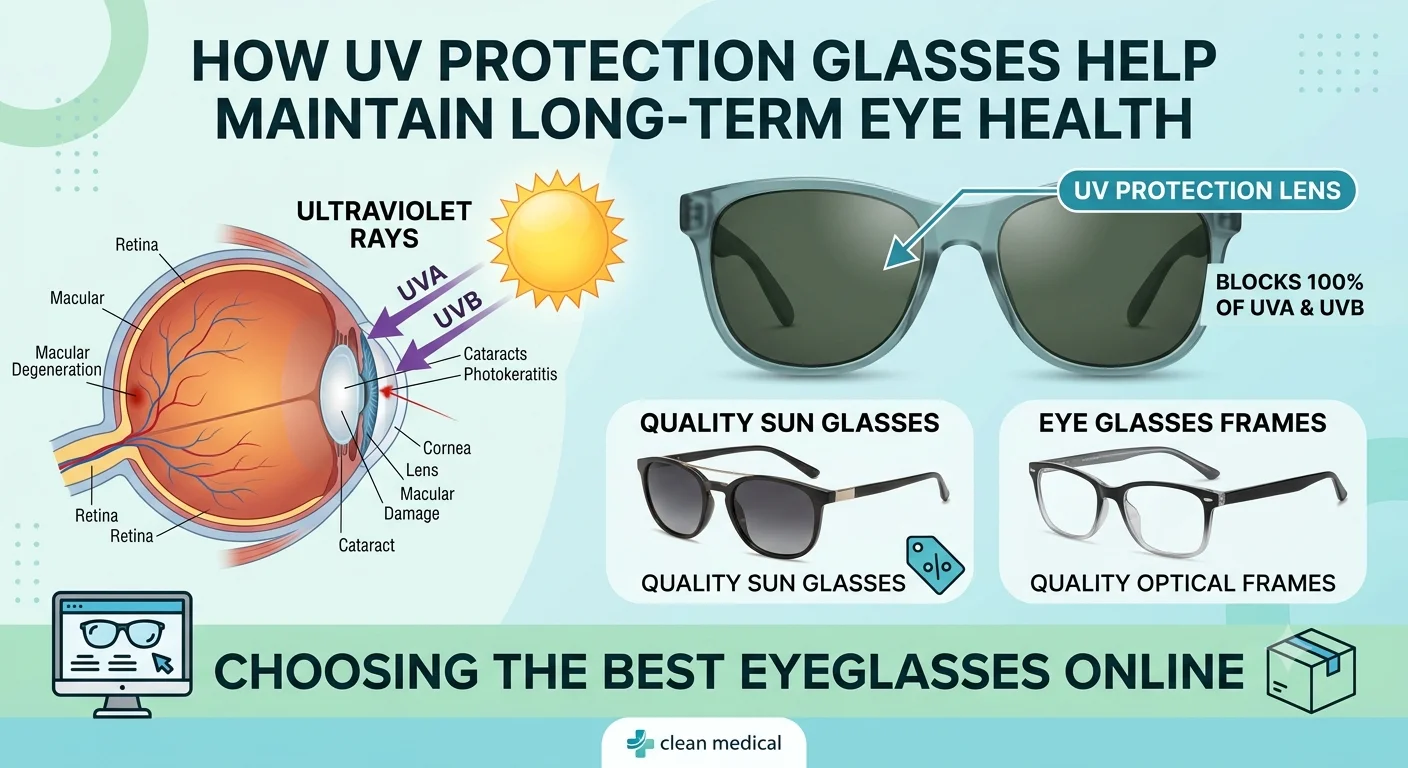
Human skin receives a tremendous amount of public health attention when it comes to solar radiation. The general public understands that broad-spectrum sunscreen prevents premature aging, cellular mutations, and deep tissue damage. Yet, the human eye—an incredibly delicate, complex organ composed of highly specialized, non-regenerative tissues—is regularly left entirely exposed to the exact same solar threats.
Ultraviolet (UV) radiation emitted by the sun presents a constant hazard to our vision. It operates silently across all seasons, penetrating cloud covers, bouncing off environmental surfaces, and interacting with ocular structures at a cellular level.
Protecting our eyes from this chronic environmental stress requires more than just wearing dark lenses. It demands a scientific understanding of how solar wavelengths interact with the anatomy of the eye, how chronic radiation manifests as clinical disease over time, and how modern optical design can serve as an effective defensive shield.
When patients choose to buy sun glasses, they are not simply acquiring a fashion accessory. They are making a critical public health decision that directly affects their ocular longevity, functional visual acuity, and long-term systemic well-being.
1. The Physics and Cellular Biology of Ocular UV Exposure
Ultraviolet radiation constitutes a segment of the electromagnetic spectrum falling between visible light and X-rays, spanning wavelengths from 100 nanometers (nm) to 400 nm. While the Earth’s stratospheric ozone layer completely filters out short-wavelength UVC rays (100–280 nm), it allows substantial quantities of UVA and UVB radiation to penetrate the atmosphere and interact with human tissue.
UVA vs. UVB: Wavelength Dynamics and Tissue Penetration
-
UVA Radiation (315–400 nm): UVA rays possess longer wavelengths and lower relative energy, but their penetrative capability is profound. Because the structural barriers of the eye are not engineered to fully absorb these extended wavelengths, UVA radiation travels directly through the cornea, penetrating deep into the internal crystalline lens and striking the vulnerable layers of the posterior retina.
-
UVB Radiation (280–315 nm): UVB rays have shorter wavelengths packed with significantly higher destructive energy. The anterior structures of the eye absorb the vast majority of this energy. The outermost layer of the eye—the corneal epithelium—and the crystalline lens act as direct physical filters, sacrificing their own cellular health to prevent these high-energy rays from instantly damaging the internal retinal layers.
The Mechanics of Photo-Oxidation and Ocular Stress
At a cellular level, UV radiation does not just heat up tissue; it disrupts atomic bonds. When UV photons hit ocular cells, they trigger the formation of highly reactive molecules called reactive oxygen species (ROS). This creates severe oxidative stress within tissues that lack direct blood flow, such as the cornea and crystalline lens.
This oxidative stress damages structural cellular matrices, causes lipid peroxidation in cell membranes, and induces direct structural breaks in cellular DNA. Over years of unshielded exposure, these micro-cellular disruptions accumulate, causing irreversible structural breakdown and paving the way for chronic eye conditions.
2. Clinical Manifestations of Chronic Solar Radiation
The clinical consequences of long-term ocular UV exposure span from temporary, acute conditions to progressive, blinding disorders. Ophthalmologists categorize these conditions based on the specific anatomical structures affected by solar radiation.
Acute Manifestations: Photokeratitis
Often described as a sunburn of the eye, photokeratitis is an acute inflammatory condition caused by brief, intense exposure to high-energy UVB radiation. This typically occurs in environments with highly reflective surfaces, such as open water, white sand beaches, or snow fields.
The radiation causes widespread shedding of epithelial cells across the surface of the cornea. Symptoms appear 6 to 12 hours post-exposure, manifesting as intense ocular pain, severe light sensitivity (photophobia), excessive tearing, and a gritty sensation beneath the eyelids. Fortunately, the corneal epithelium regenerates rapidly, and most cases resolve within 48 hours without leaving permanent scars, provided no secondary infections occur.
Conjunctival and Corneal Alterations: Pterygium and Pinguecula
Chronic exposure to wind, dust, and ambient solar radiation causes structural changes in the conjunctiva—the clear membrane covering the white part of the eye.
-
Pinguecula: A pinguecula presents as a localized, yellowish, slightly raised deposit of altered protein and fat on the conjunctiva, typically forming on the side closer to the nose. While benign, it can become chronically inflamed, red, and irritated.
-
Pterygium: A pterygium is a aggressive, fleshy growth of vascular tissue that originates on the conjunctiva and slowly spreads across the clear cornea. As it grows, it alters the physical curvature of the cornea, causing irregular astigmatism and blurred vision. If the tissue advances far enough to obstruct the central pupillary zone, it must be surgically removed. However, recurrence rates remain high if the patient continues to expose their eyes to unshielded UV light post-surgery.
Crystalline Lens Pathologies: Accelerated Cataractogenesis
The internal crystalline lens is an architectural marvel composed of dense, highly ordered proteins called crystallins. These proteins are arranged precisely to remain transparent, allowing light to pass through clearly.
Because the lens acts as a primary filter for UVA radiation, it bears the brunt of long-term solar exposure. Over decades, UV-induced oxidative stress alters these delicate proteins, causing them to unfold, clump together, and slowly turn opaque. This condition is known as a cataract. Clinical studies consistently demonstrate that individuals with high lifetime sun exposure develop cortical cataracts significantly earlier than those who protect their eyes.
Retinal Deterioration: Macular Vulnerability
The macular region of the retina is responsible for crisp, detailed central vision. While the adult crystalline lens effectively filters out a large portion of UV wavelengths, it cannot block all incoming radiation.
Long-term exposure to trace UV light and high-energy visible (HEV) blue light triggers cumulative oxidative damage within the retinal pigment epithelium (RPE). This chronic cellular strain accelerates the progression of age-related macular degeneration (AMD)—a leading cause of irreversible, central vision loss worldwide.
3. Optical Engineering: Mechanisms of True UV Defense
Protecting the eyes from solar radiation requires high-quality lens materials engineered with specific physical properties. Understanding the science behind lens manufacturing helps consumers look past basic cosmetic styles and focus on true protective performance.
The Crucial Difference Between Darkness and Protection
One of the most dangerous, widespread misconceptions in eye care is confusing lens darkness with UV protection. The darkness of a lens merely controls visible light transmission; it has no correlation with the lens’s ability to block ultraviolet wavelengths.
When a person puts on dark, non-UV-rated lenses, the drop in visible light prompts the brain to open the pupil wider to let more light in. If the lens lacks true UV-blocking properties, the dilated pupil exposes the inner crystalline lens and retina to a concentrated beam of destructive ultraviolet radiation. This makes wearing cheap, unrated dark glasses far more damaging to long-term vision than wearing no eye protection at all.
Understanding the UV400 Rating Standard
True therapeutic eyewear must meet the UV400 protection standard. This performance rating guarantees that the lens substrate filters out 100% of all electromagnetic radiation up to 400 nanometers. This comprehensive filter completely blocks the entire spectrum of both UVA and UVB rays, ensuring that only safe, visible light wavelengths reach the ocular structures.
Specialized Materials and Additive Coatings
Modern optical laboratories utilize diverse polymer configurations and specialized coatings to balance optical clarity with reliable eye protection:
| Lens Material Class | Base UV Blocking Profile | Optical Clarity Metric (Abbe Value) | Impact Resistance Profile |
| Standard CR-39 Plastic | Requires specialized chemical additive coatings to reach full UV400 protection. | High clarity rating (58), minimal color distortion. | Moderate baseline shatter resistance; ideal for daily casual wear. |
| Polycarbonate Matrix | Possesses inherent, structural UV400 blocking properties within the polymer itself. | Lower clarity rating (30), prone to minor peripheral color fringing. | Extreme impact resistance; mandatory standard for sports and safety wear. |
| High-Index Polymers | Inherent broad-spectrum UV filtration up to 400nm built into thin-profile lenses. | Moderate clarity rating (36–42) depending on material density. | Good impact resistance; ideal for high-power corrective prescriptions. |
4. Frame Anatomy: Maximizing Structural Defense
Selecting the right lens material is only half the battle. The physical architecture of the surrounding frame dictates how effectively your eyewear blocks real-world, ambient solar radiation.
The Threat of Peripheral Light Leakage
A substantial percentage of ocular UV damage does not come from looking directly at the sun. Instead, it stems from scattered, peripheral light leakage.
Standard flat, round, or minimalist frames allow up to 20% of ambient solar radiation to reach the eyes by leaking through the top, bottom, and open sides of the eyewear. This scattered light reflects off the inner surface of the lenses directly into the eyes, creating a localized pocket of chronic radiation exposure.
Engineering the Optimal Fit Checklist
To ensure your eyewear provides full physical defense against environmental rays, verify these structural fitting criteria:
-
Anatomical Wrap-Around Design: Select frames that feature a slight wrap-around curve that follows the natural contours of the face. This curve physically blocks light coming from the sides, making it an excellent choice for driving, watersports, and extended outdoor activities.
-
Optimal Vertex Distance: The physical distance between the back of the lens and the surface of your cornea should be minimized as much as comfortably possible. Bringing the frame closer to the face seals the gaps around the eyebrows and cheekbones, blocking top and bottom light leakage.
-
Thick Temple Arms: Choosing frames designed with wider temple arms provides an extra physical shield against side-angled reflections and scattered environmental rays.
5. Integrating Vision Correction and Digital Filters
Modern eye care requires eyewear that can adapt to diverse environments. Today’s optical designs seamlessly integrate outdoor solar protection with indoor digital filters, ensuring your eyes are shielded across all settings.
Precision Solutions for Corrective Lens Wearers
If you wear prescription lenses, managing your vision outdoors no longer requires constantly swapping frames.
-
Photochromic Lenses: These advanced lenses feature embedded molecules that react dynamically to UV light intensity. Indoors, they remain perfectly clear. When you step outside into direct sunlight, the UV exposure triggers a structural shift in the molecules, darkening the lenses into protective sunglasses within seconds.
-
Prescription Sun Lenses: For extended outdoor tasks, driving, or active hobbies, having dedicated prescription sun lenses built into high-quality eye glasses frames provides consistent, uncompromised visual clarity and comprehensive UV defense.
Balancing Solar Protection with Digital Blue Light Filters
As screen time continues to dominate our modern personal and professional lives, our eyes are exposed to a continuous stream of high-energy visible (HEV) blue light from digital devices. While this artificial light lacks the intense destructive power of solar UV radiation, prolonged exposure contributes significantly to digital eye strain, blurred vision, and disrupted sleep patterns.
When searching for the best eyeglasses online, look for configurations that offer dual-action defense. These advanced lens packages incorporate premium anti-reflective coatings and internal blue-light filters that absorb harmful device glare indoors, while providing full UV400 protection whenever you step outside.
read more about perfume allergy
6. Practical Field Strategies for Every Demographic
Ocular UV protection is a lifelong requirement that must be customized to fit different ages, occupations, and environmental exposures.
Pediatric Ophthalmology: Protecting Young Eyes
Children are uniquely vulnerable to solar radiation damage. A child’s crystalline lens is highly transparent, meaning it has very little natural ability to filter out short wavelengths. As a result, up to 80% of a person’s lifetime ocular UV exposure occurs before the age of 20.
Furthermore, children spend significantly more time outdoors playing, swimming, and participating in sports. Parents must prioritize durable, polycarbonate-based UV400 protective eyewear for their children, instilling healthy eye care habits early in life.
Active Outdoor Lifestyles and Extreme Environments
Different outdoor environments create unique optical challenges that require specialized lens technologies:
-
Open Marine and Water Sports: Water surfaces reflect up to 20% of incoming solar UV radiation back up at the face. For these settings, choosing polarized lenses is highly recommended. Polarized filters block intense horizontal glare, reducing eye strain and providing crystal-clear visibility through the water’s surface.
-
High-Altitude Alpine Activities: UV radiation intensity increases by roughly 10% to 12% with every 1,000 meters of elevation gain. Additionally, clean snow fields reflect up to 80% of incident UV light. This intense combination makes high-altitude environments prime locations for photokeratitis, requiring wrap-around goggles with dense dark filters and full UV400 coverage.
-
Urban Environments: Driving through urban areas presents a constant stream of scattered glare coming off concrete roads, metal cars, and glass buildings. Consistent use of everyday UV-protective eyewear reduces visual fatigue and maintains contrast sensitivity during long commutes.
7. The Eye Care Professional’s Maintenance Guide
Investing in a premium pair of protective glasses is only the first step. To ensure your lenses maintain their optical clarity and protective properties over years of use, follow these professional maintenance practices.
Proper Cleaning Protocols
-
Avoid Abrasive Fabrics: Never use paper towels, clothing fabrics, or dry tissues to clean your lenses. These materials contain tiny abrasive fibers that can leave micro-scratches on delicate lens surfaces over time, scattering light and reducing clarity.
-
Use Specialized Solutions: Clean your frames using a dedicated lens spray or a drop of mild, lotion-free dish soap mixed with lukewarm water. Wipe the lenses gently using a clean microfiber cloth to lift away oils, dust, and fingerprints without scratching the protective coatings.
Safe Storage Practices
-
Beware of Extreme Heat: Never leave your eyewear resting on a car dashboard or inside a glove compartment during hot summer days. The extreme heat can warp plastic frames and cause advanced anti-reflective or UV protective coatings to crack and peel away.
-
Always Use a Protective Case: When you are not wearing your glasses, store them inside a rigid, protective case. This simple habit shields the frames from accidental drops, structural pressure, and scratches from everyday objects.
Scheduling Regular Optical Checkups
Lens coatings can gradually wear down over years of intense, daily use. Visit your optician annually to have your frames checked for proper alignment and fit. Many eye care clinics can place your lenses under a digital spectrophotometer, verifying that your eyewear is still providing full UV400 protection.
8. Checklist for Maximum Ocular Health
To ensure your eyes are fully protected against long-term solar damage, use this practical checklist during your next eyewear evaluation:
-
[ ] Verify Full UV400 Protection: Confirm that the manufacturer guarantees 100% filtration of all UVA and UVB radiation up to 400nm.
-
[ ] Prioritize Lens Quality Over Darkness: Remember that dark lenses without proper UV ratings dilate the pupil, causing more harm than wearing no glasses at all.
-
[ ] Check the Physical Frame Fit: Choose wrap-around styles or wider temples to eliminate peripheral light leakage and top gaps.
-
[ ] Match the Lens Material to Your Lifestyle: Select lightweight CR-39 for casual use, impact-resistant polycarbonate for sports, or high-index polymers for strong prescriptions.
-
[ ] Integrate Indoor Blue-Light Filters: Ensure your daily frames offer comprehensive protection against both outdoor solar rays and indoor digital device glare.
9. The Systemic and Dermatological Impact of Periocular Protection
When discussing ocular health and solar radiation, the focus often centers strictly on the eyeball itself. However, an essential aspect of preventative eye care involves the periocular skin—the delicate, thin tissue encompassing the eyelids, brows, and upper cheekbones.
This specific anatomical zone requires robust protection, which is provided directly by high-quality eyewear.
Preventing Periocular Malignancies
The skin of the eyelids is the thinnest on the entire human body, making it exceptionally susceptible to ultraviolet damage. Dermatological and oncological data reveal that tumors of the eyelids and surrounding structures account for roughly 5% to 10% of all skin cancers.
-
Basal Cell Carcinoma (BCC): This is the most common malignancy found in the periocular region, typically appearing on the lower eyelid or near the inner corner of the eye. It presents as a slow-growing, pearly nodule that can cause localized tissue destruction if left untreated.
-
Squamous Cell Carcinoma (SCC) & Melanoma: Though less frequent, these forms of periocular skin cancer are significantly more aggressive and carry a higher risk of spreading internally.
Because traditional liquid sunscreens can easily migrate into the eyes and cause intense chemical irritation, wearing broad-coverage, UV400-rated eyewear serves as the primary physical shield against these delicate tissue malignancies.
The Mechanics of Photoaging and Squinting Reflexes
Beyond severe medical pathologies, unshielded solar radiation accelerates skin aging (photoaging) around the eyes. UV rays break down the essential collagen and elastin networks that keep this thin skin firm and elastic. This process leads directly to premature wrinkling, dynamic fine lines (“crow’s feet”), and structural sagging.
Furthermore, stepping into bright ambient sunlight without protective eyewear instantly triggers the squinting reflex. This continuous, involuntary contraction of the facial muscles around the eyes acts as a mechanical catalyst, deepening fine lines and accelerating structural aging over years of exposure.
By wearing properly engineered glasses that control visible light transmission, you soothe the optical nerves, eliminate the need to squint, and protect both your inner vision and outer skin.
10. Pediatric Eye Care: The Critical Windows of Youth
Public health campaigns routinely emphasize sun safety for children’s skin, yet pediatric eye protection is frequently overlooked. This gap in preventative care creates a long-term health risk, as children’s eyes are structurally highly vulnerable to solar radiation.
The Ocular Anatomy of a Child
A child’s eye possesses unique physiological characteristics that alter how it interacts with light. In adults, the crystalline lens naturally ages, turning slightly yellow over decades. This gradual change provides a small, natural filter that helps block short ultraviolet wavelengths from reaching the retina.
In contrast, a child’s crystalline lens is perfectly clear and highly transparent. This structural openness allows up to 70% to 80% more ambient UV radiation to pass straight through the lens and strike the sensitive retinal layers compared to an adult eye.
Because the internal tissues of young eyes cannot effectively block these high-energy wavelengths, protecting them externally during developmental years is absolutely critical.
Accumulation of Lifetime Solar Exposure
Epidemiological data shows that because children spend significantly more time outdoors playing, playing sports, and enjoying recreational activities, a large portion of an individual’s lifetime solar radiation exposure is accumulated before they reach adulthood.
This early, unshielded radiation builds up silently at a cellular level, acting as a structural catalyst that accelerates the development of cataracts and macular degeneration later in life.
When helping children select frames, parents should look past cheap, toy-like options and invest in high-quality, impact-resistant polycarbonate lenses that offer certified UV400 protection.
11. Adapting Protection for Varied Environments and Professions
Ocular UV hazards are not confined to tropical beaches or bright summer days. Ultraviolet radiation is an omnipresent environmental element that changes across different terrains, weather conditions, and occupations.
High-Altitude and Snow Environments
For individuals who enjoy alpine sports, mountain hiking, or work at high elevations, the threat of solar radiation increases exponentially:
-
Atmospheric Thinning: For every 1,000 meters of elevation gain above sea level, ambient UV radiation levels increase by approximately 10% to 12% due to the thinner atmospheric layer available to filter out incoming solar wavelengths.
-
Snow Reflection Hazards: While typical green fields or dirt paths reflect less than 10% of ambient light, a fresh blanket of clean snow acts as a massive natural mirror, reflecting up to 80% of incident UV radiation back up at the face.
This intense combination creates an environment capable of causing rapid, painful photokeratitis (“snow blindness”). Navigating these settings safely requires dense, wrap-around goggles or specialized performance eyewear that fits closely to the face to block all reflected glare.
The Myth of Cloud Cover Protection
Many people mistakenly assume that overcast, cloudy days eliminate the need for eye protection. This misconception stems from confusing visible sunlight with invisible ultraviolet radiation.
While heavy storm clouds block a portion of visible light, thin or patchy cloud covers allow up to 80% of ambient UV radiation to pass through completely unhindered.
Furthermore, light passing through the edges of clouds can experience a physical phenomenon known as scattering, which can actually focus and increase the concentration of UV rays hitting the ground.
Consistently wearing high-quality protective eyewear during outdoor activities—regardless of daily cloud levels—is essential for maintaining reliable, long-term ocular health.
read more about immune-boosting foods
12. Making Eye Protection a Daily Health Habit
Preserving the long-term clarity and health of our vision requires looking past the cosmetic appeal of eyewear and treating it as a fundamental health tool. Ultraviolet radiation is an invisible, continuous environmental stressor that interacts with our eyes across all seasons, weather conditions, and stages of life.
From the acute, immediate discomfort of photokeratitis to the gradual, irreversible progression of cataracts and macular changes, the clinical consequences of unshielded solar exposure are clear. Fortunately, modern optical engineering provides highly effective defenses.
By understanding the vital importance of certified UV400 protection, choosing proper frame shapes that block peripheral light leakage, and selecting high-quality lens materials, consumers can proactively safeguard their vision.
When you choose to buy sun glasses, you are investing directly in your long-term health. Prioritizing certified eye protection, scheduling regular eye checkups, and building reliable daily habits ensures your eyes remain healthy, clear, and protected for decades to come.