

Blog
How a Sedentary Lifestyle Affects Heart Health

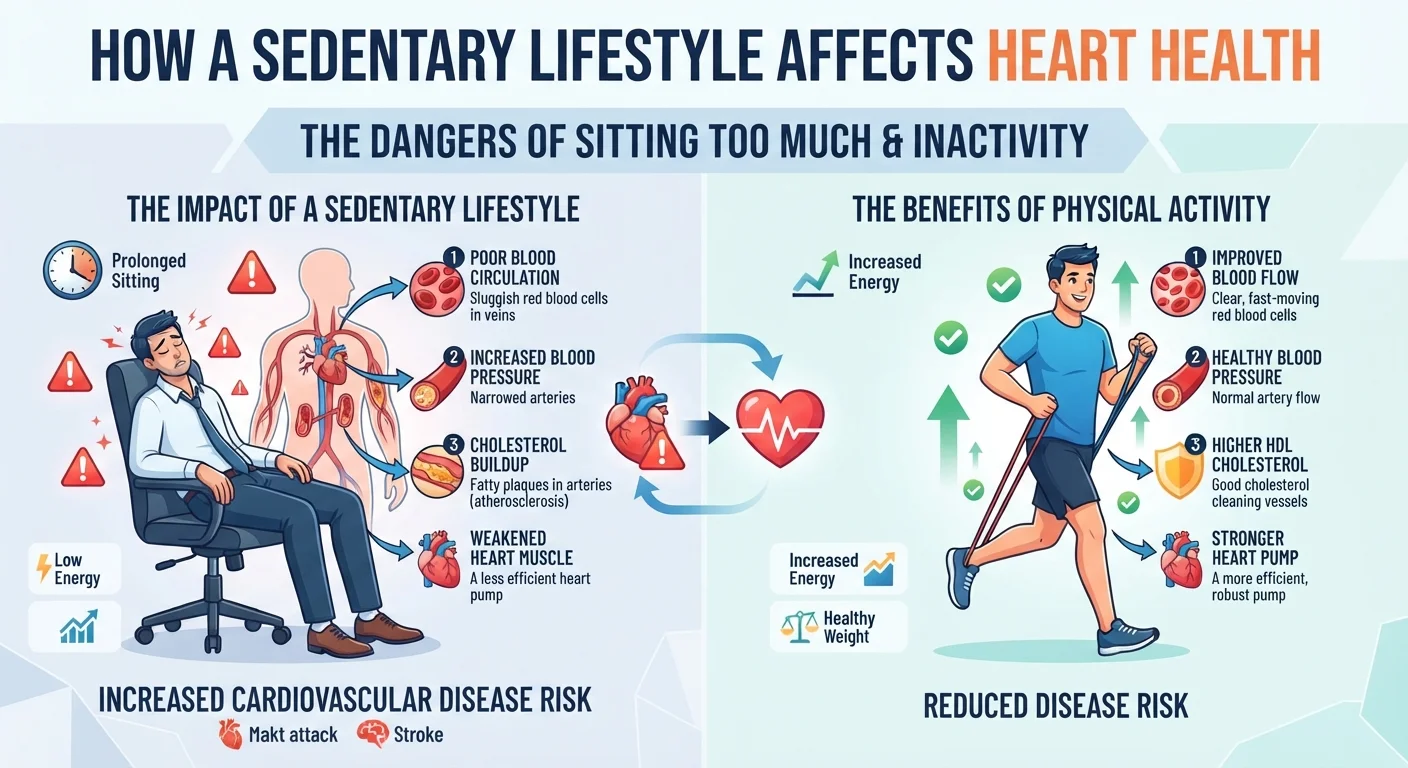
A sedentary lifestyle has become a normal part of modern life. Many people spend hours sitting at a desk, commuting in a car, watching television, using a phone, studying, gaming, or working on a computer. Even people who exercise occasionally may spend most of the remaining day sitting.
This pattern matters because the human body is designed to move regularly. Muscles, blood vessels, the heart, and metabolism all respond to physical activity. When movement becomes limited for long periods, several processes involved in cardiovascular health can be affected.
The relationship between inactivity and heart disease is not simply about whether someone visits a gym. Sitting too much and having too little movement throughout the day can contribute to a collection of risk factors associated with cardiovascular disease, including poor metabolic health, unfavorable blood pressure, reduced physical fitness, excess body weight, and abnormal blood lipid levels.
This does not mean that every person who sits at a desk will develop heart disease. Cardiovascular health is influenced by many factors, including genetics, age, diet, smoking, sleep, stress, blood pressure, cholesterol, diabetes, and other medical conditions.
However, increasing physical activity and reducing prolonged sedentary time can be important parts of a heart-healthy lifestyle.
Understanding the difference between exercise and everyday movement is especially important. Someone may complete a 30-minute workout and then spend the next ten hours sitting. That workout is beneficial, but it does not necessarily eliminate all of the effects associated with prolonged inactivity.
The good news is that reducing sedentary behavior does not require transforming your entire life overnight.
Small changes can matter.
Standing more frequently, walking during breaks, taking the stairs when appropriate, doing household activities, walking after meals, and incorporating regular exercise can all increase daily movement.
This article explains how a sedentary lifestyle affects heart health, why sitting too much can increase cardiovascular risk, how inactivity interacts with other risk factors, and what practical strategies can help people become more active.
read more about effects of soft drinks
What Is a Sedentary Lifestyle?
Understanding Sedentary Behavior
A sedentary lifestyle generally refers to spending a large amount of waking time engaging in activities that require very little physical movement.
Common examples include:
- Sitting at a desk
- Watching television
- Browsing social media
- Using a computer
- Driving
- Sitting during long commutes
- Gaming
- Reading while seated
- Working at a desk
- Spending long periods on a phone
The important point is that sedentary behavior is not simply the opposite of exercise.
A person can technically exercise every day and still spend a large portion of the day sedentary.
Sedentary Time vs. Lack of Exercise
These two concepts are related but different.
Physical inactivity generally means not achieving enough physical activity.
Sedentary behavior refers to prolonged periods of very low-energy activity, particularly while sitting or reclining.
For example, imagine someone who walks briskly for 30 minutes every morning but then sits for eight hours working and spends another three hours watching television.
That person is more active than someone who does not exercise at all, but they still have substantial sedentary exposure.
This distinction is increasingly important when discussing heart health.
Why Movement Matters for the Cardiovascular System
The Heart Is a Muscle
The heart continuously pumps blood throughout the body.
Regular physical activity challenges the cardiovascular system in ways that can improve fitness and circulation.
During activity:
- Heart rate increases
- Breathing becomes faster
- Muscles demand more oxygen
- Blood flow increases
- The cardiovascular system adapts to the workload
Over time, consistent activity can help the body become more efficient at delivering oxygen and nutrients to tissues.
Blood Vessels Respond to Activity
Blood vessels are not passive pipes.
They respond to changes in blood flow and pressure.
Regular physical activity can support healthier vascular function, while prolonged inactivity may contribute to a less favorable cardiovascular environment.
This is one reason everyday movement matters even outside formal exercise sessions.
How a Sedentary Lifestyle Can Increase Cardiovascular Risk
It Can Contribute to High Blood Pressure
Blood pressure is one of the major cardiovascular risk factors.
When blood pressure remains elevated over time, the heart and blood vessels are placed under greater strain.
Regular physical activity can help support healthy blood pressure in many people.
Conversely, low activity levels can contribute indirectly to cardiovascular risk, especially when inactivity occurs alongside weight gain, poor diet, chronic stress, and other unhealthy behaviors.
It Can Affect Blood Sugar Regulation
Muscles use glucose for energy.
Physical activity increases the body’s demand for glucose, which can support better glucose regulation.
When movement is consistently low, particularly when combined with excess calorie intake and other metabolic risk factors, the body may become less responsive to insulin.
Over time, poor insulin sensitivity can contribute to metabolic problems and increase cardiovascular risk.
It Can Contribute to Unhealthy Weight Gain
Energy balance is influenced by both food intake and physical activity.
When people spend much of the day sitting, they may burn fewer calories through movement.
If calorie intake remains high, this can contribute to gradual weight gain.
Excess body weight is itself associated with cardiovascular risk and can also contribute to:
- High blood pressure
- Type 2 diabetes
- Abnormal cholesterol
- Sleep problems
- Reduced physical fitness
The relationship is therefore often indirect and interconnected.
read more about dry skin in summer
It Can Affect Cholesterol and Blood Lipids
Healthy cholesterol management is an important component of cardiovascular prevention.
Physical activity can support healthier lipid profiles in many people.
A sedentary lifestyle, especially when accompanied by an unhealthy diet and excess weight, can contribute to an unfavorable metabolic profile.
It Can Reduce Cardiovascular Fitness
Fitness is partly the body’s ability to deliver and use oxygen during physical activity.
When people rarely challenge their cardiovascular system, their fitness may decline.
Lower fitness can make everyday activities feel harder.
A person may become tired more easily when:
- Walking upstairs
- Carrying groceries
- Walking quickly
- Cleaning the house
- Walking long distances
Reduced fitness can then make physical activity feel uncomfortable, creating a cycle in which people move even less.
Sitting Too Much and Blood Circulation
Why Long Periods of Sitting Matter
When someone sits for a long time, large muscle groups in the legs remain relatively inactive.
The body is not receiving the same muscular stimulation it would receive while walking or standing.
Long periods of sitting can also reduce opportunities for movement throughout the day.
Breaking up sitting time with movement is therefore a practical strategy.
Why Short Movement Breaks Matter
You do not necessarily need a long workout every time you stand up.
A short walk around the room, a few minutes of household activity, or walking to get water can interrupt prolonged sitting.
These small movement periods add up across the day.
The Relationship Between Sedentary Lifestyle and Heart Disease
Cardiovascular Disease Is Multifactorial
Heart disease does not have a single cause.
Risk can be influenced by:
- Age
- Family history
- Smoking
- High blood pressure
- High cholesterol
- Diabetes
- Excess body weight
- Diet
- Physical inactivity
- Sedentary behavior
- Stress
- Sleep
- Alcohol consumption
- Other medical conditions
This is important because a sedentary lifestyle should be viewed as one component of cardiovascular risk rather than a single direct cause.
Inactivity Can Create a Cluster of Risks
One of the biggest concerns is how inactivity can interact with other factors.
For example:
Less movement → lower energy expenditure → weight gain → higher blood pressure and poorer metabolic health → greater cardiovascular risk.
This is a simplified example, but it illustrates why physical activity matters beyond calorie burning.
Sedentary Lifestyle and Atherosclerosis
Understanding Atherosclerosis
Atherosclerosis involves the buildup of plaque within arteries.
Over time, this process can narrow or stiffen blood vessels and contribute to cardiovascular disease.
Multiple risk factors can contribute to atherosclerosis, including:
- Smoking
- High blood pressure
- Unhealthy cholesterol levels
- Diabetes
- Chronic inflammation
- Excess body weight
- Physical inactivity
A sedentary lifestyle can therefore contribute to the broader environment in which cardiovascular disease develops.
Why Prevention Matters
Cardiovascular disease often develops over many years.
That means lifestyle choices made during adulthood can influence long-term risk.
Increasing activity is not only about improving today’s fitness.
It can be part of protecting cardiovascular health over decades.
How Physical Activity Supports Heart Health
Aerobic Activity
Aerobic activities raise heart rate and breathing.
Examples include:
- Walking
- Brisk walking
- Cycling
- Swimming
- Dancing
- Jogging
- Hiking
The appropriate activity depends on a person’s fitness level, health status, age, and physical limitations.
Strength Training
Strength training is also important.
Examples include:
- Bodyweight exercises
- Resistance bands
- Weight training
- Functional strength exercises
Strength training helps maintain muscle mass and physical function.
For many adults, combining aerobic activity with strength training provides a more complete approach to fitness.
Everyday Movement Counts
Physical activity does not have to happen exclusively in a gym.
Movement can include:
- Walking to nearby destinations
- Gardening
- Cleaning
- Playing with children
- Taking stairs
- Shopping
- Walking while talking on the phone
- Doing household chores
These activities can reduce total sedentary time.
Why Walking Is One of the Best Starting Points
Walking Is Accessible
Walking requires little equipment.
It can often be adapted to different fitness levels.
Someone who currently takes very few steps each day can start with short walks and gradually increase duration.
Walking Can Become Part of a Routine
Instead of treating exercise as a separate event, attach walking to existing habits.
For example:
- Walk after lunch
- Walk after dinner
- Walk during a work break
- Walk while listening to a podcast
- Walk to nearby stores
- Walk while speaking on the phone
This makes activity easier to maintain.
How Much Physical Activity Do Adults Need?
General Recommendations
For most adults, widely used public-health recommendations encourage regular moderate-intensity aerobic activity each week, along with muscle-strengthening activity on multiple days.
A commonly recommended target is approximately:
150 minutes of moderate-intensity aerobic activity per week, or an equivalent amount of more vigorous activity.
Strength training is generally recommended on at least two days per week.
However, people who are currently inactive do not need to reach the full target immediately.
Some activity is better than none.
Progress Gradually
If someone has been inactive for months or years, suddenly attempting intense exercise can be uncomfortable and potentially unsafe.
A better approach is gradual progression.
For example:
Week 1: Short walks several days per week.
Week 2: Increase walking duration.
Week 3: Add another walking session.
Later: Introduce more vigorous activity or strength training if appropriate.
The exact progression should depend on individual circumstances.
Breaking Up Long Periods of Sitting
The 8-Hour Desk Problem
Office workers can spend much of their day seated.
A simple strategy is to create movement triggers.
For example:
Every 30–60 minutes:
- Stand up
- Walk around
- Stretch
- Refill water
- Visit a colleague
- Perform a brief movement routine
The goal is to interrupt prolonged sitting.
Use Technology as a Reminder
Phone or smartwatch reminders can help.
A reminder could say:
“Stand and move for two minutes.”
Small prompts can be surprisingly effective because people often become absorbed in work and lose awareness of how long they have been sitting.
read more about benefits of drinking water
Sedentary Work and Heart Health
Office Workers
Desk-based workers may be particularly vulnerable to long periods of uninterrupted sitting.
A healthier workday might include:
- Standing during phone calls
- Walking during meetings when possible
- Using stairs
- Taking walking breaks
- Standing periodically
- Walking to colleagues instead of always messaging them
Students
Students can also spend many hours sitting.
Study sessions can be divided into manageable blocks.
Between study periods, students can:
- Walk
- Stretch
- Do household tasks
- Move around the room
The goal is not to sacrifice study time.
It is to prevent hours of uninterrupted inactivity.
Sedentary Lifestyle and Remote Work
The Home Office Challenge
Working from home can eliminate commuting but also remove natural movement.
In an office, people may walk to:
- Meetings
- Bathrooms
- Break rooms
- Parking areas
- Colleagues’ desks
At home, the distance between workspace, kitchen, and bathroom may be only a few steps.
This can dramatically reduce incidental movement.
Create Movement Into the Workday
Remote workers can intentionally schedule movement.
For example:
Morning: Short walk before work.
Mid-morning: Five-minute movement break.
Lunch: Walk outside.
Afternoon: Short walking break.
After work: Longer walk or exercise session.
The objective is to create multiple movement opportunities.
Sedentary Lifestyle and Television
Passive Entertainment
Television can encourage prolonged sitting because programs and streaming platforms make it easy to continue watching for hours.
A simple solution is to combine entertainment with movement when possible.
During television breaks:
- Stand
- Walk around
- Stretch
- Do light household tasks
During less demanding programs, some people may perform simple exercises.
Sedentary Lifestyle and Smartphones
Digital Habits Can Increase Sitting
Smartphones can keep people seated or reclined for extended periods.
Scrolling through social media can easily turn into an hour or more of inactivity.
Build Healthier Digital Habits
Try:
- Standing while browsing
- Walking while taking voice calls
- Setting screen-time reminders
- Taking regular movement breaks
- Avoiding long uninterrupted scrolling sessions
The goal is not to eliminate technology.
It is to avoid allowing technology to dictate a completely sedentary routine.
Sedentary Lifestyle and Sleep
The Relationship Between Activity and Sleep
Physical activity and sleep influence each other.
Regular movement may support better sleep quality for many people.
At the same time, poor sleep can reduce energy and motivation to exercise.
This can create another cycle:
Poor sleep → fatigue → less activity → more sedentary time → poorer sleep habits.
A balanced routine that includes daytime activity and consistent sleep habits can help break that cycle.
Avoiding Late-Night Inactivity
A person may spend the entire evening sitting after work.
A short walk after dinner can introduce movement without requiring a major workout.
Sedentary Lifestyle and Mental Well-Being
Movement and Mood
Physical activity can also support psychological well-being.
People who are inactive may experience:
- Lower energy
- Reduced motivation
- Feelings of sluggishness
- Increased stress
Movement can become a useful component of a broader strategy for managing stress.
Stress and Heart Health
Chronic stress can influence behaviors and physiological processes associated with cardiovascular risk.
A stressful person may:
- Sleep poorly
- Eat differently
- Smoke
- Drink more alcohol
- Exercise less
- Spend more time sitting
Physical activity can provide a healthier outlet for stress.
Diet, Inactivity, and Cardiovascular Risk
Lifestyle Factors Work Together
It is misleading to treat physical activity separately from nutrition.
Someone who sits most of the day while consuming a diet high in excess calories, saturated fat, sodium, and added sugars may face different cardiovascular risks from someone with the same sitting time but a balanced diet and regular exercise.
Heart health depends on the overall pattern.
A Heart-Healthy Lifestyle
A comprehensive approach can include:
- Regular physical activity
- Nutritious foods
- Healthy body weight
- Adequate sleep
- No smoking
- Stress management
- Regular medical checkups
- Appropriate management of blood pressure and cholesterol
Sedentary Lifestyle and Smoking
Two Separate Risk Factors
Smoking is a major cardiovascular risk factor.
Being physically active does not eliminate the cardiovascular damage associated with smoking.
Similarly, quitting smoking does not mean physical inactivity is harmless.
The best approach is to address each risk factor separately.
Sedentary Lifestyle and Diabetes
Why Blood Sugar Matters
Diabetes is strongly associated with cardiovascular disease.
Physical activity can support blood glucose management and insulin sensitivity.
For people with diabetes, exercise can be an important part of disease management, but activity plans should be individualized when medications or other health factors are involved.
Movement After Meals
Walking after meals can be a practical form of activity.
For some people, short walks after eating can support blood glucose management.
However, individuals with diabetes should consider their personal medical plan, especially if they use medications that can cause low blood sugar.
Sedentary Lifestyle and Obesity
The Energy Balance Connection
Weight management depends on many factors.
Physical inactivity can reduce daily energy expenditure.
If food intake consistently exceeds energy needs, weight may increase.
However, body weight is influenced by more than exercise.
Genetics, sleep, medications, stress, environment, metabolism, and dietary patterns can all contribute.
Avoiding the “Exercise Equals Weight Loss” Trap
Exercise provides cardiovascular benefits even when the scale does not change dramatically.
A person should not conclude that physical activity is useless simply because body weight remains stable.
Improved fitness, blood pressure, blood sugar control, mood, and physical function are all meaningful outcomes.
The Importance of Fitness as We Age
Maintaining Cardiovascular Capacity
Fitness often declines with age, but regular activity can help preserve physical capacity.
Remaining active can support:
- Walking ability
- Balance
- Muscle strength
- Cardiovascular fitness
- Independence
Avoiding the Inactivity Cycle
Older adults may become less active because activities feel harder.
Less activity then causes further loss of fitness.
Breaking this cycle early can be valuable.
Exercise programs should be adapted to individual abilities and medical conditions.
How to Create a Less Sedentary Daily Routine
Morning
Start the day with movement.
Possible options:
- Walk
- Stretch
- Perform light exercises
- Do household chores
Even ten minutes can establish a different pattern.
During Work
Set reminders to move.
Use short breaks to:
- Stand
- Walk
- Stretch
Lunch
Instead of eating at the desk and immediately returning to work, take a short walk if circumstances allow.
Evening
After work, consider:
- Walking
- Cycling
- Swimming
- Strength training
- Dancing
- Sports
Before Bed
Avoid turning the entire evening into uninterrupted sitting.
Light movement can be incorporated naturally, while keeping the final part of the evening suitable for relaxation and sleep.
read more about healthy lifestyle
Practical Strategies for People Who Hate Exercise
Stop Calling It Exercise
Some people dislike structured workouts but enjoy movement.
Try:
- Dancing
- Walking around a shopping area
- Gardening
- Hiking
- Swimming
- Playing with children
- Cycling
- Recreational sports
The best activity is often the one you are willing to repeat.
Use the “Small Amount” Strategy
Instead of saying:
“I need to exercise for an hour.”
say:
“I will walk for ten minutes.”
Reducing the psychological barrier can make starting easier.
Creating an Active Home Environment
Make Movement Convenient
Place commonly used items slightly farther away.
Take stairs when appropriate.
Walk around during phone calls.
Keep comfortable walking shoes available.
Reduce Automatic Sitting
If you habitually sit immediately after finishing work, create a short transition routine.
For example:
Finish work → change clothes → take a 10-minute walk → return home.
This can help separate work from evening inactivity.
Creating an Active Workplace
Walking Meetings
When appropriate, some meetings can be conducted while walking.
Standing During Calls
Phone calls can become movement opportunities.
Use Breaks Properly
A five-minute movement break can be more useful for cardiovascular health than spending the entire break scrolling through a phone.
Family Strategies for Reducing Sedentary Time
Move Together
Families can create active traditions.
Examples include:
- Evening walks
- Weekend hikes
- Cycling
- Outdoor games
- Family cleaning sessions
- Walking trips
Reduce Passive Entertainment
Instead of making television the default family activity every evening, rotate activities.
This does not mean eliminating television.
Balance is the goal.
Tracking Physical Activity
Step Counters
A smartphone or wearable can help people understand how much they move.
The purpose should be awareness rather than obsession.
Track Sitting Time
Some devices can also provide reminders after prolonged inactivity.
These reminders can help identify patterns.
Focus on Trends
One inactive day is not a failure.
Look at patterns across weeks and months.
When to Be Careful With Exercise
People With Existing Heart Conditions
Anyone with known cardiovascular disease or significant medical conditions should discuss appropriate activity with a healthcare professional.
Warning Symptoms During Activity
Certain symptoms should not be ignored.
Seek medical attention for concerning symptoms such as:
- Chest pressure or pain
- Severe shortness of breath
- Fainting
- Severe dizziness
- Unusual heart palpitations accompanied by other concerning symptoms
Exercise should improve health, not be treated as something that must be pushed through despite serious warning signs.
The Long-Term Goal: More Movement, Less Sitting
Do Not Aim for Perfection
A common mistake is creating an unrealistic fitness plan.
If someone goes from almost no activity to an extremely demanding workout schedule, the plan may not last.
A sustainable routine is usually more useful.
Think in Terms of Movement Opportunities
Instead of asking:
“Did I exercise today?”
also ask:
“How often did I move today?”
These are different questions.
Someone can have a workout and still spend most of the day sitting.
The goal is to combine planned exercise with regular everyday movement.
A Sample Active Day
Morning
Wake up and take a short walk.
Work
Stand periodically and take brief movement breaks.
Lunch
Walk for 10–15 minutes if possible.
Afternoon
Take another brief movement break.
Evening
Complete a moderate workout or longer walk.
Night
Avoid spending the entire evening sitting continuously.
This is only an example.
A person’s schedule should be adapted to their responsibilities, health, fitness, and preferences.
The Biggest Myths About Sedentary Behavior
Myth: “If I Exercise Once a Day, Sitting Doesn’t Matter”
Exercise is highly beneficial, but long periods of sitting may still be worth addressing.
The better approach is to exercise regularly and break up prolonged sedentary time.
Myth: “You Need a Gym”
You do not need a gym to increase physical activity.
Walking, cycling, household activities, and bodyweight exercises can all contribute to a more active lifestyle.
Myth: “Only Intense Exercise Protects the Heart”
Moderate activities can provide meaningful health benefits.
You can build activity gradually.
Myth: “If You Are Young, Sitting Is Harmless”
Young people may have lower short-term cardiovascular risk, but habits formed early can influence long-term health.
Developing active routines earlier can make them easier to maintain throughout adulthood.
Building a Sustainable Physical Activity Habit
Start Small
Choose a realistic first step.
For example:
Walk for 10 minutes after dinner five days this week.
Once this becomes routine, increase the duration or frequency.
Make It Specific
Instead of saying:
“I will exercise more.”
say:
“I will walk for 20 minutes after work on Monday, Wednesday, and Friday.”
Specific plans are easier to follow.
Attach Activity to Existing Habits
Examples:
- After breakfast → short walk
- After lunch → short walk
- During phone calls → stand or walk
- After work → exercise
- Before dinner → movement break
Make It Enjoyable
Listen to music.
Walk with a friend.
Join a group.
Try a sport.
Explore a new neighborhood.
Enjoyment improves the likelihood of maintaining the habit.
read more about chronic dehydration
Moving More Is an Investment in Heart Health
A sedentary lifestyle is more than simply spending time on a chair.
When sitting too much becomes a daily pattern, it can contribute to a broader lifestyle characterized by insufficient physical activity, reduced fitness, weight gain, and unfavorable metabolic and cardiovascular risk factors.
Heart health is influenced by many interconnected factors, and no single lifestyle change can guarantee protection from cardiovascular disease.
However, increasing physical activity is one of the most practical steps many people can take to support cardiovascular health.
The solution does not have to be extreme.
You can start by standing more often.
Walk during breaks.
Take the stairs when appropriate.
Walk after meals.
Spend less uninterrupted time sitting.
Choose active hobbies.
Exercise regularly.
Create an environment where movement becomes part of everyday life rather than something reserved for the gym.
Most importantly, do not think of physical activity as something that only counts when you are wearing workout clothes.
Every walk, household task, active commute, recreational activity, and movement break contributes to a more active day.
The heart benefits from a lifestyle in which movement is normal.
Instead of asking whether you have enough time for exercise, ask how you can create more opportunities to move throughout the day.
That shift in perspective can make an active lifestyle feel much more achievable—and over the long term, it can become an important part of protecting heart health.