

Blog
How Soft Drinks Affect Your Health Over Time

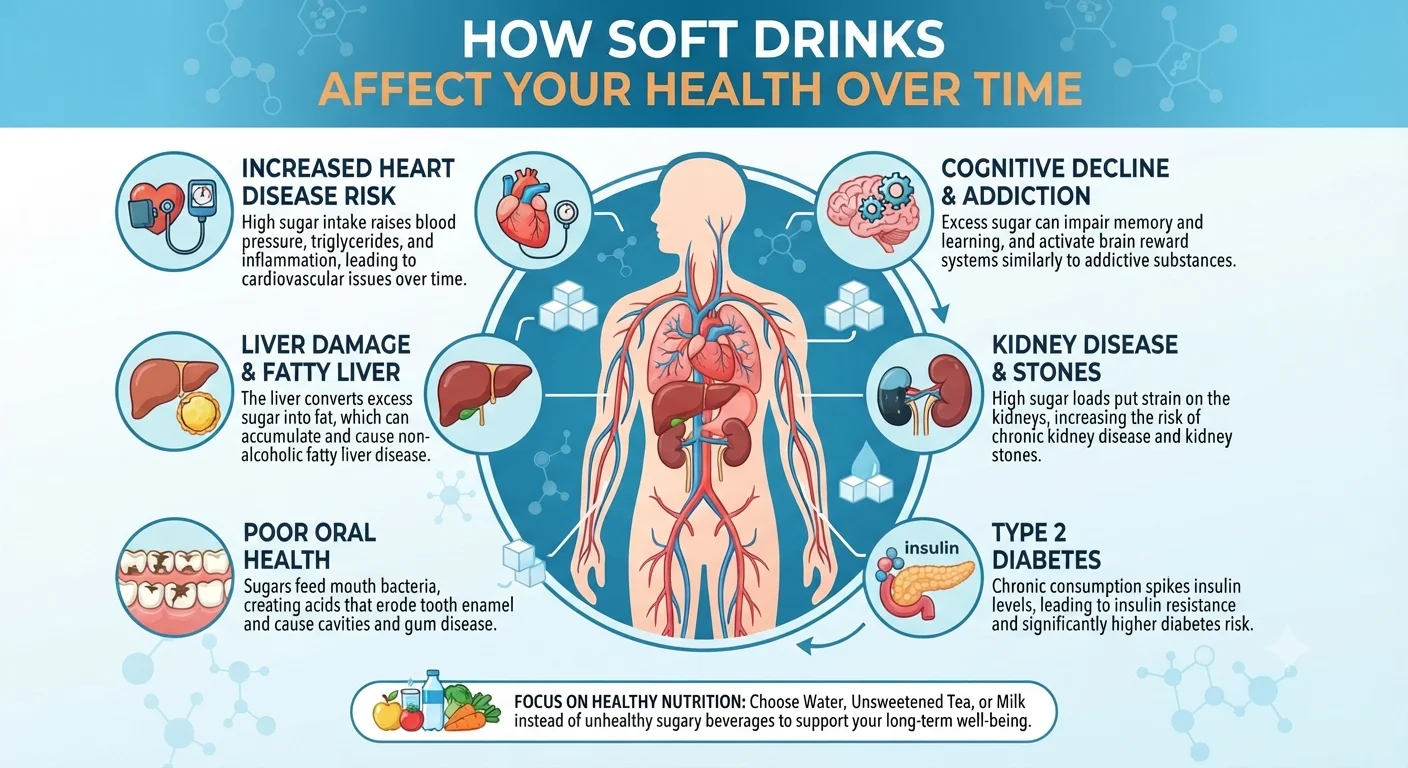
Soft drinks are among the most common beverages consumed around the world. They are easy to find, convenient to drink, and available in countless flavors and varieties. For many people, having a soft drink occasionally is simply part of enjoying a meal or social occasion. The concern begins when sugary beverages become a daily habit and gradually replace water, milk, or other nutrient-rich drinks.
Understanding the effects of soft drinks requires looking beyond what happens immediately after drinking a can or bottle. The more important question is what repeated consumption may do over months and years.
Regular intake of sugar-sweetened beverages has been associated with a range of health concerns, including weight gain, dental problems, metabolic abnormalities, and increased risk of several chronic diseases. The reasons are not limited to sugar alone. Large portions, liquid calories, low nutritional value, effects on appetite, and the habit of consuming sweet beverages frequently can all contribute to the overall picture.
This does not mean that drinking a soft drink automatically causes disease. Health outcomes depend on the amount consumed, the rest of a person’s diet, physical activity, body composition, genetics, and many other factors. However, frequent consumption can make it harder to maintain a healthy dietary pattern over time.
This guide explains what happens when sugary drinks become a regular part of the diet, why their effects can accumulate, how they differ from healthier beverages, and what practical steps can help reduce intake.
read more about healthy diet
What Counts as a Soft Drink?
Understanding Sugar-Sweetened Beverages
The term soft drink commonly refers to carbonated beverages such as cola, lemon-lime soda, and flavored fizzy drinks. However, the broader category of sugar-sweetened beverages includes many other products.
These may include:
Regular soda.
Sweetened iced tea.
Some energy drinks.
Sweetened fruit drinks.
Flavored sugary beverages.
Sweetened coffee drinks.
Some sports drinks.
Sweetened sparkling beverages.
The important factor is not whether a drink is carbonated. It is whether it contains significant amounts of added sugars.
Added Sugar Versus Naturally Occurring Sugar
Sugar is found naturally in foods such as whole fruits and milk. These foods also provide other nutrients and, in the case of whole fruit, fiber.
Sugar-sweetened beverages are different because the beverage can deliver a substantial amount of sugar without providing much fiber, protein, vitamins, minerals, or other nutrients.
This makes it possible to consume a considerable amount of energy without feeling as full as you might after eating a solid food containing a similar number of calories.
Why Liquid Sugar Matters
Drinks Can Be Easy to Consume Quickly
A soft drink can be consumed in a few minutes.
Because drinking does not require the same chewing and digestion experience as eating a solid meal, it may be easy to consume a substantial amount without feeling that you have eaten much.
A large bottle can also contain multiple servings.
If someone drinks directly from the bottle, they may not notice how much they have consumed.
Sugary Drinks Can Add Calories Without Much Satiety
One of the major concerns surrounding sugary beverages is that liquid calories may not produce the same feeling of fullness as calories from many solid foods.
This can make frequent sugary drink consumption relevant to overall energy balance.
If a person regularly consumes more energy than the body uses, the excess can contribute to weight gain over time.
The Habit Can Matter as Much as the Individual Drink
A soft drink consumed once at a celebration is very different from drinking several sugary beverages every day.
The long-term effects of soft drinks are therefore strongly influenced by frequency and quantity.
A useful question is not:
“Is soda bad?”
A more useful question is:
“How often do I drink it, how much do I consume, and what is it replacing?”
The Relationship Between Soft Drinks and Weight Gain
How Regular Sugary Drinks Can Increase Energy Intake
Weight regulation is influenced by many factors, but energy intake remains important.
Sugary beverages can make it easier to consume additional calories because they are often consumed alongside meals rather than instead of food.
For example, a person might eat a complete lunch and then drink a sugar-sweetened beverage.
The drink adds energy without necessarily reducing the amount of food consumed.
When this happens repeatedly, the additional energy can accumulate.
read more about weak immune system
Portion Size Matters
Soft drinks are sold in many different sizes.
A small serving may contain considerably less sugar than a large bottle.
However, people often consume the entire package rather than the amount listed as one serving.
Checking the nutrition label can help reveal how much sugar and energy are actually being consumed.
Weight Gain Is Not the Only Concern
It is important not to reduce the discussion to body weight alone.
A person can have a body weight within a typical range while still having a diet high in added sugars and low in nutrient-rich foods.
Conversely, not everyone who drinks sugary beverages will gain weight.
The broader issue is the overall dietary pattern.
Soft Drinks and Blood Sugar
What Happens After Drinking a Sugary Beverage?
When you drink a sugar-containing beverage, the carbohydrates are digested and absorbed into the bloodstream.
Blood glucose rises, and the body responds by releasing insulin.
The exact response varies depending on the beverage, amount consumed, individual metabolism, and whether the drink is consumed with food.
Occasional rises in blood glucose are a normal part of eating.
The concern is the repeated pattern combined with an overall diet and lifestyle that may increase metabolic risk.
Frequent Intake and Metabolic Health
Regular consumption of sugar-sweetened beverages has been associated in observational research with a higher risk of developing type 2 diabetes.
This relationship is influenced by multiple factors, including body weight and overall diet.
The evidence does not mean that every soft drink directly causes diabetes.
Instead, frequent intake can be one component of a dietary pattern associated with higher metabolic risk.
Why Replacing Sugary Drinks Can Help
Replacing sugary drinks with water or other unsweetened beverages can reduce added sugar intake without requiring major changes to meals.
For someone who drinks multiple sugary beverages each day, this may be one of the simplest dietary changes available.
Effects on Dental Health
Sugar and Tooth Decay
Dental health is one of the clearest areas where frequent sugary beverage consumption can cause concern.
When bacteria in dental plaque metabolize sugars, they produce acids.
Repeated acid exposure can contribute to the loss of minerals from tooth enamel.
Over time, this can increase the risk of dental caries.
Acidity Can Add Another Challenge
Many soft drinks are acidic.
This matters because acidic beverages can contribute to dental erosion, where the tooth surface is gradually worn down by acid.
Sugar and acidity therefore represent two different potential pathways for dental damage.
Drinking Frequency Matters
Someone who drinks a sugary beverage once with a meal is not exposed in exactly the same way as someone who repeatedly sips a sugary drink throughout the entire day.
Frequent sipping can extend the period during which teeth are exposed to sugars and acids.
Practical Ways to Protect Teeth
If you consume sugary beverages, consider:
Reducing frequency.
Drinking them with meals rather than constantly sipping them.
Rinsing the mouth with water afterward.
Maintaining regular brushing and flossing.
Following professional dental recommendations.
Water remains the simplest everyday beverage for protecting against repeated sugar exposure.
Soft Drinks and Heart Health
Looking Beyond Individual Ingredients
Heart health is influenced by blood pressure, cholesterol, blood glucose, body weight, physical activity, smoking, sleep, genetics, and overall dietary quality.
Sugary beverage consumption has been associated in research with several cardiovascular risk factors and, in some studies, higher cardiovascular disease risk.
This does not mean a single soft drink has an immediate damaging effect on the heart.
The concern is the long-term dietary pattern.
Why Long-Term Patterns Matter
A person who regularly consumes sugary beverages may also have a diet that contains fewer nutrient-dense foods.
For example, replacing water with soda throughout the day may reduce opportunities to consume healthier beverages.
Over time, these small decisions can become part of a broader lifestyle pattern.
Effects on Metabolic Health
Insulin Resistance
Insulin resistance occurs when cells respond less effectively to insulin.
The condition can develop through multiple interacting factors.
Excess energy intake, increased body fat, physical inactivity, genetics, and dietary patterns can all play roles.
Frequent consumption of sugar-sweetened beverages is associated with greater metabolic risk in population studies.
Fat Accumulation
Excess energy can be stored as body fat.
The liver also plays an important role in processing carbohydrates and fats.
High consumption of added sugars, particularly in the context of excess calorie intake, has been studied in relation to fatty liver disease and metabolic dysfunction.
Again, the overall dietary pattern matters.
Soft Drinks and Liver Health
Why the Liver Matters
The liver processes nutrients, helps regulate metabolism, and performs many essential functions.
When energy intake consistently exceeds the body’s needs, excess energy can contribute to fat accumulation in various tissues.
Sugar-sweetened beverage consumption has been associated with metabolic dysfunction and fatty liver risk in observational research.
Not All Sugar Has the Same Context
The body processes sugar based on the amount consumed and the context of the diet.
A whole fruit contains naturally occurring sugars along with fiber, water, vitamins, minerals, and plant compounds.
A sugary beverage generally provides much less nutritional complexity.
This is one reason nutrition experts often emphasize food quality rather than focusing only on individual nutrients.
Effects on Appetite and Eating Patterns
Why Sweet Drinks May Not Feel Like Food
People often consume beverages alongside meals.
A sweet drink may add calories without producing the same level of satiety as a solid food.
As a result, some people may continue eating a normal meal while also consuming substantial calories from beverages.
Liquid Calories Can Become Easy to Overlook
People may remember what they ate but forget to count beverages.
For someone trying to understand their dietary intake, tracking drinks for a few days can be revealing.
Write down:
What you drink.
How much you drink.
When you drink it.
Whether it contains added sugar.
What it replaces.
This creates a clearer picture of the habit.
The Role of Soft Drinks in Childhood Nutrition
Developing Taste Preferences
Children are exposed to flavors and eating patterns from an early age.
Frequent exposure to very sweet beverages may reinforce a preference for sweet tastes.
This does not mean that one sugary drink permanently changes a child’s preferences.
However, repeated dietary patterns can influence habits.
Sugary Drinks Can Displace More Nutritious Options
Children need nutrients for growth and development.
If sugary drinks frequently replace water or nutrient-rich beverages, the overall quality of the diet may suffer.
For younger children especially, beverage choices should be considered within the broader context of age-appropriate nutrition.
Parents Can Shape the Home Environment
Children often learn habits from what is readily available.
Keeping water easily accessible and limiting routine access to sugary drinks can make healthier choices easier.
Soft Drinks and Adolescents
Why Teenagers May Consume More Sugary Beverages
Teenagers may encounter sugary beverages through:
School environments.
Restaurants.
Fast-food meals.
Social events.
Sports activities.
Convenience stores.
Advertising.
Peer influence.
The result can be frequent consumption without much awareness of total sugar intake.
read more about hard water effects
Building Awareness Rather Than Using Fear
A better approach is education.
Teenagers can learn to:
Read labels.
Understand serving sizes.
Compare beverages.
Recognize added sugar.
Choose water more frequently.
Limit sugary drinks rather than necessarily treating them as forbidden.
This helps build independent decision-making.
How Soft Drinks Affect Nutrition Quality
Empty Calories and Nutrient Density
The term “empty calories” is commonly used to describe foods or drinks that provide substantial energy with relatively few essential nutrients.
Many sugary beverages fit this description.
This matters because the body has finite opportunities to consume food and beverages throughout the day.
If a significant proportion of energy comes from low-nutrient drinks, there may be less room in the diet for nutrient-rich foods.
Beverage Choices Can Shape the Whole Diet
Someone who frequently consumes sweetened drinks may also prefer sweet foods.
This is not universal, but dietary habits often cluster.
For example:
Sugary breakfast drink.
Sweet snack.
Soft drink with lunch.
Dessert.
Sweetened coffee later.
Each individual choice may seem small.
Together, they can create a high-sugar dietary pattern.
The Difference Between Regular and Diet Soft Drinks
What Makes Them Different?
Diet or zero-sugar soft drinks generally use non-sugar sweeteners instead of large amounts of sugar.
This means they can contain little or no sugar and fewer calories than regular soft drinks.
However, “zero sugar” does not automatically mean “nutritionally ideal.”
The broader dietary pattern still matters.
Can Diet Drinks Be Useful?
For some people, replacing a regular sugary beverage with a zero-sugar version can reduce added sugar and calorie intake.
This can be a practical transition strategy.
For others, drinking mostly water and unsweetened beverages may be a better long-term preference.
The best choice depends on individual circumstances and overall diet.
Water Remains the Simple Default
Water has an important advantage: it hydrates without added sugar or calories.
That makes it a practical everyday beverage for most healthy people.
Soft Drinks and Bone Health
The Popular Concern
There has been longstanding concern about whether carbonated beverages damage bones.
The issue is more complicated than simply saying that carbonation weakens bones.
Bone health depends on:
Calcium intake.
Vitamin D.
Protein.
Physical activity.
Hormones.
Age.
Genetics.
Overall nutrition.
Some studies have examined associations between certain soft drinks and bone health, but it is important not to assume that carbonation itself is the main cause.
The Bigger Nutritional Question
If a sugary beverage replaces milk or another nutrient-rich drink in someone’s diet, the concern may be less about carbonation and more about what is missing.
A diet that consistently provides adequate calcium, vitamin D, protein, and other nutrients is important for maintaining bone health.
Caffeine in Soft Drinks
Some Soft Drinks Contain Caffeine
Cola beverages and some other soft drinks contain caffeine.
Caffeine can increase alertness, but sensitivity varies between individuals.
Large amounts can contribute to:
Difficulty sleeping.
Restlessness.
Jitters.
Increased heart rate.
Anxiety in sensitive individuals.
Caffeine and Sleep
Drinking caffeinated beverages later in the day can interfere with sleep for some people.
Poor sleep can then affect:
Concentration.
Mood.
Appetite regulation.
Academic performance.
Physical performance.
This creates another reason to pay attention to beverage timing.
Energy Drinks Are a Different Category
Higher Caffeine and Added Ingredients
Some energy drinks contain significantly more caffeine than typical soft drinks and may also contain other stimulants.
They should not automatically be treated as ordinary soda.
Children and adolescents may be particularly vulnerable to excessive caffeine intake.
Anyone concerned about caffeine consumption should consider the total amount coming from all sources, including coffee, tea, energy drinks, and medications that contain caffeine.
The Long-Term Effects of Frequent Sugary Drink Consumption
What Happens Over Years?
The most important health effects are generally associated with repeated patterns rather than isolated consumption.
Over years, frequent intake may contribute to:
Excess calorie intake.
Weight gain.
Higher risk of obesity.
Dental caries.
Metabolic dysfunction.
Higher risk of type 2 diabetes.
Cardiovascular risk factors.
Fatty liver risk in certain dietary contexts.
Lower overall diet quality.
The exact outcome differs between individuals.
Frequency Changes the Risk Profile
Compare two patterns.
Person A drinks one small soft drink occasionally.
Person B drinks several large sugary beverages every day.
It would be misleading to treat these patterns as equivalent.
The dose, frequency, duration, and overall lifestyle matter.
How Much Sugar Is Too Much?
Look at the Nutrition Label
Instead of guessing, check the label.
Look for:
Serving size.
Total sugars.
Added sugars.
Calories.
Caffeine.
Then compare the serving size with the amount you actually drink.
One Bottle May Contain Multiple Servings
This is one of the most important labeling details.
If a bottle contains two servings and you drink the entire bottle, you need to account for both servings.
The label can otherwise make the beverage appear lower in sugar than it actually is.
Why People Drink Soft Drinks So Often
Taste and Reward
Sweet flavors are highly appealing to many people.
Carbonation, flavor, temperature, and sweetness can make soft drinks enjoyable.
Convenience
Soft drinks are widely available.
They are easy to carry, easy to order, and often sold with meals.
Habit
Habits can become automatic.
Someone may buy a soft drink whenever they:
Eat lunch.
Drive.
Watch a movie.
Study.
Meet friends.
Order fast food.
Once a behavior becomes associated with a specific situation, changing it may require replacing the routine rather than simply relying on willpower.
read more about healthy home
How to Reduce Sugary Drink Consumption
Start With Awareness
For several days, track everything you drink.
Do not change anything initially.
Simply observe.
This can reveal patterns.
Reduce Gradually if Necessary
If you drink several sugary beverages every day, an immediate complete elimination may feel difficult.
You could start by replacing one drink with water.
Then replace another.
The goal is to build a sustainable habit.
Use Cold Water
Some people prefer cold beverages because they feel more refreshing.
Keeping chilled water available can make substitution easier.
Add Natural Flavor
If plain water feels boring, consider adding:
Lemon.
Lime.
Mint.
Cucumber.
Fresh fruit.
This can make water more appealing without adding large amounts of sugar.
Healthier Beverage Alternatives
Water
Water is the simplest choice for everyday hydration.
Unsweetened Tea
Tea can provide variety without added sugar.
Unsweetened Coffee
For adults who tolerate caffeine, plain coffee can be an alternative to sweetened coffee beverages.
Sparkling Water
For people who enjoy carbonation, unsweetened sparkling water can provide a similar fizzy experience without added sugar.
Milk and Nutrient-Rich Options
Depending on age and dietary needs, milk and appropriate fortified alternatives can provide nutrients that soft drinks generally do not.
How to Make Healthy Choices Easier
Change Your Environment
If sugary drinks are always available at home, they are easier to consume.
Try keeping:
Water.
Unsweetened tea.
Sparkling water.
Other preferred low-sugar beverages.
readily available.
Plan for Restaurants
When eating out, decide what you will drink before arriving.
This can reduce impulsive choices.
Carry Water
A reusable bottle makes water accessible throughout the day.
Convenience matters.
A healthy choice becomes easier when it is already available.
Common Myths About Soft Drinks
Myth: One Soda Will Cause Diabetes
A single beverage does not determine whether someone develops diabetes.
Diabetes risk is influenced by many factors.
The concern is habitual consumption within an overall lifestyle.
Myth: All Carbonated Drinks Are Unhealthy
Carbonation itself does not automatically make a beverage unhealthy.
Unsweetened sparkling water is very different nutritionally from a sugar-sweetened soda.
Myth: Natural Sugar and Added Sugar Are Identical in Every Context
The source and food matrix matter.
Whole fruit contains fiber and other nutrients, while sugary beverages often contain added sugars with little nutritional value.
Myth: Diet Soda Is Exactly the Same as Regular Soda
Diet drinks and regular sugary drinks have different nutritional profiles.
Regular soda contains added sugar, while many diet drinks use non-sugar sweeteners.
Neither should automatically be treated as the only possible beverage choice.
How to Think About Soft Drinks Without Extreme Rules
Focus on Frequency
An occasional soft drink is different from a daily habit.
Focus on Quantity
A small serving is different from several large bottles.
Focus on the Whole Diet
One beverage should not be evaluated in isolation.
Consider:
Fruit.
Vegetables.
Whole grains.
Protein.
Healthy fats.
Water.
Added sugars.
Overall energy intake.
Avoid the “All or Nothing” Mindset
Some people find that strict rules make them more likely to overconsume later.
A flexible approach can be more sustainable.
The objective is to make water and unsweetened beverages the routine choice while keeping sugary drinks occasional if they fit your preferences and health goals.
Creating a Lower-Sugar Beverage Routine
Morning
Start the day with water or another unsweetened beverage.
During Work or Study
Keep water nearby.
If you drink coffee or tea, consider limiting added sugar.
With Meals
Choose water or an unsweetened beverage most of the time.
Social Occasions
If you want a soft drink, choose a reasonable portion and enjoy it intentionally rather than drinking automatically.
Evening
Limit caffeinated beverages if they interfere with sleep.
read more about healthy daily habits
The effects of soft drinks are best understood as the result of repeated dietary habits rather than isolated moments.
A sugary beverage occasionally is very different from a routine of consuming multiple sugar-sweetened drinks every day.
Frequent consumption can increase added sugar and calorie intake and is associated with important long-term health concerns, including dental problems, weight gain, metabolic dysfunction, and increased risk of chronic disease.
The good news is that beverage habits are often relatively easy to modify.
Replacing even one regular sugary drink with water or another unsweetened beverage can reduce sugar intake. Over time, repeated small changes can become a meaningful part of a healthier dietary pattern.
The most useful goal is not to fear every soft drink.
It is to understand what you are drinking, how often you are drinking it, how much you consume, and what that beverage is replacing.
For most people, water and other unsweetened beverages are excellent everyday defaults. Sugary drinks can then become occasional choices rather than automatic parts of every meal.
Nutrition is ultimately about patterns.
A single drink rarely defines your health.
Your habits repeated over months and years matter much more.