

Blog
Does Hard Water Damage Your Hair and Skin?

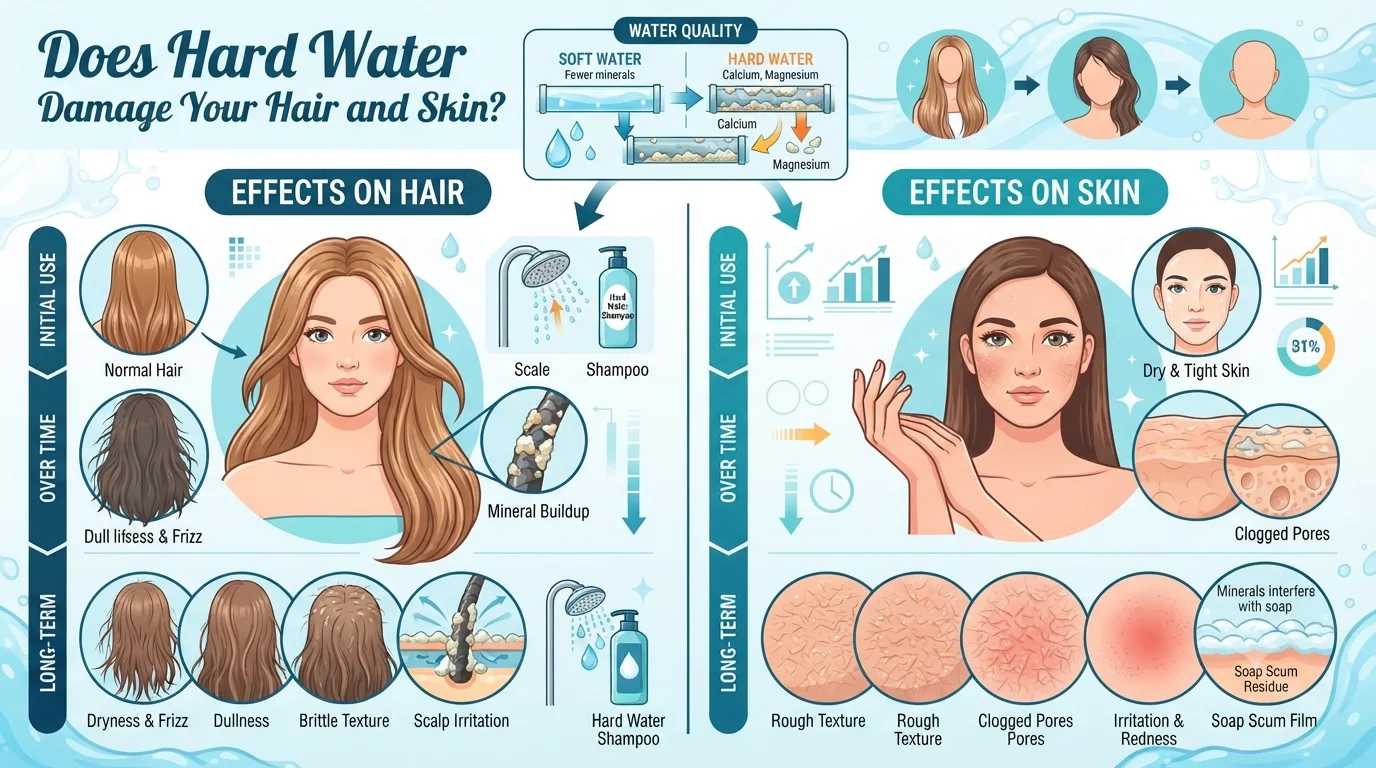
Hard water contains high concentrations of dissolved minerals, primarily calcium and magnesium. Although these minerals are generally safe to drink, prolonged exposure during bathing can affect your hair, scalp, and skin in ways that gradually become more noticeable. Many people living in hard water areas struggle with issues such as brittle hair, increased tangling, dullness, dry skin, irritation, and product buildup without realizing that their water supply may be contributing to these problems.
Understanding the relationship between hard water hair, dry skin, and overall water quality can help you make informed decisions about your personal care routine and household water treatment options. In this comprehensive guide, we’ll explore how hard water affects your hair and skin over time, explain the science behind mineral buildup, and provide practical strategies for minimizing its impact.
read more about cleaning tips for dog owners
What Is Hard Water?
Understanding Water Hardness
Water becomes “hard” when it passes through natural rock formations such as limestone, chalk, and gypsum. During this process, it dissolves minerals, particularly calcium and magnesium, increasing the water’s mineral content.
The harder the water, the higher the concentration of these dissolved minerals.
Water hardness is commonly measured in:
- Milligrams per liter (mg/L)
- Parts per million (ppm)
- Grains per gallon (gpg)
Higher measurements indicate harder water.
Is Hard Water Dangerous?
One common misconception is that hard water is unsafe.
In reality, hard water is generally considered safe for drinking and cooking. The minerals it contains may even contribute small amounts of calcium and magnesium to your diet.
However, while hard water is usually safe to consume, repeated exposure during bathing can contribute to several cosmetic and skin-related concerns.
How Hard Water Interacts with Hair and Skin
Minerals Do Not Rinse Away Easily
Unlike soft water, hard water leaves behind mineral deposits after evaporation.
These microscopic deposits can accumulate on:
- Hair strands
- The scalp
- Skin
- Shower surfaces
- Bathroom fixtures
Over time, this buildup becomes increasingly noticeable.
Soap Doesn’t Perform as Well
One of the most obvious hard water effects is reduced soap performance.
Minerals react with soaps and cleansers, making them less effective.
As a result:
- Shampoo may not lather well.
- Soap residue remains on the skin.
- Hair feels coated after washing.
- More product is required to achieve the same cleaning effect.
How Hard Water Affects Hair
Mineral Buildup on Hair Strands
Every wash leaves tiny mineral particles on the hair shaft.
Over weeks and months, this buildup can create a coating that prevents moisture from reaching the hair properly.
As buildup increases, hair may become:
- Rough
- Heavy
- Dull
- Difficult to style
This is one of the most common concerns associated with hard water hair.
Hair Feels Dry
Although hard water itself contains minerals, it does not moisturize hair.
Instead, mineral deposits may interfere with conditioners and moisturizing treatments.
As a result, hair often feels:
- Dry
- Brittle
- Less flexible
Dry hair is also more likely to break during brushing or styling.
Increased Tangling
Mineral-coated hair develops a rougher outer surface.
This increased friction causes strands to catch on one another more easily.
People with:
- Curly hair
- Long hair
- Fine hair
may notice significantly more tangles.
Loss of Shine
Healthy hair reflects light evenly.
Mineral deposits create an uneven surface that scatters light instead.
This often causes hair to appear:
- Dull
- Lifeless
- Less vibrant
Many people mistakenly blame their shampoo rather than their water quality.
read more about pet allergies in children
Color-Treated Hair May Fade Faster
Individuals with dyed hair often experience additional challenges.
Mineral buildup may reduce color vibrancy over time.
Some people notice:
- Faster fading
- Brassiness
- Uneven tones
Using appropriate water filtration and color-safe hair products may help reduce these effects.
Difficulty Managing Hair
Hair affected by hard water often becomes more resistant to styling.
Common complaints include:
- Reduced softness
- Increased frizz
- Poor curl definition
- Lack of volume
- Difficulty straightening
Professional hairstylists frequently recognize hard water as an overlooked cause of these issues.
How Hard Water Affects the Scalp
Product Residue
Because shampoo rinses less effectively in hard water, residue may remain on the scalp.
Combined with mineral deposits, this buildup can contribute to discomfort.
Dry Scalp
Many individuals exposed to hard water experience increased scalp dryness.
Symptoms may include:
- Tightness
- Flaking
- Itching
Although hard water does not directly cause every scalp condition, it can worsen dryness in susceptible individuals.
Increased Sensitivity
People with sensitive skin may notice scalp irritation more frequently when washing with hard water.
The combination of mineral deposits and cleanser residue may contribute to discomfort.
How Hard Water Affects Skin
Leaves Skin Feeling Tight
One of the earliest hard water effects involves the skin.
After showering, many people describe their skin as feeling:
- Tight
- Less smooth
- Slightly rough
This sensation occurs because minerals and soap residue remain on the skin’s surface.
Contributes to Dry Skin
Perhaps the most widely reported concern is dry skin.
Hard water may interfere with the skin’s natural moisture balance.
Over time, frequent exposure may leave skin feeling:
- Dry
- Rough
- Less comfortable
This effect is often more noticeable during colder months when indoor heating already reduces humidity.
Soap Residue Can Remain on Skin
Soap reacts with calcium and magnesium to create insoluble residues.
These residues may remain after rinsing, leaving the skin feeling less clean despite thorough washing.
Some individuals compensate by scrubbing more aggressively, which can further irritate the skin.
Sensitive Skin May Feel Worse
People with naturally sensitive skin often notice stronger reactions.
Hard water may increase discomfort associated with:
- Dryness
- Mild irritation
- Tightness
Maintaining proper moisturizing routines becomes especially important.
Can Hard Water Cause Hair Loss?
Understanding the Difference
Many people ask whether hard water directly causes hair loss.
Current scientific evidence does not clearly demonstrate that hard water alone causes permanent hair loss.
However, hard water hair problems may contribute indirectly by causing:
- Hair breakage
- Increased tangling
- Fragile strands
- Rough texture
Broken hair may create the impression of excessive shedding even when hair follicles remain healthy.
Hair Breakage vs. Hair Loss
It’s important to distinguish between:
Hair breakage:
- Occurs along the hair shaft.
- Results from weakened strands.
Hair loss:
- Begins at the follicle.
- Involves reduced hair growth.
Hard water is more commonly associated with breakage than true hair loss.
Factors That Influence Hard Water Effects
Hair Type
Different hair types respond differently.
Individuals with:
- Curly hair
- Coily hair
- Chemically treated hair
- Bleached hair
often notice mineral buildup more quickly.
Skin Type
People with naturally oily skin may experience fewer noticeable symptoms initially.
Those with naturally dry skin often notice discomfort much sooner.
Frequency of Washing
Daily exposure increases mineral accumulation.
People who shower multiple times per day may experience stronger hard water effects than those who wash less frequently.
Signs That Hard Water May Be Affecting You
You may be dealing with hard water if you notice:
- Hair feels rough after washing.
- Conditioner seems less effective.
- Shampoo doesn’t lather well.
- Hair loses shine.
- Skin feels tight after showers.
- Persistent dry skin despite moisturizing.
- White mineral deposits on faucets.
- Soap scum in showers.
Recognizing these signs is the first step toward improving both your hair care routine and your home’s water quality.
How Hard Water Affects Different Hair Types
Straight Hair
People with straight hair often notice mineral buildup more quickly because the smooth texture reflects light easily. Even a thin layer of calcium and magnesium deposits can make straight hair appear dull and lifeless.
Common symptoms include:
- Reduced shine
- Greasy-looking roots despite washing
- Hair that feels heavy
- Difficulty achieving volume
Wavy Hair
Wavy hair requires a balance between moisture and definition.
The hard water effects on wavy hair may include:
- Increased frizz
- Loss of wave definition
- Dry ends
- Product buildup
Many people find that styling products become less effective when minerals accumulate on the hair shaft.
read more about cold air and joint pain
Curly Hair
Curly hair is naturally more prone to dryness because natural scalp oils travel less efficiently along the hair strands.
When exposed to hard water over time, curls may become:
- Less defined
- More tangled
- More brittle
- Harder to detangle
Maintaining moisture becomes increasingly important for individuals with curly hair living in hard water areas.
Color-Treated Hair
Hair coloring already alters the hair structure.
Hard water can make maintaining color more challenging by increasing mineral deposits that dull the appearance of dyed hair.
Some people notice:
- Faster fading
- Brassy tones
- Uneven color
- Reduced shine
Using color-safe products together with proper water quality solutions can help preserve salon results.
Long-Term Effects on Skin
Persistent Dryness
One of the most noticeable long-term hard water effects is chronic dry skin.
Repeated exposure may interfere with the skin’s natural protective barrier, making it more difficult for the skin to retain moisture.
People may experience:
- Rough patches
- Tightness after showering
- Increased flaking
- Greater dependence on moisturizers
Increased Sensitivity
Individuals with sensitive skin may become more aware of discomfort over time.
Mineral residue combined with soap deposits can leave the skin feeling less comfortable after bathing.
Although hard water is not necessarily the sole cause of irritation, improving water quality may help reduce daily discomfort for some people.
Effects During Cold Weather
Dry winter air combined with hard water often makes skin problems more noticeable.
The combination may contribute to:
- Itchy skin
- Cracked hands
- Dry elbows
- Rough knees
Extra moisturizing becomes especially important during colder months.
How to Reduce Hard Water Effects
Install a Water Softener
One of the most effective long-term solutions is installing a whole-house water softener.
Water softeners reduce calcium and magnesium levels before water reaches your taps.
Benefits may include:
- Softer-feeling hair
- Improved soap performance
- Less mineral buildup
- Reduced scale on plumbing fixtures
A water softener improves overall water quality throughout the home.
Use Shower Filters
Although shower filters do not soften water to the same extent as traditional water softeners, some models help reduce certain impurities and improve the shower experience.
For many households, shower filters provide a convenient option without requiring major plumbing modifications.
Clarifying Shampoo
People experiencing hard water hair often benefit from using a clarifying shampoo occasionally.
Clarifying shampoos are designed to remove accumulated:
- Minerals
- Styling products
- Oils
- Environmental residue
However, because they provide deep cleansing, they should generally be used in moderation according to the manufacturer’s recommendations.
Deep Conditioning
Since hard water can contribute to dryness, regular conditioning is essential.
Weekly deep-conditioning treatments help restore moisture and improve softness.
Look for products formulated to support:
- Hydration
- Smoothness
- Hair elasticity
Skin Care Tips for Hard Water Areas
Moisturize Immediately After Showering
Applying moisturizer while the skin is still slightly damp helps lock in hydration.
Choose moisturizers containing ingredients such as:
- Ceramides
- Glycerin
- Hyaluronic acid
- Shea butter
These ingredients help support the skin’s moisture barrier.
Avoid Extremely Hot Water
Very hot showers may further dry the skin.
Warm water is generally a better choice for individuals experiencing dry skin.
Choose Gentle Cleansers
Harsh soaps combined with mineral-rich water may increase skin dryness.
Gentle cleansers formulated for sensitive skin often help reduce discomfort.
Improve Your Hair Care Routine
Rinse Thoroughly
Taking extra time to rinse shampoo and conditioner thoroughly may reduce residue left on the hair.
Although minerals remain present, proper rinsing helps remove excess product.
Avoid Overwashing
Frequent washing exposes hair repeatedly to mineral-rich water.
Unless medically necessary or appropriate for your hair type, washing less frequently may help reduce cumulative exposure.
Use Leave-In Conditioners
Leave-in conditioners provide additional moisture throughout the day.
They may also improve:
- Smoothness
- Manageability
- Frizz control
especially for individuals dealing with hard water hair.
Lifestyle Habits That Support Healthy Hair and Skin
Stay Hydrated
Internal hydration supports healthy skin and hair.
Drinking sufficient water contributes to overall skin function, although it does not eliminate external hard water effects.
Eat a Balanced Diet
Healthy hair and skin benefit from nutrients including:
- Protein
- Omega-3 fatty acids
- Zinc
- Iron
- Vitamins A, C, D, and E
Nutrition works together with good skincare and haircare habits.
Protect Hair From Additional Damage
If hard water is already contributing to dryness, reducing other sources of damage becomes even more important.
Limit excessive:
- Heat styling
- Chemical treatments
- Tight hairstyles
These practices help minimize breakage.
Common Myths About Hard Water
Myth 1: Hard Water Is Unsafe to Drink
Hard water is generally considered safe for drinking.
Its mineral content primarily affects household cleaning and cosmetic concerns rather than safety.
Myth 2: Changing Shampoo Alone Solves the Problem
While specialized hair products may help reduce mineral buildup, they cannot completely eliminate the effects of poor water quality.
Addressing the water itself often provides better long-term improvement.
Myth 3: Hard Water Causes Permanent Hair Damage Overnight
The effects usually develop gradually.
Mineral buildup accumulates over weeks or months rather than after a single shower.
Consistent hair care and appropriate treatments often improve the appearance and feel of affected hair.
Myth 4: Everyone Experiences the Same Symptoms
Responses vary considerably.
Factors influencing the severity of hard water effects include:
- Hair type
- Skin type
- Frequency of washing
- Water hardness level
- Personal care routine
Frequently Asked Questions
How do I know if I have hard water?
Common signs include mineral deposits on faucets, soap scum in bathrooms, shampoo that lathers poorly, dull hair, and persistent dry skin after bathing. Home water hardness test kits can also measure mineral levels.
Can hard water permanently damage hair?
Hard water is more commonly associated with mineral buildup, dryness, dullness, and increased breakage rather than permanent damage to hair follicles. Improving hair care practices and addressing water hardness often helps restore healthier-looking hair.
Does soft water improve hair?
Many people find that soft water allows shampoo to lather more effectively, rinses more easily, and leaves hair feeling smoother because fewer mineral deposits remain on the hair shaft.
Can improving water quality help sensitive skin?
For some individuals, improving water quality may reduce mineral residue and make skin feel more comfortable, although skin conditions have many possible causes and may require medical evaluation if symptoms persist.
Looking Beyond Hair and Skin
Hard water affects more than personal care.
Its mineral content can also contribute to:
- Scale buildup inside pipes
- Reduced appliance efficiency
- Water heater deposits
- Soap residue on dishes
- Reduced lifespan of plumbing fixtures
Improving household water quality therefore offers benefits throughout the entire home.
Comparing Hard Water and Soft Water
Hair Feel After Washing
One of the easiest ways to notice the difference between hard and soft water is how your hair feels after washing.
With hard water, many people report:
- A rough texture
- Less shine
- Increased tangling
- A heavy feeling caused by mineral buildup
With soft water, hair often feels:
- Cleaner
- Softer
- Easier to comb
- More manageable
While individual experiences vary, softer water generally allows shampoos and conditioners to rinse away more effectively, leaving fewer mineral deposits behind.
Skin Comfort
The difference in skin comfort can also become noticeable over time.
People bathing in softer water frequently describe their skin as feeling:
- Smoother
- Better hydrated
- Less tight after showering
By contrast, ongoing hard water effects may leave some individuals feeling that they need moisturizer immediately after bathing.
read more about healthy diet
Choosing Products That Help Reduce Hard Water Effects
Look for Moisturizing Hair Products
If you live in an area with hard water, consider choosing shampoos and conditioners that focus on hydration.
Helpful ingredients often include:
- Argan oil
- Coconut oil
- Shea butter
- Glycerin
- Panthenol
- Aloe vera
These ingredients help replenish moisture that may be lost due to repeated exposure to mineral-rich water.
Consider Chelating Shampoos Occasionally
Chelating shampoos are specifically formulated to help remove mineral deposits left by hard water.
Unlike everyday shampoos, they contain ingredients that bind to mineral buildup and help wash it away.
Because these products provide intensive cleansing, they are generally intended for occasional rather than daily use.
Use Gentle Skin Cleansers
For individuals experiencing dry skin, harsh soaps may worsen discomfort.
Look for cleansers that are:
- Fragrance-free
- pH-balanced
- Moisturizing
- Designed for sensitive skin
Gentle cleansing helps protect the skin’s natural barrier.
Home Solutions for Better Water Quality
Whole-House Water Softeners
A whole-house softening system treats water before it reaches faucets, showers, and appliances.
Potential benefits include:
- Reduced mineral deposits
- Softer-feeling laundry
- Less scale buildup
- Easier cleaning
- Improved bathing experience
Although installation requires an initial investment, many homeowners appreciate the long-term improvements in water quality.
Point-of-Use Solutions
Some households choose localized solutions instead of treating the entire home.
Examples include:
- Shower filters
- Faucet-mounted filters
- Filtered handheld showerheads
These options may improve the bathing experience depending on the specific system and local water conditions.
Daily Habits That Protect Hair
Brush Hair Gently
Hair affected by mineral buildup may become more fragile.
Using a wide-tooth comb or a gentle brush can help reduce unnecessary breakage.
Always begin detangling from the ends and gradually work upward.
Limit Heat Styling
Repeated use of:
- Flat irons
- Curling irons
- Blow dryers
can further dry hair already affected by hard water hair issues.
Whenever possible, allow hair to air dry or use lower heat settings.
Schedule Regular Hair Treatments
Deep conditioning masks and moisturizing treatments help restore softness and improve manageability.
Consistency often produces better long-term results than occasional intensive treatments.
Daily Habits That Protect Skin
Apply Moisturizer Consistently
Moisturizing should become part of your daily routine rather than an occasional treatment.
Applying moisturizer after every shower helps support the skin’s protective barrier.
Avoid Over-Exfoliation
When skin already feels dry or tight, excessive exfoliation may increase irritation.
Instead, exfoliate gently and only as needed.
Wear Sunscreen Every Day
Healthy skin depends on more than just good water quality.
Daily sunscreen protects against ultraviolet damage and supports long-term skin health regardless of water hardness.
When Should You Test Your Water?
You may want to evaluate your home’s water if you notice several of the following signs:
- White scale on faucets
- Soap scum in showers
- Dull hair
- Persistent dry skin
- Difficulty creating soap lather
- Frequent appliance scale buildup
- Spots on glassware after washing
Home testing kits and professional water analysis can determine the level of hardness in your water supply.
Professional Advice
Consult a Dermatologist When Necessary
Although hard water can contribute to cosmetic concerns, persistent skin problems may have other underlying causes.
Seek professional evaluation if you experience:
- Severe itching
- Painful cracking
- Persistent rashes
- Worsening eczema
- Signs of infection
A dermatologist can recommend treatments appropriate for your individual skin condition.
Speak With a Hair Care Professional
If you notice significant changes in hair texture or breakage, a hairstylist may help identify whether mineral buildup is contributing to the problem.
They can also recommend products suitable for your specific hair type.
Common Questions
Does everyone notice hard water effects?
No. The impact varies depending on:
- Hair texture
- Skin sensitivity
- Mineral concentration
- Personal care routine
- Climate
Some people experience very mild symptoms, while others notice more significant changes.
Can hard water cause dandruff?
Hard water is not considered a direct cause of dandruff, but mineral buildup and scalp dryness may contribute to flaking or discomfort in some individuals.
Will bottled water improve hair?
Occasionally rinsing with bottled or purified water may temporarily reduce mineral exposure, but it is generally not a practical long-term solution for regular hair washing.
Is hard water worse for children?
Children with naturally sensitive or dry skin may be more prone to experiencing discomfort from mineral-rich water, although individual responses vary.
Building a Long-Term Hair and Skin Care Routine
Maintaining healthy hair and skin in hard water areas is less about finding a single miracle product and more about developing consistent habits.
An effective routine often includes:
- Gentle cleansing
- Regular moisturizing
- Occasional clarifying treatments
- Deep conditioning
- Adequate hydration
- Healthy nutrition
- Protecting hair from excessive heat
These practices help reduce many of the cosmetic challenges associated with hard water effects.
Why Water Quality Matters Beyond Beauty
Good water quality influences more than appearance.
Improving household water can contribute to:
- More comfortable showers
- Better soap performance
- Reduced mineral buildup
- Easier household cleaning
- Longer appliance lifespan
For many families, addressing water hardness improves both personal care routines and overall home maintenance.
Final Thoughts
The relationship between water and personal care is often underestimated. Many people spend considerable time choosing premium shampoos, conditioners, cleansers, and moisturizers without realizing that the quality of the water they use every day can influence how well those products perform. Understanding hard water effects allows individuals to identify an often-overlooked factor that may contribute to changes in hair texture, scalp comfort, and skin hydration.
Although hard water is generally safe to drink, repeated exposure during bathing may leave mineral deposits that affect both hair and skin over time. These deposits can contribute to concerns commonly associated with hard water hair, including dullness, dryness, tangling, and increased breakage, while also making dry skin feel tighter and less comfortable after washing.
read more about weak immune system
Hard water does not necessarily cause permanent damage to healthy hair or skin, but its mineral content can gradually influence appearance, texture, and overall comfort. Recognizing the signs of mineral buildup and understanding the importance of water quality are the first steps toward developing an effective personal care routine.
Simple adjustments—such as using moisturizing hair products, incorporating occasional clarifying treatments, applying moisturizer after showering, and considering appropriate water treatment options—can significantly reduce the everyday effects of hard water. Whether you choose to install a water softener, improve your shower routine, or simply adapt your hair and skincare products, consistent care can help maintain healthier-looking hair and more comfortable skin over the long term.
By combining informed product choices with good hydration, balanced nutrition, and practical household solutions, you can successfully manage hard water effects and protect both your hair and skin for years to come.