

Blog
The Complete Guide to a Healthy Lifestyle

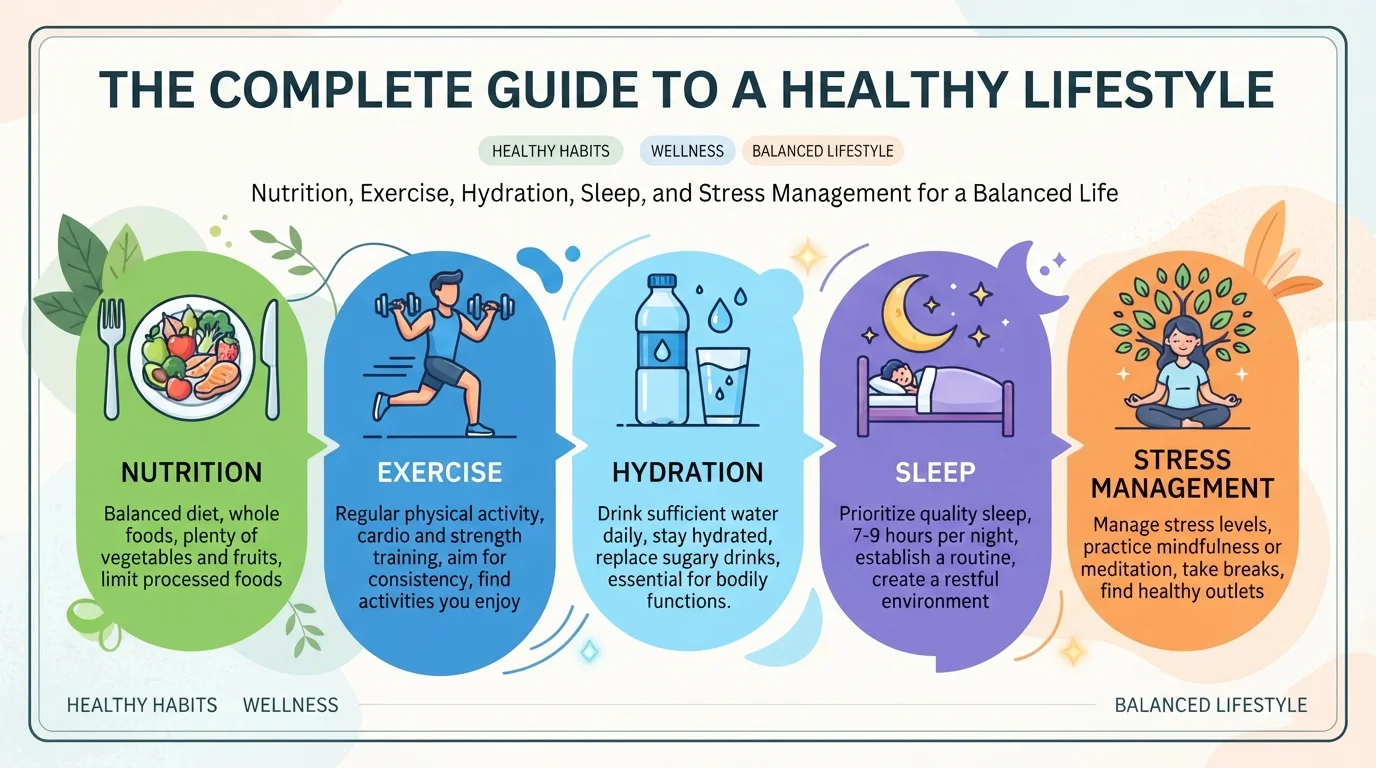
A healthy lifestyle is not about following a perfect diet, exercising every day without exception, or eliminating every food you enjoy. It is a long-term approach to taking care of your body and mind through practical, sustainable choices.
The most effective lifestyle changes are usually simple: eating a varied diet, moving regularly, drinking enough fluids, sleeping well, managing stress, maintaining supportive relationships, and creating routines that make healthy choices easier.
The challenge is turning individual recommendations into a lifestyle that works in real life.
This complete guide brings the major components of a balanced lifestyle together, including nutrition, exercise, hydration, sleep, stress management, daily habits, and practical strategies for maintaining progress over time.
read more about healthy home
What Is a Healthy Lifestyle?
More Than Diet and Exercise
When people hear the phrase healthy lifestyle, they often think immediately about food and workouts.
Those are important, but they are only part of the picture.
A person’s overall wellness can also be influenced by:
- Sleep quality.
- Hydration.
- Stress.
- Social relationships.
- Daily movement.
- Work-life balance.
- Mental well-being.
- Preventive healthcare.
- Alcohol and tobacco use.
- The ability to recover from physical and mental demands.
A healthy lifestyle is therefore better understood as a collection of interconnected behaviors rather than a single routine.
Health Does Not Require Perfection
One unhealthy meal does not ruin your diet.
One missed workout does not erase your progress.
One poor night’s sleep does not mean you have failed.
Sustainable health comes from what you do consistently over time.
Why Healthy Habits Matter
Small Decisions Accumulate
A single healthy choice may seem insignificant.
Drinking water instead of a sugary drink once is not transformative.
Walking for ten minutes once is not transformative.
Going to bed earlier one night is not transformative.
But repeating these behaviors regularly can create meaningful changes in your overall routine.
Habits Reduce Decision Fatigue
When healthy behaviors become automatic, you do not need to negotiate with yourself every day.
For example, if you always take a short walk after lunch, walking becomes part of your normal schedule rather than a decision you must repeatedly make.
The Five Foundations of a Healthy Lifestyle
Nutrition
Food provides energy and nutrients required for normal body function.
Exercise and Movement
Physical activity supports cardiovascular health, strength, mobility, and overall function.
Hydration
Fluids are essential for normal physiological processes.
Sleep
Sleep supports physical recovery, cognitive function, mood, and general health.
Stress Management
Chronic stress can affect both mental and physical well-being, making stress management an important part of wellness.
These foundations work together.
Poor sleep can make exercise harder.
Stress can influence eating habits.
Dehydration can affect how you feel during physical activity.
An unbalanced diet can make it harder to maintain energy.
Improving several areas gradually can therefore be more effective than obsessing over one area.
Nutrition and a Healthy Lifestyle
Focus on Overall Eating Patterns
Healthy nutrition is not about finding one magical food.
It is about the overall pattern of what you eat.
A balanced eating pattern generally includes a variety of:
- Vegetables.
- Fruits.
- Whole grains.
- Beans and other legumes.
- Nuts and seeds.
- Protein-rich foods.
- Dairy or suitable alternatives.
- Healthy sources of fats.
The exact proportions can vary according to individual needs, culture, preferences, and health circumstances.
Eat a Variety of Foods
Different foods provide different nutrients.
Eating a wide variety can help increase the range of vitamins, minerals, fiber, protein, and other beneficial compounds in your diet.
Instead of asking:
“What is the healthiest food?”
Ask:
“How can I make my overall diet more varied and balanced?”
Build Balanced Meals
Include a Protein Source
Protein contributes to tissue maintenance and supports many physiological functions.
Protein-rich foods can include:
- Eggs.
- Fish.
- Chicken.
- Lean meats.
- Beans.
- Lentils.
- Chickpeas.
- Yogurt.
- Milk.
- Cheese.
- Tofu.
- Nuts and seeds.
The appropriate amount varies between individuals.
Add Vegetables or Fruit
Vegetables and fruits provide fiber and a wide range of micronutrients.
Try to include different colors and varieties rather than relying on one type.
Choose Appropriate Carbohydrates
Carbohydrates are an important energy source.
Options can include:
- Oats.
- Whole-grain bread.
- Brown rice.
- Potatoes.
- Sweet potatoes.
- Whole-grain pasta.
- Fruits.
- Legumes.
Include Healthy Fats
Sources can include:
- Olive oil.
- Nuts.
- Seeds.
- Avocado.
- Fatty fish.
Fat is an essential component of a balanced diet, although the type and quantity matter.
read more about healthy daily habits
Fiber and Wellness
Why Fiber Matters
Fiber supports digestive health and can contribute to feelings of fullness.
Good sources include:
- Vegetables.
- Fruits.
- Whole grains.
- Beans.
- Lentils.
- Nuts.
- Seeds.
If your current diet is low in fiber, increasing it gradually while maintaining adequate fluid intake may be more comfortable for your digestive system.
Processed Foods
Processed Does Not Automatically Mean Unhealthy
Processing is a broad category.
Frozen vegetables, canned beans, pasteurized milk, and whole-grain bread are all processed in some way.
The more useful question is whether the food fits into your overall dietary pattern.
Limit Highly Processed Foods When Appropriate
Many highly processed foods can be high in:
- Added sugars.
- Sodium.
- Refined carbohydrates.
- Saturated fats.
They can still appear occasionally in a balanced lifestyle, but they should not necessarily dominate your diet.
Added Sugar
Pay Attention to Regular Sources
Added sugar can come from:
- Soft drinks.
- Sweetened coffee.
- Desserts.
- Candy.
- Sweetened cereals.
- Some sauces.
- Packaged snacks.
Reducing frequent consumption can be one practical nutrition improvement.
Do Not Fear Naturally Occurring Sugars
Fruit and milk contain naturally occurring sugars along with other nutrients.
The nutritional context matters.
Sodium and Healthy Eating
Read Labels
Packaged foods can contain significant amounts of sodium.
If you consume many processed foods, comparing labels can help you make more informed choices.
People with specific medical conditions may need individualized sodium recommendations from a healthcare professional.
Portion Awareness
Portion Size Is Individual
There is no universally correct plate size for everyone.
Energy requirements can differ based on:
- Age.
- Body size.
- Activity level.
- Sex.
- Pregnancy.
- Health status.
- Personal goals.
Instead of following rigid portions, learn to recognize hunger, fullness, and the nutritional composition of meals.
Mindful Eating
Slow Down
Eating quickly can make it harder to notice fullness.
Try to:
- Eat without rushing.
- Reduce distractions.
- Notice flavors and textures.
- Pause during meals.
- Pay attention to hunger and fullness.
Avoid Moralizing Food
Calling foods “good” or “bad” can create an unnecessarily restrictive relationship with eating.
A balanced lifestyle can include foods chosen for enjoyment as well as foods chosen for nutrition.
Exercise and Physical Activity
Movement Is a Foundation of Wellness
Regular physical activity supports many aspects of health.
It can help improve:
- Cardiovascular fitness.
- Muscular strength.
- Mobility.
- Physical function.
- Mood.
- Sleep quality.
You do not need to become an athlete to benefit.
Start With Your Current Ability
If you currently do very little physical activity, beginning with manageable movement is often more realistic than immediately following an intense training plan.
Examples include:
- Walking.
- Gentle cycling.
- Swimming.
- Mobility exercises.
- Beginner strength training.
Aerobic Activity
What Counts as Aerobic Exercise?
Aerobic activities increase breathing and heart rate.
Examples include:
- Brisk walking.
- Jogging.
- Cycling.
- Swimming.
- Dancing.
- Hiking.
The appropriate intensity depends on your fitness level.
Make Cardio Enjoyable
The best activity is often one you will actually continue.
If you dislike running, you do not need to force yourself to become a runner.
Walking, dancing, cycling, swimming, or another activity may be more sustainable.
Strength Training
Why Strength Matters
Strength training helps maintain and develop muscle function.
It can involve:
- Bodyweight exercises.
- Resistance bands.
- Free weights.
- Machines.
- Functional movements.
Beginners Should Focus on Technique
Learning correct movement patterns is more important than lifting heavy weights immediately.
Start with manageable resistance and gradually progress.
Flexibility and Mobility
Movement Quality Matters
Mobility work can help you move comfortably through different ranges of motion.
Examples include:
- Gentle stretching.
- Mobility drills.
- Yoga.
- Dynamic warm-ups.
Mobility work can complement strength and aerobic training.
Daily Movement Outside the Gym
Exercise Is Not the Only Movement That Matters
Your overall physical activity also includes everyday movement.
You can increase activity by:
- Walking during breaks.
- Taking stairs when appropriate.
- Doing household chores.
- Walking short errands.
- Standing periodically.
- Playing active games.
These small choices can contribute to an active lifestyle.
Creating an Exercise Routine
Start With Three Questions
Ask:
- What activity do I enjoy?
- What fits my schedule?
- What can I realistically maintain?
The ideal routine is one that can survive busy weeks.
Do Not Start Too Aggressively
A common mistake is beginning with an extremely demanding routine.
This can lead to:
- Excessive soreness.
- Fatigue.
- Frustration.
- Loss of motivation.
Gradual progression is usually more sustainable.
Hydration and a Healthy Lifestyle
Why Hydration Matters
Water is essential for many bodily functions.
Fluid needs vary according to:
- Temperature.
- Physical activity.
- Body size.
- Diet.
- Pregnancy.
- Illness.
- Individual physiology.
There is no single amount that is perfect for every person.
Drink Regularly
Instead of waiting until you are extremely thirsty, make fluids part of your normal daily routine.
Useful habits include:
- Carrying a reusable bottle.
- Drinking with meals.
- Having water after exercise.
- Keeping water accessible at work.
Hydration During Exercise
Sweating Increases Fluid Needs
Exercise, particularly in hot environments, can increase fluid loss.
Long or intense exercise sessions may require more deliberate hydration planning.
For ordinary moderate activity, water is often sufficient.
For prolonged strenuous exercise or heavy sweating, individual needs can differ.
Signs You May Need More Fluids
Pay Attention to Your Body
Thirst is one signal.
Other factors such as urine color, sweating, heat exposure, and activity level can provide additional context.
Very dark urine, dizziness, unusual weakness, or other concerning symptoms should not simply be dismissed as dehydration.
Sleep and Wellness
Sleep Is Not Optional Recovery Time
Sleep plays an important role in:
- Cognitive function.
- Emotional regulation.
- Physical recovery.
- Immune function.
- Energy.
- General well-being.
Treating sleep as something to sacrifice whenever life becomes busy can undermine other healthy habits.
How Much Sleep Do You Need?
Needs Vary by Age
Sleep requirements differ across the lifespan.
Adults generally need a substantial amount of sleep each night, while children and teenagers typically need more.
Individual needs also vary.
Instead of focusing only on a number, consider whether you regularly wake feeling rested and function well during the day.
Build a Consistent Sleep Schedule
Keep Your Timing Reasonably Stable
Going to bed and waking at roughly similar times can help establish a predictable sleep routine.
This does not mean your schedule must be perfect.
Consistency simply makes sleep easier to prioritize.
Create a Better Sleep Environment
Make the Bedroom Sleep-Friendly
Consider:
- Comfortable temperature.
- Reduced noise.
- Darkness.
- Comfortable bedding.
- Limited unnecessary interruptions.
Reduce Stimulation Before Bed
Intense work, stressful conversations, or stimulating entertainment immediately before bed may make relaxation more difficult for some people.
A calmer pre-sleep routine can help.
Screens and Sleep
Create a Personal Boundary
Phones, tablets, and computers can make it tempting to remain active late at night.
Consider setting a technology cutoff before bedtime.
The goal is not necessarily to eliminate screens completely but to prevent them from consistently delaying sleep.
Caffeine and Sleep
Timing Matters
Caffeine can remain active in the body for several hours.
If caffeine affects your sleep, consider reducing intake later in the day.
Individual sensitivity varies.
Stress Management
Stress Is Part of Life
A healthy lifestyle does not mean eliminating stress completely.
Work, relationships, financial responsibilities, and unexpected events can all create pressure.
The goal is to develop healthier ways to respond to stress.
Why Chronic Stress Matters
Long-term stress can affect:
- Sleep.
- Mood.
- Appetite.
- Concentration.
- Energy.
- Daily behavior.
Stress management should therefore be treated as part of overall wellness rather than an optional extra.
read more about effects of soft drinks
Recognize Your Stress Signals
Everyone Responds Differently
You may notice:
- Irritability.
- Headaches.
- Muscle tension.
- Difficulty sleeping.
- Racing thoughts.
- Changes in appetite.
- Difficulty concentrating.
- Feeling overwhelmed.
Recognizing your personal signals can help you intervene earlier.
Simple Stress Management Techniques
Deep Breathing
Slow, controlled breathing can be a simple way to create a short pause during stressful moments.
Walking
A short walk can provide physical movement and a mental break.
Journaling
Writing down thoughts can help some people organize worries and identify practical next steps.
Social Connection
Talking to someone you trust can reduce the sense of handling everything alone.
Mindfulness
Focus on the Present
Mindfulness practices encourage attention to the present moment without immediately reacting to every thought.
Simple practices can include:
- Focusing on breathing.
- Paying attention while walking.
- Eating without distractions.
- Brief meditation.
You do not need a long meditation session to begin.
Mental Wellness and Healthy Habits
Emotional Health Is Part of Health
A healthy lifestyle should include your mental and emotional well-being.
Healthy habits may include:
- Setting boundaries.
- Maintaining supportive relationships.
- Taking breaks.
- Pursuing enjoyable activities.
- Asking for help when necessary.
Professional Support Is Sometimes Appropriate
If stress, anxiety, low mood, sleep problems, or other concerns are persistent or interfere significantly with daily life, professional support may be appropriate.
Lifestyle habits can support well-being, but they are not substitutes for professional care when it is needed.
Work-Life Balance
Constant Productivity Is Not the Goal
A balanced lifestyle requires time for recovery.
Working continuously without meaningful breaks can increase stress and eventually reduce productivity.
Schedule Recovery
Rest does not need to be accidental.
You can deliberately protect time for:
- Sleep.
- Exercise.
- Family.
- Hobbies.
- Social activities.
- Quiet time.
Healthy Habits for Busy People
Prepare Ahead
Preparation reduces the effort required to make healthy choices.
Examples include:
- Preparing meals in advance.
- Keeping healthy snacks available.
- Scheduling workouts.
- Preparing clothes the night before.
- Setting a consistent bedtime.
Make Healthy Choices Convenient
If fruit is visible and easily accessible, you may be more likely to eat it.
If exercise equipment is ready, starting a workout may require less effort.
Environment matters.
Meal Planning
Planning Reduces Impulsive Decisions
A basic weekly meal plan can help you:
- Shop efficiently.
- Reduce unnecessary takeout.
- Maintain variety.
- Save time.
The plan does not need to be complicated.
Keep Flexible Options
Life does not always follow the schedule.
Include quick alternatives for busy days rather than creating a rigid plan that collapses after one unexpected event.
Grocery Shopping for a Balanced Lifestyle
Build Your Shopping List Around Food Groups
A practical list might include:
Vegetables: fresh, frozen, or canned varieties.
Fruit: fresh or frozen.
Protein: eggs, poultry, fish, legumes, yogurt, tofu, or other options.
Whole grains: oats, rice, whole-grain bread, or similar foods.
Healthy fats: nuts, seeds, olive oil, avocado.
Do Not Ignore Convenience
Frozen vegetables and canned beans can make healthy eating easier.
A balanced lifestyle does not require everything to be cooked from scratch.
Healthy Eating on a Budget
Buy Seasonal Foods
Seasonal produce can sometimes be less expensive.
Use Legumes
Beans and lentils can provide affordable sources of protein and fiber.
Cook Larger Portions
Preparing larger quantities can reduce the cost and effort of future meals.
Reduce Food Waste
Plan meals around foods you already have.
Healthy Lifestyle and Social Life
Health Does Not Require Isolation
Eating out, attending celebrations, and spending time with friends can be part of a balanced lifestyle.
You do not need to avoid social situations to maintain healthy habits.
Use Flexible Choices
You can enjoy special occasions while maintaining your normal routine most of the time.
Alcohol and a Healthy Lifestyle
Moderation and Individual Risk Matter
Alcohol can affect health in several ways.
People who drink should understand that lower consumption generally means lower alcohol-related risk, while some individuals should avoid alcohol entirely.
People taking certain medications, pregnant individuals, and those with certain medical or addiction-related concerns may need complete avoidance.
Tobacco and Wellness
Avoiding Tobacco Is a Major Health Priority
Smoking and other tobacco use can seriously affect health.
If you use tobacco and want to quit, professional cessation support can significantly improve your chances of success.
Preventive Healthcare
Lifestyle Is Not the Whole Health Picture
Even people with excellent habits need appropriate preventive care.
Depending on age, sex, family history, and personal risk, this may include:
- Routine medical checkups.
- Dental care.
- Vision care.
- Vaccinations.
- Recommended screening tests.
Know Your Family History
Family history can influence certain health risks.
Discuss relevant family history with healthcare professionals so that preventive recommendations can be personalized.
Healthy Lifestyle for Different Ages
Young Adults
Young adults can benefit from establishing strong habits early.
Focus on:
- Regular movement.
- Balanced nutrition.
- Adequate sleep.
- Stress management.
- Avoiding tobacco.
- Developing sustainable routines.
Middle Adulthood
As responsibilities increase, time management becomes especially important.
Prioritize:
- Strength.
- Cardiovascular activity.
- Healthy eating.
- Sleep.
- Stress management.
- Preventive healthcare.
Older Adults
Older adults may benefit particularly from:
- Strength training.
- Balance exercises.
- Mobility.
- Adequate nutrition.
- Social connection.
- Regular healthcare.
Individual needs should be discussed with healthcare professionals.
Healthy Lifestyle for Families
Create Shared Habits
Families can make wellness easier by doing things together.
Examples include:
- Family walks.
- Shared meals.
- Outdoor activities.
- Cooking together.
- Consistent bedtime routines for children.
Avoid Turning Health Into Punishment
Children should not be taught that food or exercise is a punishment.
Instead, focus on nourishment, strength, enjoyment, and healthy routines.
Healthy Lifestyle at Work
Move During the Day
If your job involves sitting for long periods, add short movement breaks.
You can:
- Walk during phone calls.
- Stretch between tasks.
- Stand periodically.
- Walk during breaks.
Keep Healthy Options Nearby
Having nutritious snacks available can reduce dependence on vending machines or fast food.
Healthy Travel Habits
Maintain the Basics
Travel disrupts routines, but you do not need perfection.
Try to maintain:
- Hydration.
- Reasonable movement.
- Sleep whenever possible.
- Balanced meals.
- Stress management.
Walk When Practical
Walking can help you stay active while exploring a destination.
How to Create a Sustainable Healthy Lifestyle
Start With One or Two Changes
Trying to change everything simultaneously can become overwhelming.
Instead:
Month One: improve breakfast and daily walking.
Month Two: establish a consistent sleep schedule.
Month Three: add structured strength training.
The exact sequence can vary.
Use Habit Stacking
Attach a new behavior to an existing habit.
For example:
After brushing your teeth, spend five minutes stretching.
After lunch, take a short walk.
After preparing dinner, fill your water bottle for the evening.
Track Progress Without Obsessing
Use Simple Measurements
You can track:
- Workout sessions.
- Sleep consistency.
- Water intake if useful.
- Fruit and vegetable intake.
- Daily steps.
- Mood.
- Energy.
Tracking should help you understand patterns, not create unnecessary anxiety.
read more about dry skin in summer
What to Do When You Lose Motivation
Motivation Is Unreliable
Motivation changes.
A sustainable lifestyle depends more on systems and routines than on feeling motivated every morning.
Make the Minimum Easier
On difficult days, reduce the goal.
Instead of skipping movement entirely, take a ten-minute walk.
Instead of abandoning your eating plan, make one balanced meal.
Small actions preserve the habit.
Dealing With Setbacks
Expect Imperfect Weeks
You may:
- Travel.
- Get sick.
- Work overtime.
- Attend celebrations.
- Miss workouts.
- Eat differently than planned.
This is normal.
Return to Your Routine Quickly
The most important question is not:
“Why did I fail?”
It is:
“What is the next healthy action I can take?”
Avoid Extreme Diets
Extreme Restriction Is Often Difficult to Sustain
Very restrictive diets may create a cycle of:
Restriction → cravings → overeating → guilt → renewed restriction.
A balanced approach is generally easier to maintain.
Focus on Long-Term Behavior
Your goal should be a way of eating that you can realistically maintain.
Healthy Lifestyle and Weight Management
Weight Is Only One Health Measure
Body weight can provide information, but it does not capture every aspect of health.
Other factors include:
- Fitness.
- Strength.
- Blood pressure.
- Blood glucose.
- Sleep.
- Nutrition.
- Mental well-being.
Avoid Unrealistic Promises
Be cautious of programs promising dramatic results in very short periods.
Healthy lifestyle changes are generally gradual.
Exercise Recovery
Rest Is Part of Training
Your body needs time to recover.
Recovery can involve:
- Sleep.
- Rest days.
- Adequate nutrition.
- Hydration.
- Appropriate training progression.
Listen to Persistent Pain
Normal exercise discomfort can occur, but persistent or severe pain should not simply be ignored.
Seek appropriate medical or professional advice when needed.
Healthy Lifestyle and Sleep Recovery
Exercise and Sleep Work Together
Regular physical activity can support sleep for many people.
At the same time, insufficient sleep can make exercise feel more difficult.
This illustrates why wellness should be viewed as a system rather than separate categories.
Building a Morning Routine
Keep It Simple
A useful morning routine might include:
- Wake at a consistent time.
- Drink fluids.
- Eat a balanced breakfast if desired.
- Get some natural light.
- Move your body.
- Plan the day’s priorities.
You do not need a complicated two-hour routine.
Building an Evening Routine
Prepare for Tomorrow
An evening routine can include:
- Finishing work.
- Preparing clothes.
- Planning meals.
- Reducing stimulation.
- Light stretching.
- Reading.
- Going to bed at a consistent time.
This can make mornings easier and support better sleep.
The Role of Natural Light
Light Helps Regulate Daily Rhythms
Exposure to natural light, especially earlier in the day, can support a consistent sleep-wake rhythm.
Spending some time outdoors can therefore serve multiple purposes:
- Light exposure.
- Movement.
- Stress reduction.
- Fresh air.
Healthy Habits for Better Energy
Energy Is Influenced by Multiple Factors
Low energy can be related to:
- Poor sleep.
- Inadequate nutrition.
- Dehydration.
- Inactivity.
- Stress.
- Illness.
- Other medical issues.
Instead of relying entirely on caffeine or energy products, examine the underlying routine.
Caffeine and a Balanced Lifestyle
Caffeine Can Be Useful
Coffee and tea can fit into a healthy lifestyle for many people.
However, excessive caffeine may contribute to:
- Sleep problems.
- Nervousness.
- Palpitations.
- Digestive discomfort.
Individual tolerance differs.
Building a Wellness Mindset
Think Long Term
A healthy lifestyle is not a temporary challenge.
It is the process of developing habits that support your future health.
Replace “All or Nothing” Thinking
Instead of:
“I ate dessert, so the day is ruined.”
Think:
“I enjoyed dessert. My next meal can still be balanced.”
Instead of:
“I missed my workout, so I failed.”
Think:
“I missed today. I can move tomorrow.”
This mindset makes consistency more achievable.
How Nutrition, Exercise, Hydration, Sleep, and Stress Connect
Nutrition Supports Activity
Balanced meals provide energy and nutrients needed for physical activity and recovery.
Hydration Supports Normal Function
Adequate fluids help the body function normally, particularly when fluid losses increase.
Sleep Supports Recovery
Rest allows the body and mind to recover from daily demands.
Stress Influences Everything
High stress can disrupt sleep, appetite, motivation, and exercise habits.
The System Is More Important Than One Habit
Improving one area can make improvements in another area easier.
For example:
Better sleep → more energy → more movement → improved mood → easier healthy eating.
This is one reason a balanced lifestyle should be approached holistically.
A Practical Weekly Healthy Lifestyle Plan
Monday
Focus on balanced meals, hydration, and a short walk.
Tuesday
Add a strength session and prioritize sleep.
Wednesday
Take a lighter movement day and focus on stress management.
Thursday
Repeat strength training and prepare healthy meals.
Friday
Include enjoyable physical activity and social connection.
Saturday
Do something active outdoors.
Sunday
Rest, review the week, and prepare for the next one.
The schedule can be changed completely according to individual circumstances.
A Simple Healthy Lifestyle Checklist
Daily
Ask yourself:
- Did I eat a variety of nutritious foods?
- Did I drink enough fluids for my needs?
- Did I move my body?
- Did I give myself opportunities to rest?
- Did I manage stress in a healthy way?
- Did I get enough sleep or create the conditions for it?
Weekly
Ask:
- Was my activity consistent?
- Did I eat a varied diet?
- Did I have time for relationships?
- Did I recover adequately?
- What habit should I improve next week?
Common Healthy Lifestyle Mistakes
Trying to Change Everything at Once
Too many goals can become overwhelming.
Choosing Unsustainable Diets
Extreme restriction often creates unnecessary difficulty.
Ignoring Sleep
Exercise and nutrition cannot completely compensate for chronically poor sleep.
Treating Hydration as an Afterthought
Fluid intake matters throughout the day, particularly in hot environments or during exercise.
Using Exercise as Punishment
Exercise should support health and function rather than become a punishment for eating.
Comparing Yourself to Others
Different bodies and circumstances require different approaches.
When to Seek Professional Advice
Individual Needs Can Be Complex
General healthy lifestyle guidance cannot account for every medical condition, medication, pregnancy, eating disorder, injury, or nutritional requirement.
Consult an appropriate healthcare professional if you need individualized recommendations.
Warning Signs Should Not Be Ignored
Persistent symptoms, unexplained changes in health, severe fatigue, significant pain, or other concerning changes deserve appropriate medical evaluation rather than being treated solely with lifestyle changes.
read more about benefits of drinking water
A genuinely sustainable healthy lifestyle does not require perfection.
It requires consistency.
Nutrition provides the foundation for nourishing the body. Regular physical activity supports strength, cardiovascular health, mobility, and function. Hydration helps maintain normal physiological processes. Sleep provides essential recovery. Stress management protects the balance between daily demands and your ability to recover.
These areas are interconnected.
A person who eats well but never sleeps may still struggle with energy.
Someone who exercises regularly but constantly relies on highly unbalanced meals may miss important nutritional needs.
Someone who has an excellent workout plan but experiences overwhelming stress may struggle to maintain it.
That is why wellness works best as a complete system.
Start small. Build practical healthy habits. Make your environment support your goals. Choose activities you enjoy. Eat a varied diet rather than chasing perfection. Drink regularly according to your needs. Protect your sleep. Give stress the attention it deserves. Make room for relationships, recovery, and enjoyment.
Most importantly, remember that a balanced lifestyle should fit your real life.
You do not need to follow an unrealistic routine designed for someone else. You need a set of behaviors that you can maintain through ordinary days, busy weeks, vacations, celebrations, and difficult periods.
The goal is not to create a perfect life.
The goal is to create a healthier life that you can actually live.
When small positive choices become part of your normal routine, they stop feeling like temporary health goals and become a natural part of everyday life.