

Blog
Can Chronic Dehydration Affect Your Health?

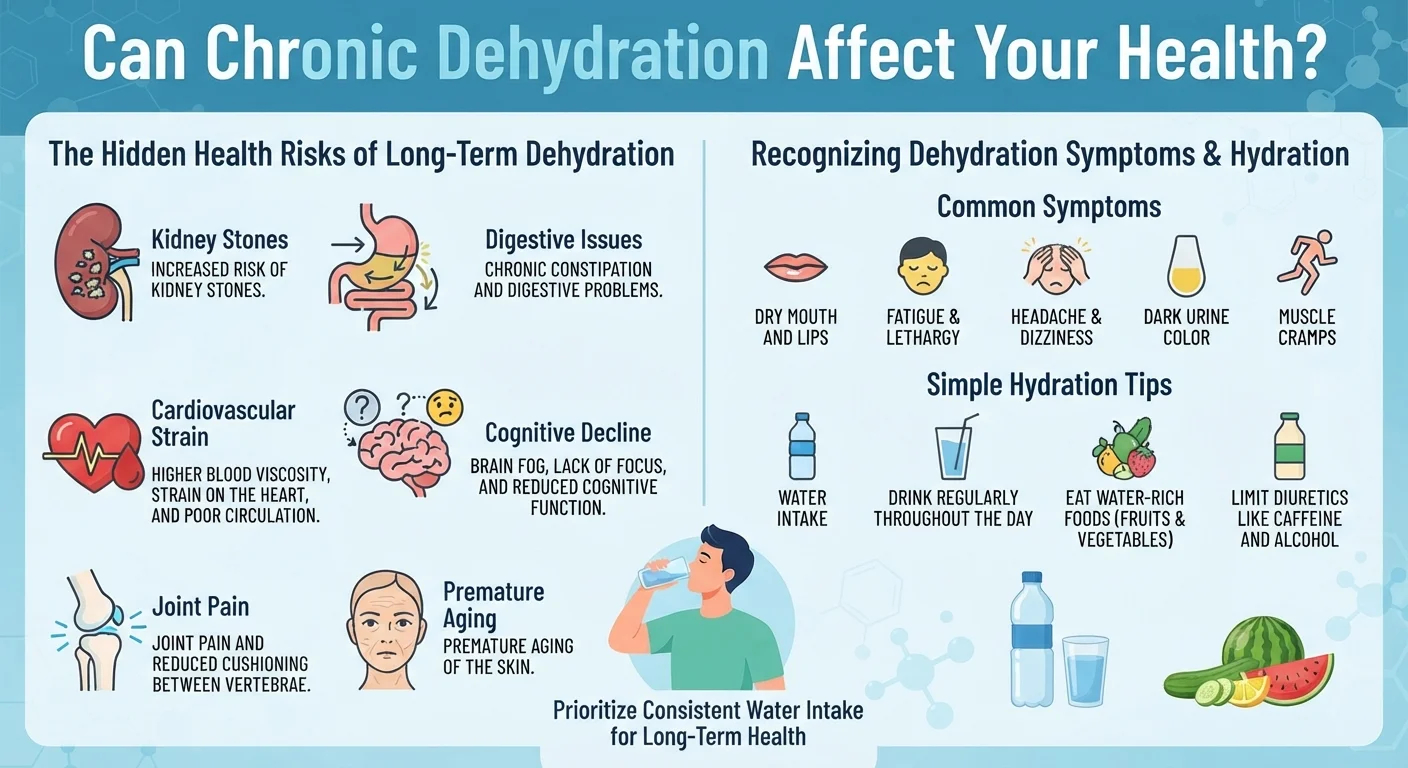
Water is so fundamental to human health that it is easy to overlook. Most people think about hydration only when they feel thirsty after exercise, spend a long day in hot weather, or become sick with vomiting or diarrhea. But hydration is not simply something to worry about during extreme situations.
Your body continuously loses water through urine, sweat, breathing, and other normal processes. It must constantly replace those losses to maintain its internal balance. Water supports circulation, temperature regulation, digestion, kidney function, and numerous cellular processes. The National Academies describes water as essential for cellular homeostasis, transport of nutrients and waste, and maintenance of vascular volume.
This raises an important question: Can chronic dehydration affect your health?
The answer requires some nuance.
“Chronic dehydration” is often used informally to describe regularly failing to replace enough fluid over time. It should not be treated as a precise diagnosis by itself. A person can experience repeated mild dehydration, periods of inadequate fluid intake, or recurring fluid losses without necessarily having a continuously severe state of dehydration.
Nevertheless, consistently inadequate hydration can become a health concern, particularly when combined with heat, physical activity, illness, vomiting, diarrhea, certain medications, or medical conditions that increase fluid loss. Dehydration can affect the urinary system and contribute to kidney stone risk, while more severe dehydration can cause dangerous disturbances in circulation and electrolytes.
The problem is that the early signs can be easy to dismiss.
You might experience:
- Thirst
- Darker urine
- Fatigue
- Headache
- Dizziness
- Dry mouth
- Reduced urination
- Difficulty concentrating
- Feeling unusually tired
A busy person may blame these symptoms on poor sleep, stress, work, caffeine, or a demanding schedule without considering hydration.
This comprehensive guide explains chronic dehydration, common dehydration symptoms, the relationship between hydration and health, how to think about daily water intake, the potential long-term risks of repeatedly inadequate fluid intake, who is most vulnerable, and how to develop healthier hydration habits.
It also explains why drinking excessive amounts of water is not the answer. Hydration is about maintaining an appropriate fluid balance—not simply consuming as much water as possible.
read more about healthy daily habits
What Is Chronic Dehydration?
Understanding Dehydration
Dehydration occurs when the body loses or uses more fluid than it takes in, leaving insufficient water and other fluids for normal physiological functions.
This can happen because of:
- Not drinking enough
- Excessive sweating
- Vomiting
- Diarrhea
- Fever
- Frequent urination
- Certain medications
- Prolonged heat exposure
- Intense exercise
In some situations, dehydration develops quickly.
In others, inadequate fluid intake may occur repeatedly over days or longer periods.
Is Chronic Dehydration a Formal Medical Diagnosis?
The phrase “chronic dehydration” is commonly used online and in everyday health discussions, but it does not necessarily describe one clearly defined medical condition.
It is more useful to think about it as a pattern of repeated or persistent inadequate hydration.
For example, someone might regularly drink very little during the workday, experience mild dehydration symptoms, compensate occasionally in the evening, and repeat the same pattern the next day.
That pattern does not necessarily mean the person is severely dehydrated all the time.
However, repeatedly failing to replace fluid losses can become problematic, especially when additional factors increase the body’s fluid requirements.
Why Does the Body Need Water?
Water Is Essential for Cellular Function
Water is involved in countless processes throughout the body.
Cells need an appropriate fluid environment to function properly. Water also acts as a medium for biochemical reactions and helps transport substances throughout the body.
This is why hydration is not merely about avoiding thirst.
It is about maintaining physiological balance.
Water Supports Blood Volume
The circulatory system depends on adequate fluid availability.
When significant dehydration occurs, blood volume can fall. Severe dehydration can eventually contribute to low blood pressure and reduced oxygen delivery to tissues. In extreme cases, this can progress to hypovolemic shock, which is a medical emergency.
Water Helps Regulate Temperature
Your body produces heat continuously.
During exercise or hot weather, sweating helps dissipate that heat. But sweating also causes fluid loss.
If those losses are not replaced, the risk of heat-related illness increases.
This is particularly important when exercising intensely or spending extended periods in hot and humid conditions.
What Are the Common Dehydration Symptoms?
Thirst
Thirst is one of the most recognizable dehydration symptoms.
However, thirst is not always a perfect early warning signal.
Some people, particularly older adults, may have a reduced sensation of thirst and may not recognize their need for fluids until dehydration is already developing.
Darker Urine
Urine color can provide a useful general clue.
Pale-yellow urine is commonly associated with adequate hydration, while darker urine can indicate that more fluid may be needed. However, urine color can also be affected by foods, supplements, medications, and medical conditions, so it should not be treated as a diagnostic test by itself.
Reduced Urination
If you are drinking too little or losing substantial fluid, your body attempts to conserve water.
One consequence can be producing less urine.
A noticeable reduction in urination, particularly when accompanied by other symptoms, deserves attention.
read more about effects of soft drinks
Dry Mouth
A dry mouth can occur when fluid levels are insufficient.
However, dry mouth can also result from:
- Medications
- Mouth breathing
- Anxiety
- Certain medical conditions
- Salivary gland problems
Therefore, dry mouth alone does not prove dehydration.
Fatigue
Feeling unusually tired can occur with dehydration.
When fluid balance is disrupted, normal physiological functions can become more difficult to maintain.
But fatigue has many possible causes, including:
- Sleep deprivation
- Anemia
- Stress
- Infection
- Nutritional deficiencies
- Medication effects
- Hormonal disorders
Persistent fatigue should not automatically be attributed to hydration.
Dizziness
Dizziness can occur with dehydration, particularly when fluid loss contributes to reduced blood volume or blood pressure.
If dizziness is frequent, severe, or associated with fainting, chest symptoms, neurological symptoms, or other concerning signs, medical evaluation is important.
Headache
Some people experience headaches when they become dehydrated.
However, headaches have many causes, so drinking water should not be considered a universal treatment for every headache.
Mild Dehydration vs Severe Dehydration
Mild Dehydration
Mild dehydration may present with relatively subtle symptoms such as:
- Thirst
- Dry mouth
- Darker urine
- Mild fatigue
- Headache
- Reduced urination
The symptoms can be easy to overlook.
More Significant Dehydration
As dehydration becomes more severe, symptoms can become more concerning.
These may include:
- Marked weakness
- Significant dizziness
- Confusion
- Very low urine output
- Rapid heartbeat
- Low blood pressure
- Severe lethargy
Severe dehydration requires prompt medical attention. Mayo Clinic notes that severe dehydration should be treated immediately, potentially with intravenous fluids in a medical setting.
Why Repeated Mild Dehydration Can Be Easy to Miss
The Body Tries to Compensate
The human body has sophisticated mechanisms for maintaining fluid balance.
When fluid intake falls, the body can reduce water loss and concentrate urine.
This compensation can make someone feel relatively normal despite regularly consuming less fluid than their body requires under particular circumstances.
Symptoms Can Be Attributed to Other Causes
A person who feels tired at 4 p.m. may think:
“I need coffee.”
Someone with a headache may think:
“I didn’t sleep enough.”
Someone who feels dizzy may think:
“I stood up too quickly.”
Sometimes those explanations are correct.
But inadequate hydration can also contribute.
The important lesson is not to blame every symptom on dehydration. Instead, consider hydration as one part of the broader health picture.
The Hidden Health Risks of Long-Term Inadequate Hydration
Kidney Stone Risk
One of the clearest connections between inadequate fluid intake and urinary health involves kidney stones.
Kidney stones form when certain substances become concentrated enough in urine to form crystals. Drinking enough fluid helps dilute urine and can reduce the concentration of minerals that contribute to stone formation.
People who do not drink enough liquid are more likely to develop kidney stones, and adequate fluid intake is an important preventive strategy for many stone types.
This does not mean every person who drinks little water will develop kidney stones.
Kidney stone risk also depends on:
- Genetics
- Diet
- Sodium intake
- Body weight
- Medical conditions
- Previous stone history
- Certain medications
- Type of stone
Hydration is one important factor among many.
Urinary Tract Problems
Adequate hydration supports normal urinary function.
The urinary system removes waste and excess fluid through urine. The kidneys filter blood, while urine travels through the ureters to the bladder and exits through the urethra.
Insufficient fluid intake can lead to more concentrated urine.
For some people, this can contribute to urinary discomfort and may be relevant to urinary health, particularly when combined with other risk factors.
Kidney Stress During Significant Dehydration
The kidneys play a central role in maintaining fluid and electrolyte balance.
When dehydration becomes significant, kidney function can be affected.
Repeated or prolonged dehydration can be particularly concerning for people who already have kidney problems.
This is one reason people with kidney disease should not simply follow generic online hydration advice without discussing fluid requirements with their healthcare professional.
Heat-Related Illness
Inadequate hydration becomes especially dangerous in hot environments.
Sweating is one of the body’s primary cooling mechanisms.
If someone continues exercising or working in heat while losing fluid without adequate replacement, they may progress from mild dehydration toward heat exhaustion or potentially life-threatening heatstroke.
Electrolyte Imbalances
Hydration is not simply about water.
Body fluids also contain electrolytes such as:
- Sodium
- Potassium
- Chloride
These substances are important for nerve signaling, muscle function, and fluid balance.
Severe dehydration or inappropriate fluid replacement can disrupt electrolyte levels.
That is one reason extreme situations such as prolonged vomiting, severe diarrhea, or heavy sweating may require more than simply drinking plain water.
Hydration and Exercise
Why Exercise Increases Fluid Needs
Exercise increases heat production and often increases sweating.
The amount of fluid lost depends on:
- Exercise intensity
- Duration
- Temperature
- Humidity
- Clothing
- Individual sweat rate
Two people completing the same workout can lose very different amounts of fluid.
Don’t Wait Until the End of Exercise
If you know you will exercise for a long period, hydration should be considered before, during, and after activity.
The exact amount needed depends on the circumstances.
There is no universal water intake number that fits every athlete.
When Electrolytes May Matter
For prolonged or intense exercise with substantial sweating, electrolyte-containing beverages may sometimes be useful.
However, many ordinary workouts do not require specialized sports drinks.
For moderate everyday activity, water and normal meals are often sufficient for many healthy people.
Hydration During Hot Weather
Heat Changes the Equation
Someone who drinks enough during cool weather may need more fluids during a hot day.
Sweating increases fluid loss.
Humidity can also affect how efficiently sweat evaporates and therefore how effectively the body cools itself.
Outdoor Workers
People who work outdoors may have substantially higher hydration needs than someone sitting in an air-conditioned office.
Examples include:
- Construction workers
- Agricultural workers
- Delivery workers
- Outdoor maintenance workers
- Athletes
- Military personnel
These individuals need to consider fluid replacement as part of heat-safety planning.
How Much Water Should You Drink?
There Is No Universal Number for Everyone
One of the most common hydration questions is:
“How many liters of water should I drink every day?”
The problem is that human water requirements vary.
Needs can change based on:
- Body size
- Age
- Sex
- Activity
- Climate
- Diet
- Pregnancy
- Breastfeeding
- Illness
- Medication
- Kidney function
- Heart function
The National Academies emphasizes that water needs vary substantially according to physical activity and environmental conditions and that a single intake level cannot ensure optimal hydration for every healthy person under every condition.
Total Water Intake Is Not Just Plain Water
Water comes from:
- Drinking water
- Other beverages
- Fruits
- Vegetables
- Soups
- Other foods containing water
This matters when evaluating overall hydration.
General Guidance Is Not a Prescription
People often encounter rules such as “drink eight glasses a day.”
Such rules can be useful as simple reminders, but they should not be interpreted as a precise medical prescription for every person.
NIDDK provides general guidance for many healthy people but also emphasizes that fluid needs vary and that people with conditions such as kidney or heart failure may need individualized limits.
Can You Drink Too Much Water?
More Is Not Always Better
Hydration does not mean drinking enormous quantities of water.
Excessive water intake can dilute blood sodium and potentially cause a dangerous condition known as hyponatremia.
This is particularly relevant when someone consumes very large quantities of water rapidly or during endurance activities.
The goal is adequate hydration, not maximum water consumption.
Follow Medical Fluid Restrictions
People with:
- Heart failure
- Kidney failure
- Certain liver conditions
- Certain endocrine disorders
may have individualized fluid requirements.
Some may actually be advised to limit fluid intake.
This is why generic hydration challenges should not be followed blindly by people with significant medical conditions.
read more about dry skin in summer
Water vs Other Beverages
Water Is the Simplest Choice
Water is calorie-free and convenient.
For everyday hydration, it is often an excellent default beverage.
Milk and Other Drinks
Other beverages can contribute to total fluid intake.
However, the nutritional effects vary.
Some drinks contain:
- Added sugar
- Caffeine
- Alcohol
- Large amounts of calories
These factors matter when choosing beverages regularly.
Caffeine
Caffeinated beverages can contribute to fluid intake.
The idea that ordinary caffeinated drinks automatically cause severe dehydration is an oversimplification.
Still, caffeine may affect some people differently, and high consumption can cause other problems.
Alcohol
Alcohol should not be treated as a hydration strategy.
It can increase fluid losses and impair judgment, which can be particularly problematic in hot environments.
Hydrating Through Food
Water-Rich Foods
Hydration does not come exclusively from beverages.
Foods with high water content include:
- Watermelon
- Cucumber
- Strawberries
- Oranges
- Tomatoes
- Lettuce
- Soups
- Yogurt
These foods can contribute to overall fluid intake.
Why Food Matters
A diet rich in fruits and vegetables can provide both water and nutrients.
This makes hydration part of an overall healthy eating pattern rather than an isolated behavior.
How to Build Better Hydration Habits
Start the Day With a Drink
Some people find it easier to maintain hydration when they make drinking part of their morning routine.
The goal is not to force a huge amount of water immediately after waking.
Instead, establish a consistent habit.
Keep Water Accessible
People are more likely to drink when water is easy to reach.
Keep a reusable bottle:
- At your desk
- In your bag
- In the car
- Near your exercise equipment
Drink With Meals
Having water with meals can make hydration easier to remember.
Use Reminders
If you regularly forget to drink while working, phone reminders can help.
The purpose is to develop awareness rather than obsessively track every sip.
Adjust for Heat and Exercise
Do not use the same hydration strategy every day regardless of circumstances.
Hot weather and physical activity can increase fluid losses.
Signs You May Need to Pay More Attention to Hydration
You Rarely Drink During the Day
If several hours regularly pass without consuming fluids, your hydration habits may need attention.
Your Urine Is Consistently Dark
Persistently dark urine can be a clue that you are not consuming enough fluid, although other causes are possible.
You Frequently Feel Thirsty
Regular thirst can indicate that your intake is not keeping up with your needs.
You Exercise and Don’t Replace Fluid Losses
If you sweat heavily and finish workouts without replacing lost fluid, dehydration can develop.
You Work in Heat
Heat exposure increases the importance of hydration.
People at Higher Risk of Dehydration
Older Adults
Older adults may be particularly vulnerable because thirst sensation can decrease with age and because certain illnesses or medications may increase fluid losses.
Infants and Young Children
Children can become dehydrated quickly, particularly with:
- Vomiting
- Diarrhea
- Fever
Signs can be different from those seen in adults.
People With Vomiting or Diarrhea
These conditions can cause rapid fluid and electrolyte losses.
Severe diarrhea can produce substantial fluid loss in a relatively short period.
People Who Exercise in Heat
High sweat losses combined with inadequate replacement increase dehydration risk.
People Taking Certain Medications
Some medications, including diuretics, can increase urine production.
Anyone taking medication that affects fluid balance should follow their healthcare professional’s guidance rather than changing medication or fluid intake independently.
Dehydration and Illness
Fever
Fever can increase fluid requirements.
Sweating and faster breathing can contribute to additional losses.
Vomiting
Vomiting directly removes fluid and electrolytes.
If someone cannot keep fluids down, simply telling them to “drink more water” may not be enough.
Diarrhea
Diarrhea can cause rapid fluid and electrolyte losses.
Oral rehydration solutions may be appropriate in certain situations because they provide water and electrolytes in carefully balanced proportions.
When Should You Seek Medical Attention?
Severe Symptoms
Urgent medical attention may be necessary for signs of severe dehydration such as:
- Confusion
- Severe weakness
- Very little or no urination
- Fainting
- Significant deterioration
- Inability to keep fluids down
Mayo Clinic advises immediate medical treatment for severe dehydration.
Persistent Vomiting or Diarrhea
If vomiting or diarrhea prevents adequate fluid replacement, medical advice may be needed.
Blood in Stool or Severe Symptoms
Blood in stool, severe abdominal symptoms, or prolonged diarrhea should not simply be treated as a hydration issue.
Children and Older Adults
Lower thresholds for medical assessment may be appropriate because these groups can become seriously dehydrated more quickly.
How Dehydration Is Evaluated
Medical History
A healthcare professional may ask:
- How much are you drinking?
- How often are you urinating?
- Have you been vomiting?
- Do you have diarrhea?
- Have you been exercising?
- Have you been exposed to heat?
- What medications do you take?
- Do you have kidney or heart problems?
read more about benefits of drinking water
Physical Examination
Signs such as:
- Blood pressure changes
- Heart rate
- Dryness
- General appearance
can help evaluate dehydration.
Blood Tests
Blood tests may evaluate:
- Electrolytes
- Kidney function
These can help determine severity and identify complications.
Urine Testing
Urinalysis can provide information about hydration status and may also help identify urinary problems.
Why Hydration Advice Should Be Individualized
Body Size Matters
A small person and a large person may have different fluid needs.
Activity Matters
An inactive office worker and a marathon runner cannot use the same hydration strategy.
Climate Matters
Someone living in a hot environment may lose more fluid through sweating.
Health Conditions Matter
Kidney and heart conditions can significantly alter fluid recommendations.
Diet Matters
Foods and beverages contribute to total water intake.
Chronic Dehydration and Daily Performance
Energy and Alertness
Even mild dehydration may coincide with feelings of fatigue or reduced well-being.
But hydration should not be presented as a miracle solution for poor energy.
If you are chronically exhausted despite adequate hydration, other causes should be investigated.
Concentration
Fluid balance can affect normal physiological function.
If you notice that you regularly struggle with concentration while working in a hot environment or after long periods without drinking, hydration may be one factor worth addressing.
Exercise Performance
Fluid losses during exercise can affect performance, especially when they become substantial.
This is one reason athletes take hydration seriously.
Common Myths About Hydration
Myth: Everyone Needs Exactly Eight Glasses of Water
There is no single number that applies perfectly to every person.
Total water requirements vary significantly.
Myth: Clear Urine Is Always Better
Extremely clear urine does not necessarily mean you have achieved some ideal state.
Overhydration is possible.
A pale-yellow color is generally a more useful practical target for many people than attempting to make urine completely clear.
Myth: Thirst Always Comes Too Late
Thirst is an important physiological signal, although it may be less reliable in certain populations and circumstances.
Myth: Coffee Never Counts Toward Hydration
Ordinary caffeinated beverages contribute fluid.
However, that does not make high-caffeine or sugar-heavy beverages the best everyday hydration choice.
Myth: More Water Always Means Better Health
Excessive water intake can be harmful.
Hydration should be balanced.
Creating a Sustainable Hydration Routine
Morning
Start your day normally with fluids rather than attempting to compensate for the entire day’s needs at once.
During Work
Keep water accessible.
Take regular opportunities to drink.
With Meals
Use meals as natural hydration reminders.
During Exercise
Increase fluid replacement according to activity and environmental conditions.
Before Bed
Avoid forcing large quantities immediately before sleeping if doing so causes frequent nighttime urination.
The goal is consistency throughout the day.
A Practical Hydration Checklist
Every Day
Ask yourself:
- Have I had fluids regularly today?
- Is my urine usually pale yellow?
- Am I unusually thirsty?
- Am I exercising or sweating more than usual?
- Is the weather particularly hot?
- Have I been sick?
- Am I taking medication that affects fluid balance?
These questions can help identify patterns.
During Exercise
Consider:
- How long will I exercise?
- How hot is it?
- How much do I usually sweat?
- Do I have access to fluids?
- Will I need electrolytes?
During Illness
Ask:
- Can I keep fluids down?
- Am I urinating normally?
- Is vomiting continuing?
- Is diarrhea severe or persistent?
- Am I becoming confused or extremely weak?
If the situation is severe, seek medical care rather than attempting to manage it alone.
The Relationship Between Hydration and Kidney Health
Why the Kidneys Need Fluid
The kidneys filter the blood and help regulate water and electrolyte balance.
Urine is one of the main ways the body removes waste and excess substances.
Concentrated Urine
When the body conserves water, urine becomes more concentrated.
For people prone to kidney stones, this can matter because adequate fluid intake helps dilute substances that can form crystals.
People With Kidney Disease Need Individual Advice
Someone with impaired kidney function may not be able to handle fluid in the same way as a healthy person.
In some cases, too much water can be dangerous.
Therefore, people with kidney disease should ask their healthcare team how much fluid is appropriate.
Can Better Hydration Prevent Every Health Problem?
No
Hydration is important, but it is only one part of health.
Drinking more water cannot compensate for:
- Poor nutrition
- Sleep deprivation
- Smoking
- Excessive alcohol
- Inactivity
- Untreated medical conditions
- Chronic stress
A healthy lifestyle requires multiple habits working together.
Think of Hydration as a Foundation
Adequate hydration supports normal physiology.
It does not replace medical care or healthy lifestyle choices.
How to Know Whether Your Hydration Habits Are Working
Look for Patterns
Rather than obsessing over an exact number of liters, pay attention to:
- Thirst
- Urination
- Urine color
- Exercise
- Heat exposure
- Illness
- General well-being
Monitor Changes
If you suddenly become extremely thirsty or begin urinating much more frequently than usual, do not automatically assume you simply need more water.
Excessive thirst and urination can sometimes be associated with medical conditions such as diabetes.
Persistent or unexplained changes deserve medical evaluation.
A Balanced Approach to Water Intake
Don’t Undrink
Regularly ignoring thirst and consuming very little fluid can contribute to dehydration.
Don’t Overdrink
Avoid forcing excessive amounts of water simply because you have heard that more is healthier.
Match Intake to Losses
This is the central principle.
Your needs rise when your losses rise.
That can happen with:
- Heat
- Exercise
- Fever
- Vomiting
- Diarrhea
Your needs may be different if you have medical conditions that require fluid restriction.
read more about healthy lifestyle
Can Chronic Dehydration Affect Your Health?
Yes, repeatedly inadequate hydration can affect health, particularly when fluid losses are significant or when dehydration occurs in vulnerable people.
The most important point is not to think of hydration as a competition to drink a certain number of liters every day.
Instead, think about fluid balance.
Your body continuously loses water. Your job is to replace an appropriate amount through drinks and water-containing foods while accounting for your activity, environment, health status, and individual needs.
The most obvious dehydration symptoms include thirst, darker urine, reduced urination, dry mouth, fatigue, dizziness, and confusion when dehydration becomes more serious.
The potential consequences of significant or repeated dehydration can extend beyond temporary thirst. They can include increased kidney stone risk, heat-related illness, electrolyte disturbances, and—in severe cases—dangerous reductions in blood volume and kidney function.
At the same time, it is important not to overstate the evidence. The National Academies notes that while low water intake has been associated with some chronic diseases, evidence is insufficient to establish increased water intake as a general strategy for reducing chronic disease risk.
That distinction matters.
Good hydration is an important part of normal health, but water is not a cure-all.
The most practical approach is simple:
Drink regularly. Pay attention to your body’s signals. Increase fluid replacement when you are losing more water through heat, exercise, vomiting, diarrhea, or fever. Choose water as a convenient everyday beverage. Eat water-rich foods. And don’t force excessive amounts of fluid.
If you have kidney disease, heart failure, take medications that affect fluid balance, or have been instructed to restrict fluids, follow individualized medical advice rather than generic hydration targets.
Most importantly, don’t ignore severe symptoms.
Confusion, fainting, inability to keep fluids down, severe weakness, markedly reduced urination, or other signs of serious illness require medical attention.
Ultimately, healthy hydration is not about drinking the maximum amount of water.
It is about giving your body an appropriate amount of fluid, consistently, for the conditions in which you actually live.