

Blog
Can Perfume Trigger Breathing Problems?

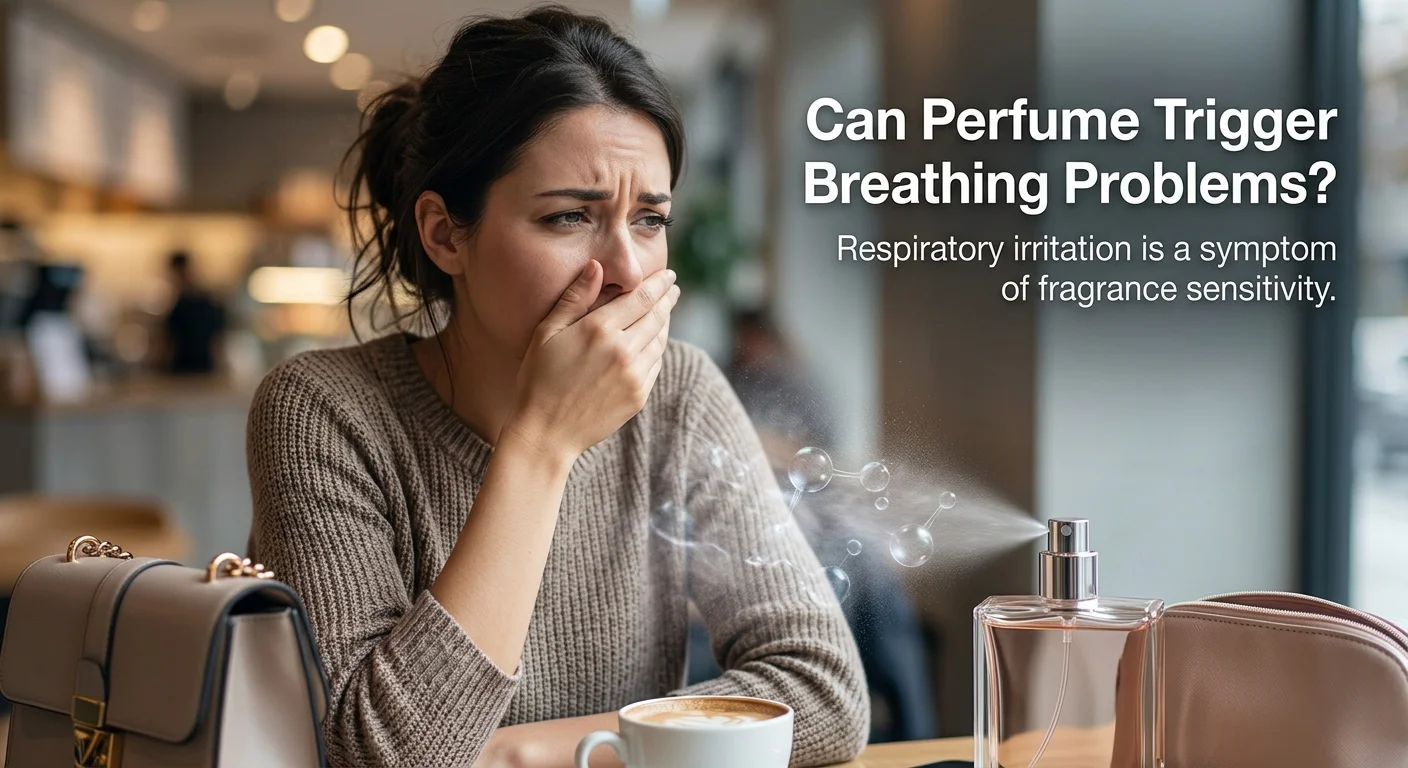
Perfume is designed to smell pleasant, but for some people, exposure to strong fragrances can cause uncomfortable or even significant symptoms. A fragrance that feels refreshing to one person may trigger coughing, throat irritation, headache, nasal congestion, or breathing discomfort in another.
This is where terms such as perfume allergy symptoms, fragrance sensitivity, and respiratory irritation become important. Not every reaction to perfume is a true allergy. In many cases, the respiratory system is reacting to irritating fragrance compounds rather than to an immune-mediated allergic response.
Strong perfumes can be especially noticeable in enclosed environments such as offices, elevators, classrooms, cars, airplanes, salons, and public transportation. Because fragrance particles and volatile compounds can remain suspended in indoor air, sensitive individuals may experience symptoms even when they are not the person wearing the perfume.
Understanding the difference between a perfume allergy and fragrance-related irritation can help people recognize their symptoms, reduce exposure, and know when medical evaluation is appropriate.
read more about sleep deprivation symptoms
What Is a Perfume Allergy?
Understanding the Term “Perfume Allergy”
A perfume allergy generally refers to an immune-system reaction to one or more ingredients used in a fragrance.
Perfumes can contain many different substances, including fragrance ingredients, essential oils, preservatives, solvents, and other compounds. Some people can become sensitized to particular ingredients and develop an allergic response after exposure.
However, the word “allergy” is often used broadly to describe any unpleasant reaction to perfume.
That distinction matters because respiratory symptoms after fragrance exposure do not automatically mean that someone has a true allergy.
Allergy Versus Irritation
An allergic reaction involves the immune system.
Irritation is different. A strong fragrance can irritate the nose, throat, or airways without causing a classic allergic response.
For example, someone may enter a room with a powerful perfume and immediately begin coughing or experience burning in the nose. That reaction may represent irritation or sensitivity rather than an allergy.
Because the underlying mechanisms can differ, the appropriate response and medical evaluation may also differ.
What Are Common Perfume Allergy Symptoms?
Skin Symptoms
Some fragrance reactions primarily affect the skin.
Possible symptoms include:
- Redness
- Itching
- Burning
- Dryness
- RashSwelling
- Irritation
A reaction may occur where perfume has been sprayed directly or where fragranced products contact the skin.
Nasal Symptoms
Fragrance exposure can also affect the nose.
Potential symptoms include:
- Sneezing
- Runny nose
- Nasal congestion
- Stuffy nose
- Nasal irritation
- Increased nasal discharge
These symptoms can occur in people who are sensitive to strong odors even when there is no confirmed fragrance allergy.
Throat Symptoms
Strong fragrances may cause throat irritation in some individuals.
A person may experience:
- Scratchy throat
- Burning sensation
- Throat discomfort
- Frequent throat clearing
- Coughing
The symptoms may improve after leaving the fragranced environment.
Eye Symptoms
Fragrance exposure may irritate the eyes.
Possible symptoms include:
- Watery eyes
- Burning
- Redness
- Itching
- General eye discomfort
This can be particularly noticeable in poorly ventilated indoor environments.
Can Perfume Cause Breathing Problems?
Strong Fragrances Can Irritate the Airways
Yes, strong fragrances can cause respiratory discomfort in some people.
Perfume contains volatile substances that become airborne after application. When these substances are inhaled, they can be irritating to sensitive individuals.
Respiratory irritation may lead to symptoms such as:
- Coughing
- Throat irritation
- Chest discomfort
- Shortness of breath
- A sensation of tightness
- Wheezing in susceptible individuals
The presence of these symptoms does not automatically establish a perfume allergy.
Fragrance Can Affect People Differently
One person’s reaction may be completely different from another’s.
Some people can be around strong perfume without experiencing any noticeable effects. Others may develop symptoms after relatively brief exposure.
Individual sensitivity, exposure level, ventilation, and underlying respiratory conditions can all influence how someone responds.
read more about fast food health effects
How Can Fragrance Affect Respiratory Health?
The Role of Airborne Fragrance Compounds
Perfumes release volatile compounds into the surrounding air.
When a fragrance is sprayed, some of its components evaporate and become part of the indoor air.
In a well-ventilated outdoor environment, these compounds may disperse relatively quickly. In a small enclosed room, concentrations can become more noticeable.
Sensitive people may react when they inhale these compounds.
Why Enclosed Spaces Can Be More Difficult
Ventilation is an important factor.
A strong fragrance in a large outdoor area may be barely noticeable after a short time. The same amount of fragrance in a small office or vehicle can be much more concentrated.
This is why some people experience symptoms in:
- Elevators
- Cars
- Airplanes
- Offices
- Classrooms
- Waiting rooms
- Theaters
- Public transportation
The longer a person remains exposed, the more opportunity there may be for symptoms to develop or persist.
Fragrance Sensitivity and Breathing
What Is Fragrance Sensitivity?
Fragrance sensitivity is a broad term describing symptoms that occur when someone is exposed to scented products.
It does not necessarily mean that the person has a medically confirmed allergy.
People may report symptoms involving several systems, including:
- The respiratory system
- Eyes
- Skin
- Head
- Nose and throat
Sensitivity can also vary from one fragrance to another.
Someone may tolerate a mild scent but react strongly to another fragrance that is more intense or contains different ingredients.
Why Sensitivity Can Be Difficult to Identify
Perfumes are complex mixtures.
A person may react to a particular ingredient, to the intensity of the fragrance, or to the overall combination of airborne compounds.
Without appropriate medical evaluation, it can be difficult to determine the precise mechanism behind a reaction.
For this reason, it is better to describe a suspected reaction accurately rather than automatically labeling it a perfume allergy.
Can Perfume Trigger Asthma Symptoms?
Fragrance as a Potential Asthma Trigger
Some people with asthma report that strong odors or fragrances can trigger respiratory symptoms.
A fragrance may act as an irritant or trigger in susceptible individuals rather than causing an allergic reaction to perfume itself.
Potential symptoms can include:
- Coughing
- Wheezing
- Chest tightness
- Shortness of breath
People with asthma who repeatedly experience symptoms after fragrance exposure should discuss the pattern with a healthcare professional.
Why People With Sensitive Airways May React More Strongly
Asthma involves increased sensitivity and inflammation of the airways.
Because of this, certain environmental exposures can provoke symptoms in some individuals.
Fragrance is only one possible trigger. Smoke, air pollution, dust, respiratory infections, allergens, exercise, and other environmental factors may also contribute.
Therefore, a reaction occurring around perfume should be considered in the broader context of the person’s respiratory health.
Is Perfume Allergy the Same as Asthma?
They Are Not the Same Condition
A perfume allergy and asthma are different concepts.
An allergy involves an immune response to a substance. Asthma is a chronic respiratory condition involving airway inflammation and variable narrowing.
A person can have asthma without having a perfume allergy.
Likewise, someone may have a fragrance-related skin reaction without having asthma.
However, strong fragrances may act as triggers for respiratory symptoms in some people with asthma or sensitive airways.
Why the Distinction Matters
Confusing these conditions can make it harder to understand symptoms.
For example, coughing after entering a heavily fragranced room does not automatically mean that the person is allergic to perfume.
The cause could involve airway irritation, asthma triggering, another environmental exposure, or a different respiratory problem.
A healthcare professional can help determine the most likely explanation when symptoms are recurrent or significant.
Why Do Strong Perfumes Cause Respiratory Irritation?
Fragrance Intensity Matters
The stronger the fragrance, the more noticeable its airborne presence may be.
However, intensity does not tell you exactly which ingredient is responsible for symptoms.
A fragrance can feel overwhelming because of its concentration, composition, application amount, or the environment in which it is worn.
Multiple Fragrance Ingredients Are Involved
Modern perfumes can contain numerous aromatic compounds.
A person who reacts to one product may tolerate another fragrance because the formulations differ.
This is one reason why identifying a specific trigger can be challenging.
Individual Sensitivity Varies
People have different sensory and respiratory responses.
Some individuals are particularly sensitive to strong odors, while others may not experience symptoms at all.
The same person may also respond differently depending on exposure level and environmental conditions.
How Long Do Perfume-Related Symptoms Last?
Symptoms May Improve After Leaving the Area
For some people, fragrance-related symptoms improve after exposure ends and they move into an area with cleaner air.
The duration can vary depending on:
- Exposure level
- Ventilation
- Individual sensitivity
- Type of symptoms
- Underlying respiratory conditions
- Continued exposure
A mild irritation may resolve relatively quickly, while more significant respiratory symptoms may require medical attention.
Persistent Symptoms Should Not Be Ignored
If coughing, wheezing, shortness of breath, chest tightness, or other symptoms continue after leaving the fragranced environment, do not automatically assume perfume is the only cause.
Persistent respiratory symptoms can have many possible causes and may require medical assessment.
How to Reduce Exposure to Strong Fragrances
Move to Fresh Air
If a strong fragrance is causing discomfort, moving away from the source can reduce further exposure.
When possible, go to a well-ventilated area.
Improve Indoor Ventilation
Opening windows or increasing appropriate ventilation can help reduce the concentration of airborne odors.
In workplaces or shared environments, improving ventilation may benefit everyone, not only people who report fragrance sensitivity.
Avoid Direct Application Near the Face
Perfume should not be sprayed directly toward the face or inhaled intentionally.
When applying fragrance, use a reasonable amount and allow it to disperse naturally.
Limit Exposure in Small Spaces
If you know that strong fragrances trigger symptoms for you, enclosed spaces may require additional caution.
Consider minimizing time in heavily fragranced areas when possible.
read more about dry air and skin
How to Handle Fragrance Sensitivity at Work
Communicate Respectfully
Fragrance sensitivity can become difficult when multiple people share the same workplace.
A respectful conversation may be more effective than confronting someone about their perfume.
Explain that strong fragrances cause you discomfort and, if appropriate, ask whether they would be willing to reduce the amount they use.
Discuss Workplace Policies
Some workplaces have fragrance-aware or fragrance-reduced policies.
If symptoms are significant, discussing the issue with a supervisor, human resources representative, occupational health professional, or another appropriate workplace contact may help identify practical accommodations.
Consider Ventilation and Workspace Placement
If possible, improving airflow or moving a workstation away from a strong fragrance source may reduce exposure.
These measures can sometimes help without requiring everyone in the workplace to stop using scented products entirely.
Fragrance-Free Products and Respiratory Comfort
What Does Fragrance-Free Mean?
A fragrance-free product is generally formulated without added fragrance ingredients.
However, product labeling can vary, and “unscented” does not always mean the same thing as “fragrance-free.”
People who are highly sensitive should examine product labels carefully and discuss concerns with an appropriate healthcare professional.
Consider Other Scented Products
Perfume is not the only potential source of fragrance exposure.
Other products may include:
- Body sprays
- Aftershave
- Hair products
- Deodorants
- Lotions
- Soaps
- Laundry products
- Air fresheners
- Cleaning products
- Scented candles
If someone experiences symptoms around fragrances, considering the total fragrance exposure can be more useful than focusing exclusively on perfume.
How to Identify a Possible Fragrance Trigger
Keep a Symptom and Exposure Record
If symptoms repeatedly occur around fragrance, recording the circumstances can provide useful information for a healthcare professional.
Note:
- What product or odor was present
- Where the exposure occurred
- How long you were exposed
- How strong the smell was
- What symptoms developed
- How quickly symptoms began
- Whether symptoms improved after leaving
- Whether other potential triggers were present
This information can help identify patterns.
Consider Other Environmental Exposures
Do not assume perfume is always responsible.
Other factors may be present at the same time, such as:
- Dust
- Smoke
- Cleaning chemicals
- Mold
- Outdoor air pollution
- Pet allergens
- Seasonal allergens
A pattern of symptoms can have multiple contributing factors.
How Is a Perfume Allergy Diagnosed?
Medical History Comes First
A healthcare professional will generally need to understand the timing and nature of symptoms.
Important questions may include:
- What symptoms occur?
- How soon do they start after exposure?
- How long do they last?
- Does the reaction happen every time?
- Is there direct skin contact?
- Are there respiratory symptoms?
- Are other products involved?
A detailed history can help distinguish possible irritation from other causes.
Allergy Testing May Be Considered
Depending on the symptoms, a clinician may recommend appropriate testing.
Testing is particularly relevant when there are suspected allergic skin reactions or other signs of allergy.
Not every fragrance-related respiratory reaction can be confirmed through a simple allergy test, because irritation and sensitivity are not necessarily classic allergic responses.
When Should You Seek Medical Attention?
Mild Symptoms
Occasional mild irritation that resolves after leaving a fragranced environment may not require emergency care.
However, repeated reactions should still be discussed with a healthcare professional if they interfere with daily life.
Breathing Difficulty Requires Attention
Breathing problems deserve particular attention.
Seek urgent medical care if you experience significant or worsening:
- Shortness of breath
- Wheezing
- Chest tightness
- Difficulty breathing
- Trouble speaking because of breathlessness
- Swelling of the lips, tongue, or throat
- Fainting or severe weakness
Severe breathing difficulty can have many causes and should not be assumed to be a simple perfume sensitivity.
Signs of a Severe Allergic Reaction
If fragrance exposure is followed by symptoms involving breathing together with swelling,widespread hives, dizziness, or other signs of a severe allergic reaction, seek emergency medical help immediately.
Do not wait to determine whether the perfume was definitely responsible.
read more about indoor air quality
Can You Prevent Perfume Allergy Symptoms?
Avoid Known Triggers
If a specific fragrance consistently causes symptoms, avoiding it is one of the most straightforward preventive strategies.
For people with confirmed fragrance allergies, healthcare professionals can help identify relevant ingredients and provide guidance on avoidance.
Reduce Overall Fragrance Exposure
If strong odors trigger respiratory irritation, reducing exposure to highly scented environments may help.
This may include choosing fragrance-free personal-care products and avoiding unnecessary air fresheners.
Use Ventilation
Good airflow can reduce the accumulation of airborne fragrance compounds indoors.
Ventilation is particularly important in shared spaces where multiple scented products may be used.
Is Natural Perfume Safer?
Natural Does Not Automatically Mean Non-Irritating
Some people assume that natural fragrances cannot cause reactions.
That is not necessarily true.
Natural essential oils and botanical extracts contain active chemical compounds and can cause irritation or allergic reactions in susceptible individuals.
The distinction between natural and synthetic does not by itself determine whether a fragrance will be tolerated.
Focus on Your Individual Response
If a particular product repeatedly causes symptoms, the fact that it is marketed as natural does not mean you should continue using it.
Personal response and appropriate medical guidance are more useful than marketing labels.
Can Perfume Cause Headaches Along With Breathing Symptoms?
Fragrance Can Be Associated With Multiple Symptoms
Some fragrance-sensitive individuals report headaches along with respiratory or nasal symptoms.
Possible symptoms may include:
- Headache
- Nausea
- Dizziness
- Nasal irritation
- Coughing
- Eye discomfort
The relationship between fragrance exposure and these symptoms can vary greatly among individuals.
Do Not Assume Every Headache Is a Fragrance Allergy
Headaches have many potential causes.
Dehydration, stress, lack of sleep, infections, migraine, environmental conditions, and numerous other factors can contribute.
If headaches repeatedly occur around specific fragrance exposures, documenting the pattern may help when discussing it with a healthcare professional.
Perfume and Indoor Air Quality
Why Indoor Air Matters
Indoor environments can contain many sources of volatile compounds.
Perfumes, cleaning products, air fresheners, personal-care products, and other scented materials can contribute to the overall odor and chemical environment.
People who are sensitive to strong smells may notice symptoms more readily in enclosed spaces.
Ventilation Can Make a Difference
Good ventilation can help reduce the buildup of airborne compounds.
However, ventilation should not be considered a substitute for medical care when someone is experiencing serious respiratory symptoms.
Common Myths About Perfume Allergy
Myth: Every Reaction to Perfume Is an Allergy
This is one of the most common misunderstandings.
A reaction may involve irritation, sensitivity, asthma triggering, allergic contact dermatitis, or another mechanism.
Only an appropriate medical evaluation can help clarify the situation.
Myth: Stronger Perfume Is Always More Dangerous
Fragrance intensity can influence exposure, but it does not by itself determine the health risk for every individual.
Different people respond differently to different formulations.
Myth: Natural Perfume Cannot Cause Reactions
Natural ingredients can still cause irritation or allergy.
“Natural” should not automatically be interpreted as “hypoallergenic.”
Myth: If You Can Smell It, It Must Be Harmful
The ability to smell a fragrance does not automatically mean that it is causing harmful effects.
Many people tolerate perfumes without problems.
The relevant issue is whether a particular exposure consistently causes symptoms or poses a known risk for an individual.
Practical Tips for People Sensitive to Fragrance
Carry Unscented Alternatives
If fragrances frequently cause discomfort, choosing fragrance-free versions of commonly used personal-care products may reduce the overall exposure.
Check Product Labels
Read ingredient and fragrance information when selecting cosmetics, skincare, detergents, and other products.
Tell Healthcare Providers About Your Reactions
If fragrance exposure repeatedly produces respiratory symptoms, mention the pattern during medical appointments.
This information may be relevant when evaluating respiratory health.
Keep Emergency Medication Available if Prescribed
People who have a diagnosed respiratory or allergic condition should follow their healthcare professional’s treatment plan.
If a prescribed rescue medication is part of that plan, use it exactly as instructed.
Do not start or change medication solely because perfume appears to trigger symptoms.
Frequently Asked Questions About Perfume Allergy Symptoms
Can perfume make you cough?
Yes. Strong fragrance can irritate the nose, throat, or airways and may cause coughing in some people. Coughing can also occur when fragrance acts as a trigger for an underlying respiratory condition.
Can perfume cause shortness of breath?
Strong fragrances may be associated with shortness of breath in sensitive individuals, particularly when they trigger airway irritation or symptoms in someone with asthma. Significant or worsening breathing difficulty requires prompt medical attention.
Is fragrance sensitivity the same as a perfume allergy?
No. Fragrance sensitivity is a broad term that can include irritation and other reactions. A true perfume allergy involves an immune response to a particular substance.
Why does perfume bother me but not other people?
People differ in their sensitivity to odors and airborne compounds. Individual respiratory health, exposure level, ventilation, and the specific fragrance formulation can all affect the response.
Can perfume trigger asthma?
Strong fragrances can act as triggers for asthma symptoms in some susceptible individuals. This does not necessarily mean that the person has a perfume allergy.
How can I reduce perfume-related respiratory irritation?
Reducing exposure, moving to fresh air, improving ventilation, and avoiding strongly fragranced environments may help. If symptoms are recurrent, discuss them with a healthcare professional.
Should I stop wearing perfume if it causes symptoms?
If a specific perfume repeatedly causes symptoms, avoiding it is sensible until you understand the cause. If reactions are significant or involve breathing problems, seek professional medical advice rather than trying to manage the issue through trial and error.
Can perfume cause an allergic reaction?
Yes, fragrance ingredients can cause allergic reactions in some people. However, not every unpleasant reaction to perfume is an allergy.
read more about natural immune boosters
Perfume Allergy Symptoms and Breathing Problems
Perfume allergy symptoms can involve the skin, eyes, nose, throat, and respiratory system, but it is important to distinguish a true allergy from fragrance sensitivity and respiratory irritation.
Strong fragrances can release volatile compounds into the air, and some people may experience coughing, throat irritation, wheezing, chest tightness, or breathing discomfort after exposure. Fragrance may also act as a trigger for respiratory symptoms in susceptible individuals, including some people with asthma.
At the same time, experiencing symptoms around perfume does not automatically prove that a person is allergic to fragrance. The response may involve irritation, sensitivity, an underlying respiratory condition, or another environmental factor.
The most practical approach is to recognize patterns, reduce exposure to fragrances that consistently cause problems, improve ventilation in enclosed environments, and document symptoms when they occur. If reactions are recurrent, disruptive, or difficult to explain, a healthcare professional can help determine what may be contributing to them.
Most importantly, significant breathing difficulty should never be dismissed as merely a perfume problem. Severe or worsening shortness of breath, wheezing, throat swelling, or other signs of a serious reaction require urgent medical attention.
Understanding how fragrances interact with individual sensitivity and respiratory health can help people make informed choices while creating more comfortable indoor environments for everyone.