

Blog
How Fast Food Affects Your Health

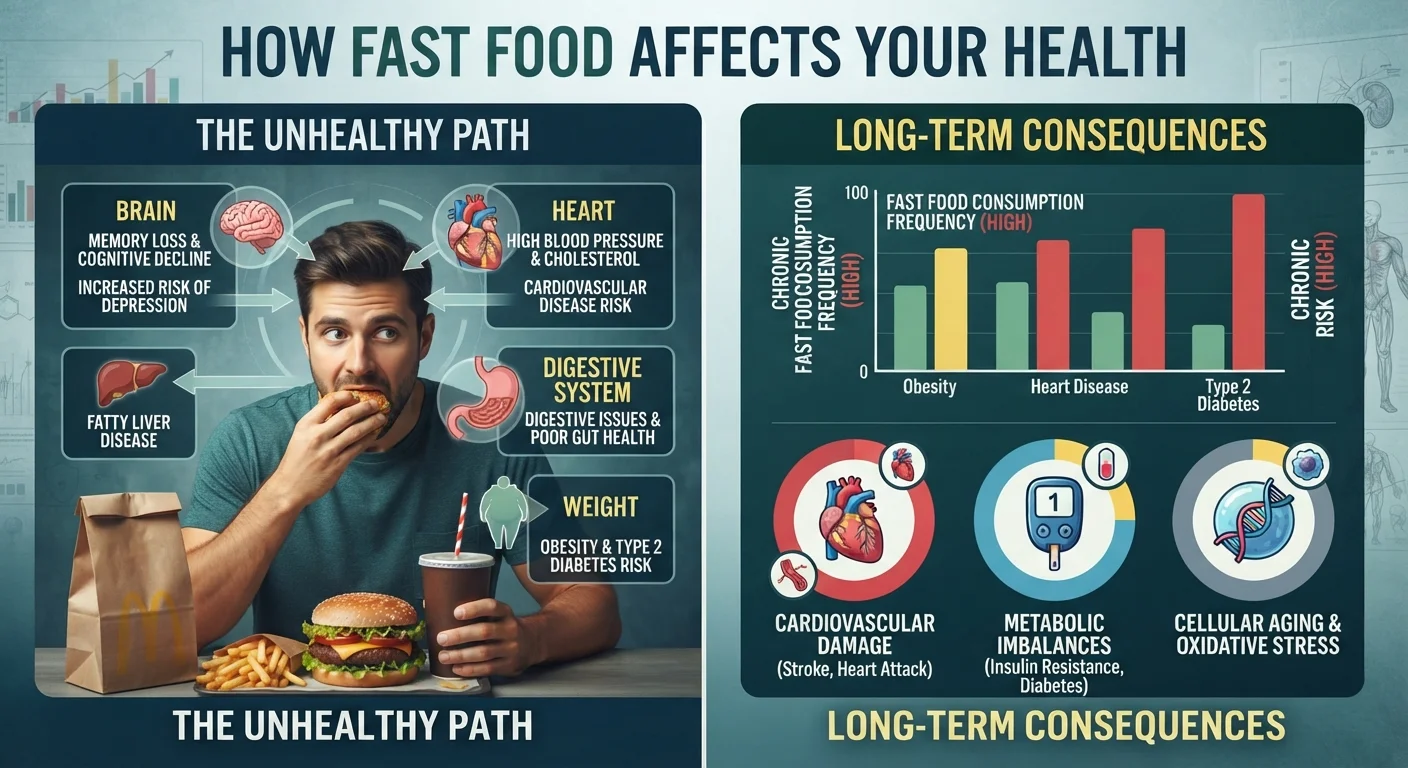
Fast food has become a regular part of modern eating habits. Burgers, fried chicken, pizza, fries, sandwiches, desserts, sugary drinks, and other convenient meals are widely available and often inexpensive compared with some traditional dining options. Busy schedules, long working hours, commuting, social habits, advertising, and convenience can all make fast food an attractive choice.
Eating fast food occasionally is not necessarily a reason for concern. The bigger issue is what happens when these foods become a major part of a person’s regular diet.
Understanding the fast food health effects is important because dietary patterns influence many aspects of health over time. Regular consumption of meals that are high in calories, sodium, saturated fat, added sugars, and refined carbohydrates, while being relatively low in fiber and certain nutrients, can contribute to an unhealthy diet.
The effects may not always be obvious immediately. Someone may eat fast food frequently without noticing any short-term problem. However, consistently consuming an unbalanced diet can gradually affect body weight, blood pressure, blood sugar regulation, cholesterol levels, digestive health, and overall nutritional quality.
read more about healthy lifestyle
Fast Food Is More Than Just One Type of Food
Fast food is not a single nutritional category. A grilled chicken sandwich, a salad with a balanced dressing, a large fried meal, and a sugary dessert can have very different nutritional profiles.
Therefore, the goal is not to label every restaurant meal as unhealthy.
Instead, it is important to understand common patterns in fast food meals and how frequent consumption can affect health.
A meal that is occasionally included in an otherwise balanced diet is very different from a diet based heavily on fried foods, processed meats, sugary beverages, refined grains, and calorie-dense snacks.
What Makes Fast Food Potentially Unhealthy?
High Calorie Density
Many fast food meals contain a large amount of energy in a relatively small volume of food.
Fried foods, sauces, cheese, processed meats, desserts, and sugary beverages can significantly increase the calorie content of a meal.
When people regularly consume more energy than their bodies use, excess energy can contribute to weight gain.
The issue is not that calories are inherently bad. Calories provide energy that the body needs. The concern arises when calorie intake consistently exceeds individual energy requirements.
High Sodium Content
Sodium is another important consideration.
Many restaurant and processed foods contain substantial amounts of sodium because salt is used for flavor, preservation, and food preparation.
Consistently consuming too much sodium can contribute to higher blood pressure in some people, particularly when the overall diet is not balanced.
A diet centered on fast food may make it difficult to control sodium intake because sodium can come from multiple components of a meal, including sauces, processed meats, cheese, bread, fries, and seasoning.
High Amounts of Saturated Fat
Some fast food meals contain significant amounts of saturated fat, particularly when they include fatty meats, fried foods, cheese, butter-based ingredients, or creamy sauces.
Dietary patterns high in saturated fat can contribute to unfavorable blood cholesterol levels in some people.
The overall quality of the diet matters, and replacing foods high in saturated fat with sources of unsaturated fats can be part of a heart-conscious eating pattern.
Added Sugars
Sugary drinks, desserts, sweet sauces, milkshakes, and some breakfast items can contribute substantial amounts of added sugar.
Liquid calories can be particularly easy to consume quickly without producing the same level of fullness that comes from many solid foods.
Frequent consumption of sugar-sweetened beverages can therefore make it easier to consume more calories than intended.
Low Fiber in Many Meals
Fiber is important for digestive health, fullness, and overall dietary quality.
Many common fast food meals rely heavily on refined bread, fried potatoes, processed meats, and other foods that may provide relatively little fiber compared with vegetables, legumes, whole grains, fruits, nuts, and seeds.
A diet consistently low in fiber can make it harder to achieve a balanced nutritional pattern.
Fast Food and Weight Gain
How Excess Calories Affect Body Weight
One of the most widely recognized long-term concerns associated with frequent fast food consumption is excess calorie intake.
When a person regularly consumes more energy than they expend, the body can store some of that excess energy, contributing to weight gain over time.
Fast food can make this easier because many meals combine several calorie-dense ingredients in one serving.
For example, a fried main dish combined with fries, a sugary drink, and dessert can provide considerably more energy than a balanced meal built around vegetables, lean protein, whole grains, and water.
Portion Size Matters
Portion size has an important influence on calorie intake.
Large restaurant portions can encourage people to eat more than they would at home.
Value meals and meal upgrades may also encourage larger servings of fries, drinks, or other high-calorie items.
People do not necessarily need to avoid restaurant food entirely. Learning to recognize portion size and stopping when comfortably full can help reduce excessive intake.
Weight Gain Is Not the Only Issue
Body weight is only one part of nutritional health.
A person can have a body weight within a typical range while still having a diet that lacks important nutrients.
Conversely, body weight can be influenced by many factors beyond diet, including genetics, activity, sleep, medications, stress, and medical conditions.
For this reason, fast food health effects should be evaluated as part of overall health rather than through weight alone.
read more about chronic dehydration
Fast Food and Heart Health
Dietary Patterns and Cardiovascular Risk
A diet that regularly contains large amounts of saturated fat, sodium, added sugar, and excess calories may contribute to several cardiovascular risk factors.
These can include unfavorable cholesterol levels, elevated blood pressure, and weight gain.
Over many years, combinations of these risk factors can increase the risk of cardiovascular disease.
This is why dietary quality matters even when an individual meal seems harmless.
The Role of Cholesterol
Some fast food meals contain significant amounts of saturated fat, which can raise LDL cholesterol in many people.
LDL cholesterol is often referred to as “bad” cholesterol because elevated levels are associated with a higher risk of cardiovascular disease.
Replacing some saturated fats with unsaturated fats, such as those found in nuts, seeds, fish, and certain plant oils, can support a healthier dietary pattern.
Blood Pressure and Sodium
High sodium intake can contribute to increased blood pressure, especially in people who are sensitive to sodium.
High blood pressure often does not cause obvious symptoms, which means a person may not realize that dietary habits are affecting cardiovascular risk.
Reducing reliance on highly salted processed and restaurant foods can be one component of a healthier eating pattern.
Fast Food and Blood Sugar Regulation
Refined Carbohydrates and Added Sugar
Many fast food meals contain refined carbohydrates in bread, buns, fries, pastries, desserts, and sweetened drinks.
When these foods dominate the diet, they may contribute to a dietary pattern that is less balanced in fiber and nutrient density.
Foods containing added sugar can also increase overall calorie intake.
Insulin and Metabolic Health
The body uses insulin to help regulate blood glucose.
Regularly consuming a calorie-dense diet combined with insufficient physical activity and weight gain can contribute to metabolic problems in susceptible individuals.
Over time, these factors can increase the risk of insulin resistance and type 2 diabetes.
However, diabetes does not develop simply because someone eats one fast food meal. It is a complex condition influenced by genetics, body composition, physical activity, overall dietary pattern, and other factors.
Sugary Beverages Deserve Special Attention
Soft drinks, sweetened iced beverages, milkshakes, and other sugary drinks can add substantial amounts of sugar without providing much fiber or protein.
Because beverages are easy to consume quickly, they can contribute to excess energy intake.
Choosing water or unsweetened beverages more often can be a simple way to improve the nutritional quality of restaurant meals.
Fast Food and Digestive Health
The Importance of Dietary Fiber
Fiber supports normal digestive function and helps promote a healthy gut environment.
It is found in foods such as:
- Vegetables
- Fruits
- Beans
- Lentils
- Whole grains
- Nuts
- Seeds
A diet heavily dependent on refined and fried foods may provide less fiber than a varied diet rich in plant foods.
Constipation and Low-Fiber Diets
Insufficient dietary fiber, particularly when combined with inadequate fluid intake and low physical activity, can contribute to constipation.
Replacing some refined foods with vegetables, fruits, legumes, and whole grains can increase fiber intake.
Fiber should generally be increased gradually so the digestive system has time to adapt.
Gut Microbiome Considerations
The digestive tract contains a complex community of microorganisms known as the gut microbiome.
Diet is one of the factors that can influence the composition and activity of these microorganisms.
Diets rich in diverse plant foods provide different types of fiber and compounds that can support a diverse gut environment.
A diet dominated by highly processed foods may provide less dietary diversity.
Research into the gut microbiome continues to develop, so it is better to focus on the established principle of eating a varied diet rich in plant foods rather than relying on exaggerated claims about individual foods.
Fast Food and Nutritional Deficiencies
Calories Do Not Equal Nutritional Quality
A meal can contain plenty of calories while providing relatively little of certain vitamins, minerals, and other beneficial compounds.
This is sometimes described as low nutrient density.
For example, a meal dominated by refined carbohydrates, fried foods, processed meat, and sugary drinks may provide substantial energy but relatively few vegetables, fruits, legumes, and whole grains.
Common Nutrients That May Be Missing
Depending on the overall diet, frequent reliance on fast food may make it harder to obtain adequate amounts of:
- Fiber
- Potassium
- Certain vitamins
- Certain minerals
- Antioxidant-rich plant compounds
- Healthy fats
This does not mean that every fast food meal lacks nutrients. Some restaurant meals can include vegetables, lean protein, whole grains, and other nutritious components.
The issue is dietary balance over time.
Fast Food and Processed Food
What Is Processed Food?
Processing refers to changing food from its original form through methods such as cooking, freezing, drying, fermenting, or adding ingredients.
Not all processed food is unhealthy.
Frozen vegetables, canned beans, pasteurized milk, and whole-grain bread can all be part of a nutritious diet.
The greater concern is frequent consumption of highly processed foods that are energy-dense and contain substantial amounts of sodium, added sugar, or unhealthy fats.
Why Highly Processed Meals Can Be Easy to Overeat
Highly processed foods can be designed to be convenient, appealing, and easy to consume.
Some combine refined carbohydrates, fat, salt, and sugar in ways that make them highly palatable.
When these foods are readily available in large portions, it can become easier to eat beyond physical hunger.
Processed Food Does Not Automatically Mean Bad Food
The term “processed” should not be used as a synonym for unhealthy.
A better question is what the food contains and how frequently it appears in the diet.
A packaged food with a short ingredient list and useful nutrients can be a reasonable choice, while a heavily processed meal high in calories and low in fiber may be less beneficial when consumed frequently.
read more about sedentary lifestyle
Fast Food and Mental Well-Being
The Relationship Between Diet and Mental Health
Food and mental health are connected through multiple biological and behavioral pathways.
Nutritional deficiencies, unstable eating patterns, poor sleep, inflammation, and metabolic health can all interact with well-being.
However, it would be inaccurate to claim that eating fast food directly causes depression or anxiety.
Mental health is influenced by many factors, including genetics, life circumstances, stress, sleep, relationships, and medical conditions.
Eating Patterns and Energy Levels
Meals that are high in refined carbohydrates and added sugars may be followed by fluctuations in energy and hunger for some people.
A balanced meal containing protein, fiber, healthy fats, and minimally processed carbohydrates may provide more sustained fullness.
Regular meals and adequate nutrition can support consistent energy throughout the day.
Fast Food and Energy Levels
Why Some Meals Feel Heavy
Large meals high in fat and calories can leave some people feeling sluggish or uncomfortable afterward.
This may be particularly noticeable when meals are eaten quickly or in very large portions.
Eating more slowly and choosing reasonable portions can help.
The Role of Balanced Meals
A balanced meal generally includes a combination of protein, carbohydrates, healthy fats, vegetables or fruits, and sufficient fluids.
This structure can provide energy while also contributing important nutrients.
Fast food can sometimes be modified to better fit this pattern.
Fast Food and Inflammation
Understanding Inflammation
Inflammation is a normal biological response that helps the body respond to injury and infection.
However, chronic low-grade inflammation can be associated with several long-term health conditions.
Diet is one factor that may influence inflammatory processes.
Dietary Patterns Matter
A dietary pattern high in vegetables, fruits, whole grains, legumes, nuts, seeds, fish, and unsaturated fats is generally associated with better overall health.
A dietary pattern dominated by highly processed, calorie-dense foods can be less favorable.
It is therefore more useful to consider the overall diet than to label one specific fast food item as inflammatory.
Fast Food and Liver Health
Excess Calories and Fat Accumulation
The liver plays a central role in metabolism.
Regularly consuming more calories than the body needs, particularly when combined with weight gain and metabolic problems, can contribute to excess fat accumulation in the liver.
Metabolic dysfunction-associated steatotic liver disease is increasingly recognized as an important health concern.
Why Dietary Balance Matters
Reducing excess calories, improving diet quality, maintaining appropriate physical activity, and managing metabolic risk factors can support liver health.
Fast food does not act as a single cause, but frequent consumption can contribute to an overall dietary pattern associated with metabolic problems.
Fast Food and Kidney Health
Sodium and Blood Pressure
High sodium intake can increase blood pressure, which is an important factor in kidney health.
The kidneys play a major role in regulating fluid and electrolyte balance, including sodium.
For people with kidney disease, dietary requirements can be particularly specific.
Individual Needs Matter
People with kidney conditions should follow recommendations from their healthcare professionals rather than relying on general nutrition advice.
The appropriate amounts of sodium, protein, potassium, phosphorus, and fluids can vary depending on the individual.
Fast Food and Oral Health
Sugary Foods and Tooth Decay
Frequent consumption of sugary drinks and desserts can increase exposure of teeth to sugars.
Oral bacteria can use sugars to produce acids that contribute to tooth decay.
The frequency of exposure can matter as well as the total amount consumed.
Sticky and Sugary Foods
Certain desserts and sweet snacks can remain in contact with teeth for longer periods.
Good oral hygiene, regular dental visits, and limiting frequent sugary snacks and beverages can help protect dental health.
Fast Food and Children’s Health
Why Children’s Diets Need Special Attention
Children are growing and developing, so adequate nutrition is particularly important.
A diet that frequently replaces nutrient-rich foods with highly processed meals may make it more difficult for children to obtain the variety of nutrients they need.
Children also develop eating habits through repeated exposure.
Developing Healthy Habits
Parents do not need to completely eliminate restaurant food.
Instead, children can learn that fast food is an occasional option rather than the foundation of everyday eating.
Offering vegetables, fruits, whole grains, legumes, dairy or suitable alternatives, and protein-rich foods at home can help create a more balanced pattern.
Long-Term Consequences of Regular Fast Food Consumption
Increased Risk of Weight-Related Problems
Regular consumption of calorie-dense fast food can contribute to excess energy intake and weight gain.
Over time, excess body weight can increase the risk of several chronic conditions.
However, individual responses vary.
Cardiovascular Risk
A long-term dietary pattern high in sodium, saturated fat, added sugar, and excess calories may contribute to cardiovascular risk factors.
Over many years, these factors can increase the likelihood of heart and blood vessel disease.
Type 2 Diabetes Risk
Excess calorie intake, weight gain, low physical activity, and an overall unhealthy dietary pattern can increase the risk of type 2 diabetes.
Reducing sugary beverages and increasing fiber-rich foods can be useful components of a healthier eating pattern.
Metabolic Health
Regular reliance on highly processed, calorie-dense foods can contribute to a broader pattern of metabolic risk.
This can include problems related to blood pressure, blood glucose, cholesterol, and body fat distribution.
Poor Overall Diet Quality
Perhaps one of the most important long-term consequences is what fast food can replace.
If frequent restaurant meals displace vegetables, fruits, legumes, whole grains, nuts, seeds, and other nutrient-rich foods, overall diet quality can decline.
The opportunity cost of an unhealthy diet is important.
How Often Is Fast Food Too Much?
There Is No Universal Number
There is no single number of fast food meals that applies to every person.
Health depends on the overall dietary pattern, portion sizes, activity level, age, health status, and individual nutritional needs.
Someone who occasionally eats a burger as part of a balanced diet is in a very different situation from someone who consumes multiple high-calorie fast food meals every day.
Focus on Frequency and Pattern
Instead of asking whether a particular food is “allowed,” consider how often it appears.
If most meals consist of minimally processed or nutrient-dense foods and fast food is occasional, the overall dietary pattern may be considerably healthier.
How to Make Fast Food Healthier
Choose Smaller Portions
One of the simplest strategies is to avoid automatically choosing the largest available serving.
A smaller portion can reduce calorie and sodium intake while still allowing you to enjoy the food.
Add Vegetables
When possible, choose meals that include vegetables.
A salad, vegetable side, or sandwich with additional vegetables can increase the nutritional variety of the meal.
Choose Water More Often
Replacing sugary drinks with water can significantly reduce added sugar and unnecessary liquid calories.
Unsweetened beverages can also be useful alternatives.
Look for Grilled Options
When available, grilled or baked foods may contain less fat than heavily fried alternatives.
However, sauces, cheese, breading, and portion size still matter.
Be Careful With Sauces
Creamy and sugary sauces can add substantial calories, sodium, and sugar.
Ordering sauces separately can make portion control easier.
Include Protein
Protein can contribute to fullness and help make a meal more satisfying.
Depending on the restaurant, options may include grilled chicken, fish, eggs, beans, or other protein sources.
read more about air conditioning sore throat
How to Build a More Balanced Diet
Make Whole Foods the Foundation
A healthier eating pattern can emphasize:
- Vegetables
- Fruits
- Whole grains
- Beans
- Lentils
- Nuts
- Seeds
- Fish
- Lean proteins
- Healthy fats
These foods provide a variety of nutrients and dietary components.
Think About the Whole Week
One meal rarely determines overall health.
Instead of becoming anxious about an occasional indulgence, consider your dietary pattern across days and weeks.
If most meals are nutritious and balanced, there is room for flexibility.
Avoid the All-or-Nothing Mindset
Healthy eating does not require perfection.
Strictly labeling foods as “good” or “bad” can make eating unnecessarily stressful.
A flexible approach can make healthier habits easier to maintain over the long term.
Fast Food for People With Busy Schedules
Convenience Is a Real Factor
Many people rely on fast food because they genuinely lack time to prepare meals.
Simply telling busy people to cook every meal is not always realistic.
The more useful approach is to identify convenient alternatives that provide better nutritional balance.
Prepare Simple Meals in Advance
Meal preparation does not need to involve complicated recipes.
Simple combinations such as cooked grains, vegetables, beans, eggs, chicken, yogurt, fruit, or nuts can create quick meals.
Keeping nutritious foods readily available can reduce dependence on fast food when hunger appears.
Keep Healthy Emergency Options
Portable foods can help during busy days.
Examples include fruit, unsalted nuts, yogurt, whole-grain snacks, or simple sandwiches.
The goal is not perfection but having alternatives available when convenience becomes the main priority.
How to Change an Unhealthy Eating Pattern
Start With One Habit
Trying to completely eliminate fast food overnight can be difficult.
Instead, begin with one change.
For example, replace sugary drinks with water several days per week.
Once that becomes routine, focus on portion sizes or add vegetables to more meals.
Identify Your Triggers
People often eat fast food because of specific situations.
Common triggers include:
- Stress
- Lack of time
- Long commutes
- Social activities
- Hunger after work
- Lack of meal preparation
- Easy availability
Identifying the trigger makes it easier to find a practical solution.
Make Healthy Choices Convenient
Healthy choices become easier when they are accessible.
Keep nutritious snacks available, prepare simple meals ahead of time, and plan meals around your schedule.
The environment often influences food choices as much as willpower.
Fast Food Health Effects: Myths and Misunderstandings
Myth: Every Fast Food Meal Is Unhealthy
This is an oversimplification.
Some fast food restaurants offer meals that include vegetables, lean proteins, and other nutritious ingredients.
The nutritional quality depends on what you order and how frequently you eat it.
Myth: One Fast Food Meal Will Damage Your Health
An occasional meal does not determine long-term health.
Health outcomes are influenced by long-term habits and many other factors.
Myth: All Processed Food Is Bad
Processing can improve food safety, convenience, shelf life, and accessibility.
The important distinction is between different types of processed foods and their overall nutritional profiles.
Myth: You Must Never Eat Fast Food
A sustainable diet can include flexibility.
For many people, the more realistic goal is to make fast food occasional while building most meals around nutrient-rich foods.
Frequently Asked Questions About Fast Food and Health
What Are the Main Fast Food Health Effects?
Frequent consumption can contribute to excess calorie intake, weight gain, high sodium intake, high saturated fat intake, excessive added sugar, and low dietary fiber.
Over time, these factors may contribute to cardiovascular and metabolic health risks.
Can Eating Fast Food Every Day Cause Health Problems?
Regularly eating calorie-dense, high-sodium, high-sugar, or high-saturated-fat meals can contribute to an unhealthy diet and increase the risk of certain chronic health problems over time.
The exact effects depend on portion sizes, food choices, overall diet, physical activity, genetics, and individual health.
Is Fast Food Always High in Calories?
Not necessarily.
Some menu items can be relatively moderate in calories, while others can contain very large amounts.
The full meal, including drinks, sauces, sides, and desserts, should be considered.
Is Fast Food Bad for Your Heart?
A dietary pattern high in sodium, saturated fat, added sugar, and excess calories can contribute to cardiovascular risk factors.
Occasional fast food consumption is different from relying on it regularly.
Can Fast Food Increase the Risk of Diabetes?
Frequent consumption of an overall unhealthy dietary pattern can contribute to risk factors for type 2 diabetes, especially when combined with excess calorie intake, weight gain, and low physical activity.
Diabetes has multiple causes and risk factors.
How Can I Eat Fast Food Without Completely Abandoning Healthy Eating?
Focus on portion control, choose water more often, include vegetables, look for grilled or less heavily fried options, limit sugary drinks and excessive sauces, and keep fast food as one part of a varied overall diet.
What Is the Healthiest Fast Food Choice?
There is no single healthiest choice across every restaurant.
Generally, look for meals that include vegetables and protein while limiting excessive portions of fried foods, sugary beverages, creamy sauces, and highly processed ingredients.
Is Homemade Food Always Healthier?
Not automatically.
Homemade meals can also be high in calories, sodium, sugar, or saturated fat depending on ingredients and preparation methods.
However, cooking at home gives you greater control over ingredients and portion sizes.
read more about sleep deprivation symptoms
Fast Food and Long-Term Health
The most important lesson when considering fast food health effects is that occasional consumption and regular dependence are two very different situations.
Fast food can be convenient, enjoyable, affordable, and socially useful. There is no need to treat a single restaurant meal as a health disaster. The greater concern is what happens when fast food becomes the foundation of an unhealthy diet.
Frequent consumption of calorie-dense meals that are high in sodium, saturated fat, added sugar, and refined carbohydrates can make it easier to consume excess calories while obtaining less fiber and dietary variety. Over time, these patterns may contribute to weight gain, high blood pressure, unfavorable cholesterol levels, impaired metabolic health, and increased risk of chronic diseases.
The long-term consequences are not caused by one burger, one serving of fries, or one dessert. They are more closely related to repeated dietary patterns combined with other factors such as physical activity, sleep, genetics, stress, and overall lifestyle.
This distinction is important because healthy eating does not need to be perfect.
A person can enjoy fast food occasionally while still maintaining a nutritious overall diet. The key is to make nutrient-rich foods the foundation of everyday eating and treat highly processed, calorie-dense foods as occasional choices rather than everyday staples.
When eating fast food, simple decisions can improve the nutritional balance: choose smaller portions, include vegetables, select water or unsweetened beverages, consider grilled options, limit heavy sauces, and pay attention to the overall meal rather than one ingredient.
For people with specific medical conditions, dietary requirements can be more complex, and individualized advice from a qualified healthcare professional or registered dietitian may be appropriate.
Ultimately, good nutrition is about patterns rather than perfection. Understanding how fast food fits into your overall diet allows you to make informed choices without unnecessary fear or guilt.
The goal is not to eliminate every convenient meal. It is to build eating habits that provide enough nutrients, fiber, protein, healthy fats, and appropriate energy while leaving room for flexibility.
When fast food becomes occasional rather than routine, and when most meals are built around a diverse range of nutrient-rich foods, it becomes much easier to support long-term health while still enjoying the foods you love.