

Blog
Can Dry Air Irritate Sensitive Skin?

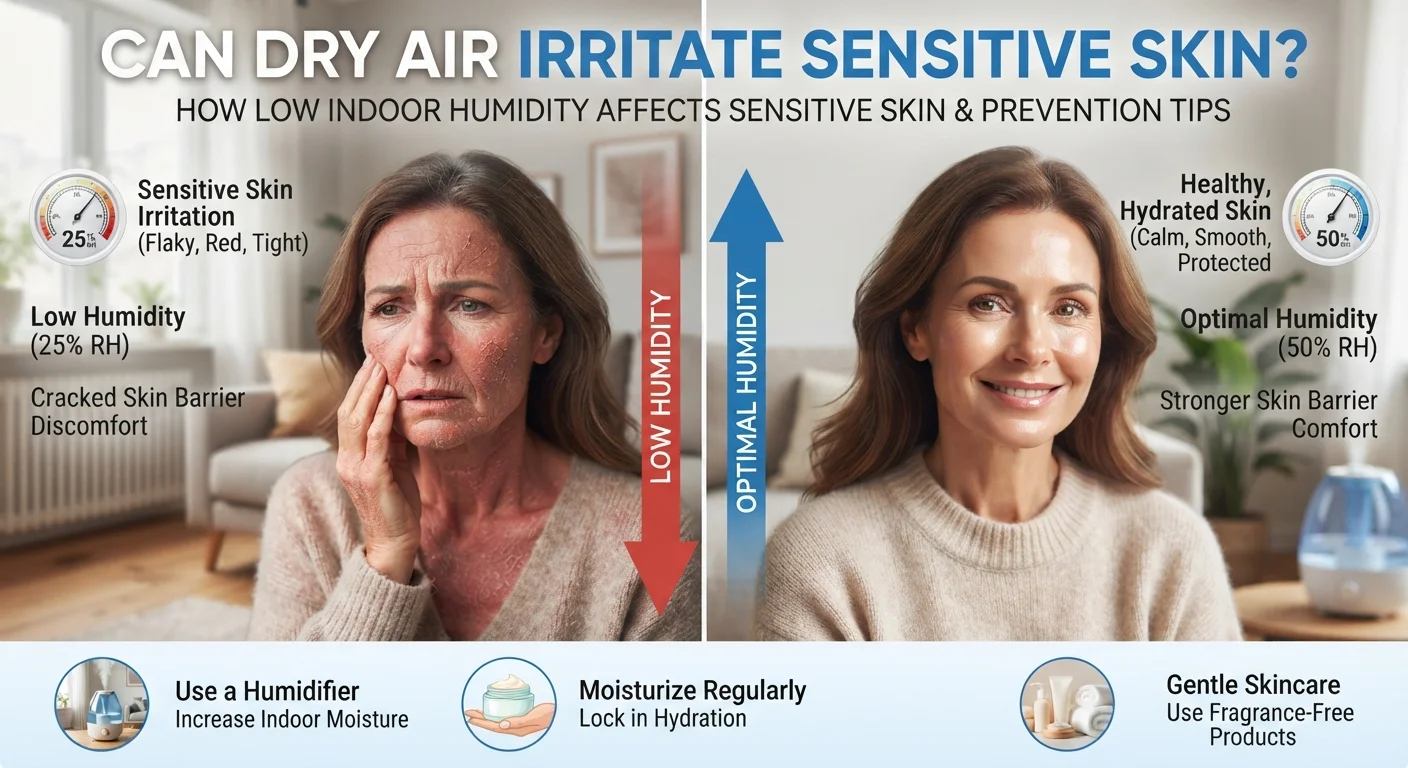
The relationship between dry air and skin is easy to overlook until your face starts feeling tight, rough, itchy, or unusually uncomfortable. Many people notice changes in their skin during cold weather, in heated rooms, or in air-conditioned environments. For people with sensitive skin, these changes can be even more noticeable.
Air contains moisture, often described as humidity. When indoor humidity becomes too low, water can evaporate from the surface of the skin more quickly. This can interfere with the skin’s natural ability to retain moisture and protect itself from environmental irritants.
The result may be skin dryness, tightness, flaking, itching, or increased sensitivity.
Dry air does not affect everyone in exactly the same way. Some people may experience only mild dryness, while others may find that their existing sensitivity becomes more noticeable. The skin’s condition, skincare routine, environmental exposure, age, and other individual factors all play a role.
Understanding how humidity interacts with the skin can make it easier to build a practical routine that protects the skin barrier without making skincare unnecessarily complicated.
read more about chronic dehydration
What Happens to Skin When the Air Is Dry?
The skin barrier and moisture retention
The outermost layer of the skin plays an important protective role. One of its responsibilities is helping keep water inside the skin while limiting exposure to potentially irritating substances from the environment.
A healthy skin barrier does not completely prevent water loss. Some water naturally leaves the skin through a process called transepidermal water loss. However, when the surrounding environment is very dry, the difference in moisture between the skin and the air can encourage more water to evaporate.
This can contribute to increased dryness.
When the skin loses too much moisture, it may feel:
- Tight after washing.
- Rough or uneven.
- Flaky.
- Itchy.
- More sensitive than usual.
- Uncomfortable when applying skincare products.
- More easily irritated by wind, heat, or fragrances.
For someone with sensitive skin, the effects can feel particularly noticeable because the skin may already be more reactive to environmental changes.
Why low humidity can increase water loss
Humidity refers to the amount of water vapor present in the air. When humidity is low, the surrounding environment contains less moisture.
Think of the skin as constantly interacting with its environment. In a humid environment, the air contains more moisture, while in a very dry environment, the air can contribute to faster evaporation of water from the skin’s surface.
This does not mean that humidity alone determines skin health. However, it is one environmental factor that can influence how comfortable and hydrated the skin feels.
Why Sensitive Skin Can React More Strongly
What does sensitive skin mean?
Sensitive skin is not necessarily a medical diagnosis. It is commonly used to describe skin that tends to react more easily to certain environmental conditions, cosmetic ingredients, temperature changes, or physical irritation.
Someone with sensitive skin may experience burning, stinging, redness, itching, tightness, or discomfort after exposure to products or environmental conditions that other people tolerate well.
Dry air can become one of those environmental triggers.
Dryness and sensitivity can reinforce each other
There is an important connection between skin dryness and sensitivity.
When the skin becomes excessively dry, its protective barrier may become less effective. This can make the skin feel more reactive. Increased sensitivity may then make it harder to tolerate certain products, cleansing routines, or environmental conditions.
This can create a frustrating cycle:
Dry environment → increased moisture loss → dry or compromised skin barrier → increased sensitivity → greater discomfort.
Breaking this cycle usually involves reducing unnecessary irritation while supporting the skin’s ability to retain moisture.
read more about sedentary lifestyle
Common Signs That Dry Air May Be Affecting Your Skin
Tightness
One of the earliest signs of environmental dryness is a feeling of tightness.
You may notice it after washing your face, waking up in the morning, or spending several hours inside an air-conditioned or heated room.
Tightness does not necessarily mean that your skin is severely dry, but it can be a signal that your current environment or routine is removing more moisture than your skin comfortably tolerates.
Flaking and rough texture
As skin becomes drier, its surface may appear rough or develop visible flakes.
Makeup may also sit unevenly on dry areas, making texture more noticeable.
Scrubbing aggressively to remove flakes can make the situation worse by creating additional irritation.
Itching
Dryness can cause itching, particularly on areas such as the hands, arms, legs, cheeks, and around the eyes.
Repeated scratching may further irritate the skin.
Redness and discomfort
Some people notice increased redness when their skin becomes dry.
However, redness can have many possible causes. Dry air may contribute to irritation, but persistent or severe redness should not automatically be attributed to humidity.
Increased sensitivity to skincare products
A product that normally feels comfortable may begin to sting when the skin is very dry.
This can happen because the skin barrier is less comfortable and may be more reactive to ingredients or physical application.
How Indoor Humidity Affects Skin
Why indoor environments matter
People often think about outdoor weather when considering dry skin, but indoor conditions can be equally important.
Heating systems can reduce indoor humidity during colder periods, while air conditioning can contribute to a cool, dry-feeling environment.
You may spend many hours each day inside:
- A bedroom.
- An office.
- A classroom.
- A car.
- A shopping center.
- A hotel.
- An air-conditioned home.
Even if the outdoor environment is not particularly dry, indoor conditions may affect how your skin feels.
Finding a comfortable humidity range
There is no single humidity level that guarantees perfect skin for everyone.
However, maintaining a moderate indoor humidity level can make the environment more comfortable for many people.
A basic digital hygrometer can help you understand the humidity level in your bedroom or living space instead of relying on how the air feels.
This is useful because people are not always accurate at estimating indoor humidity.
Avoiding excessive humidity
It is also important not to assume that more humidity is always better.
Very high indoor humidity can encourage condensation and contribute to an environment where mold and other unwanted organisms may thrive.
The goal is balance.
A comfortable indoor environment should provide enough moisture to avoid excessive dryness without creating excessive dampness.
Dry Air and Facial Skin
Why the face can be especially sensitive
Facial skin is exposed to many products and environmental conditions every day.
Cleansers, makeup, sunscreen, shaving, weather, wind, air conditioning, and frequent touching can all influence how the skin feels.
When dry air is added to these factors, facial dryness may become more obvious.
Common areas include:
- Cheeks.
- Around the mouth.
- Forehead.
- Nose.
- Under-eye area.
The skin around the eyes is particularly delicate, so aggressive rubbing or repeated application of irritating products should be avoided.
Dry lips are another common complaint
Lips do not have the same protective characteristics as much of the skin elsewhere on the body.
Dry indoor air can therefore contribute to chapped or uncomfortable lips.
A simple lip moisturizer or protective balm can help reduce moisture loss.
Avoid repeatedly licking the lips because saliva can evaporate and leave them feeling even drier.
Dry Air and Body Skin
Hands
Hands are frequently exposed to water, soap, cleaning products, and environmental conditions.
Frequent hand washing can remove some of the skin’s natural oils, while dry air may increase moisture loss.
Using a gentle cleanser and applying moisturizer after washing can help.
Legs and arms
The arms and legs may become dry and rough during periods of low humidity.
Long, hot showers can make dryness worse by removing oils from the skin’s surface.
A shorter shower using comfortably warm rather than very hot water can be a more skin-friendly approach.
Feet
Dry air can contribute to rough skin on the feet, although other factors can also cause dryness.
Regular moisturizing and avoiding excessively harsh scrubbing may help maintain smoother skin.
How to Prevent Skin Dryness in a Dry Environment
Moisturize consistently
One of the simplest strategies for managing environmental dryness is regular moisturizing.
A moisturizer can help reduce water loss and support the skin barrier.
The best moisturizer depends on the individual’s skin type and preferences.
Some people prefer lightweight lotions, while others with very dry skin may find creams or ointments more comfortable.
Apply moisturizer after washing
Moisturizing soon after bathing or washing can be particularly useful because the skin may still contain some surface moisture.
Gently pat the skin rather than rubbing it aggressively with a towel, then apply moisturizer.
This routine can help support moisture retention.
Do not wait until the skin feels extremely dry
Moisturizer does not need to be reserved for moments when the skin is visibly peeling.
A consistent routine can be more useful than applying a large amount only after severe dryness develops.
read more about air conditioning sore throat
Choosing Skincare Products for Sensitive Skin
Keep the routine simple
When the skin is irritated or very dry, adding many new products at once can make it difficult to identify what is causing discomfort.
A simple routine may include:
- A gentle cleanser.
- A moisturizer.
- Sunscreen during daytime outdoor exposure.
Additional products can be introduced gradually when needed.
Look for gentle formulations
People with sensitive skin often prefer products that are designed to minimize potential irritation.
Depending on individual tolerance, they may choose products that are:
- Fragrance-free.
- Gentle.
- Moisturizing.
- Suitable for sensitive skin.
- Free from ingredients known personally to trigger irritation.
However, “natural” does not automatically mean non-irritating. Botanical extracts and essential oils can also cause reactions in some people.
Avoid constantly changing products
When skin is struggling with dryness, changing the entire skincare routine every few days can make matters worse.
Give your routine time to work unless a product clearly causes irritation.
If something causes burning, swelling, significant redness, or another concerning reaction, stop using it and seek appropriate professional advice.
Ingredients That Can Support Dry Skin
Humectants
Humectants help attract and hold water.
Common examples include glycerin and hyaluronic acid.
They are often found in moisturizers and hydrating serums.
However, a humectant is generally most useful as part of a broader moisturizing routine rather than as the only step.
Emollients
Emollients help soften and smooth the skin.
They can fill gaps between skin cells and improve the feel of rough skin.
Many creams contain a combination of humectants and emollient ingredients.
Occlusive ingredients
Occlusive ingredients create a protective layer that helps reduce water loss.
Examples include petrolatum and certain types of oils and waxes.
Occlusive products can be especially useful for very dry areas, although some people may find heavier textures uncomfortable.
The Role of Cleansing in Skin Dryness
Avoid overly aggressive cleansing
Cleansing is important, but more cleansing is not necessarily better.
Using very hot water, harsh cleansers, or vigorous scrubbing can increase dryness and irritation.
For sensitive skin, gentle cleansing is often a better approach.
Do not scrub away every dry patch
When skin flakes, it can be tempting to exfoliate aggressively.
However, excessive exfoliation can further disturb the skin barrier.
If your skin is already dry and irritated, reducing exfoliation may be more appropriate than increasing it.
How Bathing Habits Affect Dry Skin
Keep showers comfortably warm
Very hot water can feel relaxing, especially during cold weather, but prolonged exposure may leave the skin feeling drier.
A comfortably warm shower is generally a better choice for people dealing with dryness.
Keep bathing time reasonable
Long showers can expose the skin to water and cleansing products for extended periods.
If your skin becomes consistently tight after bathing, consider shortening your shower and simplifying your cleansing routine.
Moisturize afterward
A simple moisturizer applied after bathing can help support the skin’s moisture barrier.
This small step can become particularly important during periods of low indoor humidity.
Can a Humidifier Help With Dry Skin?
Understanding how humidifiers work
A humidifier adds moisture to indoor air.
If the air in your home is genuinely dry, increasing humidity to a comfortable level may reduce some of the environmental factors that contribute to dry skin.
This does not replace skincare, but it can complement a good routine.
Where to place a humidifier
Many people use humidifiers in bedrooms because they spend several consecutive hours there.
The device should be positioned according to the manufacturer’s instructions and kept away from surfaces where condensation could cause damage.
Humidifier hygiene is essential
A dirty humidifier can become a source of unwanted microorganisms and particles.
Regular cleaning is therefore essential.
Follow the manufacturer’s cleaning instructions and avoid allowing standing water to remain in the device for long periods.
A humidifier should improve the indoor environment, not create another source of irritation or respiratory concerns.
Signs That Your Indoor Air May Be Too Dry
Physical clues
You may suspect low humidity if several signs occur together, such as:
- Frequent dry skin.
- Chapped lips.
- Dry hands.
- Static electricity.
- Dry-feeling nasal passages.
- Increased need for moisturizer.
- Rough skin texture.
These signs are not proof that humidity is the cause, but they can encourage you to measure indoor humidity.
Use a hygrometer instead of guessing
A simple hygrometer can tell you what the humidity actually is.
This is more reliable than deciding whether the air is dry based only on how your skin feels.
If your skin remains severely dry despite a comfortable indoor humidity level and a suitable skincare routine, another cause may be involved.
Dry Air, Weather, and Seasonal Changes
Winter dryness
Cold weather often creates a combination of environmental challenges.
Outdoor air can be dry, while indoor heating can further change the humidity of the environment.
People may therefore notice increased skin dryness during colder seasons.
Air conditioning
Air conditioning can also affect how an indoor environment feels.
If you spend long hours in an air-conditioned office or bedroom and notice that your skin becomes tight or uncomfortable, indoor humidity may be one factor worth considering.
Climate differences
Not every region has the same humidity patterns.
A person living in a naturally humid climate may experience a different skin response from someone living in a dry climate.
Indoor climate control can further modify these conditions.
read more about sleep deprivation symptoms
Lifestyle Habits That Can Support Skin Moisture
Stay adequately hydrated
Drinking an appropriate amount of water is important for overall health.
However, drinking excessive amounts of water is not a guaranteed solution for dry skin.
Skin hydration depends on many factors, including the skin barrier and environmental conditions.
Good hydration habits should therefore be part of overall wellness rather than viewed as a replacement for topical moisturization.
Eat a balanced diet
A varied diet provides nutrients needed for general health and normal skin function.
Instead of focusing on a single “skin food,” aim for a balanced eating pattern that includes a variety of fruits, vegetables, protein sources, whole grains, and healthy fats.
Protect your skin outdoors
Dry air is not the only environmental factor that can irritate skin.
Cold wind, strong sunlight, and extreme temperatures can also contribute to discomfort.
Using appropriate sun protection and covering exposed skin during harsh weather can help reduce environmental stress.
Common Mistakes People Make When Treating Dry Skin
Using very hot water
Hot showers can temporarily feel soothing, but they may leave dry skin feeling worse afterward.
If your skin is consistently tight after bathing, reducing the water temperature may be worth trying.
Over-exfoliating
Exfoliation can help remove dead surface cells, but excessive exfoliation can irritate already sensitive skin.
When dryness is severe, focus first on supporting the skin barrier.
Using heavily fragranced products
Fragrance is not automatically harmful, but some people with sensitive skin find fragranced products irritating.
If your skin frequently reacts, a fragrance-free routine may be easier to tolerate.
Applying too many active ingredients
Retinoids, acids, exfoliating products, and other active ingredients can be useful in appropriate skincare routines.
However, introducing multiple active products when the skin is already irritated may increase discomfort.
A simpler routine can make it easier for the skin to recover.
How to Build a Simple Routine for Dry, Sensitive Skin
Morning routine
A basic morning routine may include gentle cleansing or simply rinsing, depending on your skin type and personal needs.
Follow with a moisturizer and a broad-spectrum sunscreen when appropriate.
If your skin is very dry, you may prefer a richer moisturizer.
Evening routine
At night, gently remove makeup, sunscreen, and accumulated dirt.
Use a mild cleanser if needed, then apply moisturizer.
The goal is to avoid unnecessary irritation while maintaining the skin barrier.
Adjust according to the season
You do not necessarily need to use the same skincare texture throughout the year.
A lightweight moisturizer may feel comfortable during humid weather, while a richer cream may be preferable during dry conditions.
The key is to pay attention to how your skin responds.
How to Make Your Home More Comfortable for Sensitive Skin
Monitor the environment
A hygrometer can help you understand the conditions in your home.
You can also pay attention to temperature, airflow, and whether heating or cooling systems run continuously.
Avoid placing your skin directly in front of strong airflow
Sitting directly in front of an air conditioner, heater, or fan for long periods can make your skin feel uncomfortable.
If possible, adjust the airflow so that it is not constantly blowing directly onto your face.
Keep bedroom conditions comfortable
Because people spend many hours sleeping, the bedroom environment can have a meaningful effect on comfort.
A moderate temperature, appropriate humidity, clean bedding, and good ventilation can all contribute to a more comfortable environment.
When Dry Skin May Need More Than a Skincare Routine
Persistent dryness deserves attention
Dry air is a common contributor to discomfort, but it is not the only possible explanation for persistent dry skin.
Ongoing dryness may also be associated with skin conditions, irritant exposure, allergies, medications, or other factors.
If symptoms persist despite reasonable environmental and skincare adjustments, consider speaking with a dermatologist or other qualified healthcare professional.
Watch for concerning symptoms
Professional evaluation is particularly important if dry skin is accompanied by:
- Significant swelling.
- Severe pain.
- Cracking that repeatedly bleeds.
- Extensive rash.
- Signs of infection.
- Persistent severe itching.
- Symptoms that interfere with sleep or daily activities.
- Sudden unexplained changes in the skin.
These symptoms should not automatically be blamed on dry air.
Frequently Asked Questions About Dry Air and Skin
Can dry air make sensitive skin worse?
Yes. Low humidity can increase water loss from the skin and contribute to dryness, tightness, itching, and discomfort. People with sensitive skin may notice these effects more easily.
What humidity is best for skin?
There is no single humidity level that works perfectly for everyone. A moderate indoor humidity level is generally more comfortable than extremely dry or excessively damp conditions. A hygrometer can help you monitor your home’s actual humidity.
Can air conditioning cause dry skin?
Air-conditioned environments may contribute to dryness in some people, particularly when indoor humidity becomes low. Spending many hours in such an environment can make the effect more noticeable.
Can a humidifier help dry skin?
A humidifier may help if the indoor air is genuinely dry. It should be used correctly and cleaned regularly to prevent hygiene problems. Humidification works best as part of a broader approach that includes appropriate skincare.
Should I use a thick moisturizer for sensitive skin?
A thicker cream or ointment may be helpful for very dry skin because it can reduce moisture loss. However, the best texture depends on individual preferences, skin type, and tolerance.
Is dry skin always caused by low humidity?
No. Dry skin can have many causes. Cleansing habits, hot water, skincare products, weather, skin conditions, medications, and other factors can all play a role.
Does drinking more water cure dry skin?
Adequate fluid intake is important for overall health, but simply drinking excessive amounts of water does not necessarily resolve dry skin. Supporting the skin barrier from the outside is also important.
Should I exfoliate dry, flaky skin?
Aggressive exfoliation can make irritated or sensitive skin worse. If your skin is already dry and uncomfortable, it is usually better to focus on gentle cleansing and moisturization rather than excessive scrubbing.
A Practical Checklist for Managing Dry Air and Skin
Check your environment
Start by asking:
- Is my indoor air unusually dry?
- Have I measured the humidity?
- Do I spend long hours in air conditioning or heating?
- Is air blowing directly onto my face?
- Does my skin feel worse in a particular room?
Identifying environmental patterns can help you understand what may be contributing to your symptoms.
Check your skincare routine
Then review your routine:
- Am I using very hot water?
- Is my cleanser gentle enough?
- Am I exfoliating too often?
- Am I moisturizing consistently?
- Do products sting when I apply them?
- Have I recently introduced several new products?
- Am I using a suitable sunscreen?
Simplifying the routine can sometimes make it easier to identify what your skin tolerates.
Make gradual changes
You do not need to change everything at once.
Start with a few practical adjustments:
- Measure indoor humidity.
- Reduce excessively hot showers.
- Use a gentle cleanser.
- Apply moisturizer consistently.
- Avoid unnecessary exfoliation.
- Keep airflow from blowing directly onto your skin.
- Maintain appropriate indoor humidity.
- Monitor how your skin responds.
Small, consistent changes can be more sustainable than a complicated routine.
read more about fast food health effects
Dry Air and Sensitive Skin
Dry air is only one part of the picture
The connection between dry air and skin is real, but it should be viewed as one part of a larger picture.
Low humidity can encourage moisture loss and contribute to skin dryness. For people with sensitive skin, this may lead to increased tightness, itching, flaking, redness, or discomfort.
The good news is that many practical steps can help.
Maintaining comfortable indoor humidity, using gentle skincare products, moisturizing regularly, avoiding excessively hot water, limiting unnecessary exfoliation, and paying attention to environmental triggers can all support healthier-feeling skin.
Focus on the skin barrier
One of the most useful concepts to remember is the importance of the skin barrier.
Rather than constantly adding more products, consider whether your routine is helping your skin retain moisture and remain comfortable.
Gentle cleansing, consistent moisturizing, and protection from environmental stress can provide a strong foundation.
Pay attention to your individual response
Not everyone reacts to dry air in the same way.
Some people may experience only mild dryness, while others may develop significant irritation. The right routine therefore depends on individual skin type, environmental conditions, lifestyle, and tolerance.
If your skin remains persistently irritated or symptoms become severe, do not assume humidity is the only explanation. A qualified healthcare professional can help determine whether an underlying skin condition or another factor needs attention.
Ultimately, managing skin dryness is less about finding one perfect product and more about creating an environment and routine that consistently support the skin’s natural protective function. When indoor conditions, cleansing habits, moisturization, and lifestyle choices work together, sensitive skin may become much easier to manage during periods of dry air.