

Blog
Can Air Conditioning Cause a Sore Throat?

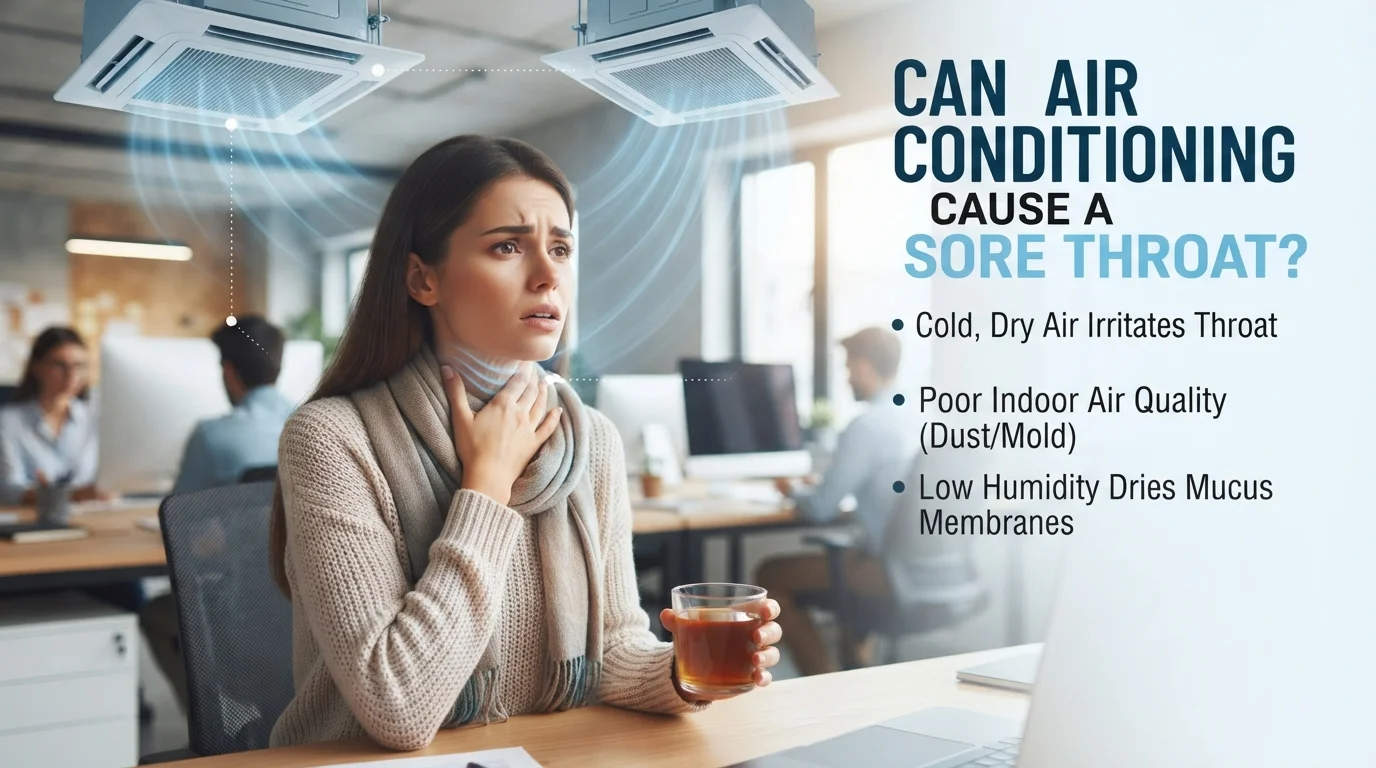
Many people notice throat discomfort after spending several hours in an air-conditioned room. The sensation may range from mild dryness or scratchiness to a more noticeable sore throat that makes swallowing uncomfortable. Because the symptoms often appear after exposure to cold indoor air, it is natural to wonder whether air conditioning itself is responsible.
The answer is more nuanced than simply saying that air conditioning causes a sore throat.
Air conditioning does not usually cause an infection by itself. However, air-conditioned environments can contribute to conditions that make the throat feel dry, irritated, or uncomfortable. Cold air, low indoor humidity, continuous airflow, dust, inadequate maintenance, and poor indoor air quality may all play a role.
In some situations, throat irritation that appears while using air conditioning may also be caused by something unrelated to the air conditioner. A viral respiratory infection, allergies, postnasal drip, dehydration, acid reflux, smoking, or exposure to other irritants can produce similar symptoms.
Understanding the difference is important because the appropriate response depends on the underlying cause.
read more about dry skin in summer
Why Throat Irritation May Appear in Air-Conditioned Rooms
The throat is lined with delicate tissues that need adequate moisture to remain comfortable. When the surrounding air is dry, moisture can evaporate more quickly from the surfaces of the nose and throat.
Air conditioning can lower indoor humidity under certain conditions. At the same time, cold air flowing directly toward the face or throat may make discomfort more noticeable.
If someone already has allergies, nasal congestion, dehydration, or another condition affecting the upper respiratory tract, the effect may be more pronounced.
This means that the connection between air conditioning and sore throat is often indirect.
The air conditioner may create an environment that contributes to dryness and irritation rather than directly causing the underlying problem.
How Air Conditioning Can Contribute to Throat Discomfort
Cold Air and Throat Sensitivity
Cold air is one of the most obvious factors people associate with air conditioning.
When you sit directly beneath a strong air-conditioning vent, cold air may continuously contact your face, nose, and throat. For some people, this exposure can create a sensation of dryness or irritation.
Cold air can also encourage people to breathe through their mouths, particularly when nasal passages become uncomfortable or congested. Mouth breathing allows more moisture to escape from the mouth and throat.
The result may be:
- Dry throat.
- Scratchiness.
- Mild burning.
- Frequent throat clearing.
- Hoarseness.
- Discomfort when swallowing.
These symptoms do not necessarily mean that an infection is developing.
Dry Indoor Air
Humidity plays an important role in respiratory comfort.
Air that is excessively dry can increase moisture loss from the upper respiratory tract. If a person spends many hours in a dry environment, the throat may gradually become irritated.
This can be especially noticeable during long periods of indoor air conditioning.
However, not every air-conditioned room is excessively dry. Humidity depends on the air conditioner’s operation, outdoor climate, ventilation, building design, occupancy, and other environmental factors.
Therefore, it is more accurate to think of low humidity as one possible contributor rather than an unavoidable consequence of using an air conditioner.
Continuous Airflow
The direction and strength of airflow can also influence comfort.
A powerful stream of cold air blowing directly toward the face may dry the mouth and throat more quickly than gentle, indirect airflow.
People who sleep directly under an air-conditioning unit or sit in front of a vent for many hours may notice symptoms more frequently.
Changing the direction of airflow can sometimes reduce this problem.
Mouth Breathing
Nasal breathing helps warm, filter, and humidify incoming air.
When the nose is congested because of allergies, a cold, or dry air, people may switch to mouth breathing.
This can increase moisture loss and contribute to a dry or irritated throat.
Someone may therefore believe that the air conditioner is causing the sore throat when the actual sequence is:
air conditioning → nasal discomfort or dryness → mouth breathing → increased throat dryness → irritation.
Understanding this chain can help explain why some people experience symptoms while others do not.
Indoor Air Quality and Throat Irritation
Why Indoor Air Quality Matters
Indoor air quality can have a major influence on respiratory comfort.
People spend substantial amounts of time indoors, particularly at home, in offices, schools, stores, and other air-conditioned environments.
If indoor air contains dust, allergens, smoke, chemical irritants, or other pollutants, sensitive individuals may develop irritation of the eyes, nose, or throat.
Air conditioning systems can affect indoor air quality depending on their design, maintenance, filtration, and ventilation.
Dust and Air Filters
Air-conditioning filters are designed to capture particles from circulating air, although their effectiveness depends on the type and condition of the filter.
When filters are neglected, dust and particles may accumulate.
A dirty filter does not automatically mean that an air conditioner is producing harmful air, but inadequate maintenance can contribute to poorer indoor air conditions.
Regular inspection and cleaning according to the manufacturer’s recommendations can help maintain the system.
Mold and Excess Moisture
Moisture problems in air-conditioning systems or buildings can contribute to mold growth.
Mold and other biological contaminants can irritate the respiratory system, particularly in people who are sensitive to them.
Possible symptoms may include:
- Sneezing.
- Nasal congestion.
- Runny nose.
- Coughing.
- Throat irritation.
- Eye irritation.
If symptoms repeatedly occur in one particular room or building but improve elsewhere, environmental factors deserve consideration.
Chemical Irritants
Air-conditioned environments may contain other sources of irritation.
Examples include:
- Cleaning chemicals.
- Air fresheners.
- Fragrances.
- Tobacco smoke.
- Paint fumes.
- Solvents.
- Aerosol products.
If throat discomfort occurs in an air-conditioned space, it may not be the cooling system itself that is responsible.
The surrounding environment should be considered as a whole.
read more about benefits of drinking water
Is a Sore Throat From Air Conditioning or an Infection?
Why the Difference Matters
A sore throat is a symptom rather than a diagnosis.
It can occur for many reasons.
Viral infections are among the common causes of sore throat. Other possibilities include bacterial infections, allergies, environmental irritation, acid reflux, voice strain, and dry air.
If someone develops a sore throat after spending time in an air-conditioned room, timing alone does not prove that the air conditioner caused it.
Signs That May Suggest Environmental Irritation
Environmental dryness or irritation may be more likely when:
- Symptoms appear after prolonged exposure to air conditioning.
- The throat feels dry rather than severely painful.
- Symptoms improve after leaving the environment.
- There is little or no fever.
- There are no significant body aches.
- Symptoms are closely associated with a particular room.
- Drinking water provides noticeable relief.
- Other people in the same environment report similar irritation.
These clues are not diagnostic, but they can help identify patterns.
Signs That May Suggest an Infection
An infection may be more likely when a sore throat occurs alongside symptoms such as:
- Fever.
- Chills.
- Significant fatigue.
- Body aches.
- Cough.
- Runny nose.
- Swollen lymph nodes.
- Worsening symptoms over several days.
The presence of these symptoms does not identify the exact infection, but it makes a simple environmental explanation less likely.
Common Symptoms Associated With Air-Conditioned Environments
Dry or Scratchy Throat
The most common complaint may be a dry or scratchy sensation.
People often describe it as feeling as though they need to drink water frequently or clear their throat.
This can happen when the mucous membranes become less hydrated.
Mild Burning Sensation
Some people experience a mild burning or raw sensation.
This can be caused by dryness or exposure to irritants.
If the sensation is severe, persistent, or associated with other concerning symptoms, it should not automatically be attributed to air conditioning.
Hoarseness
Dryness can affect the vocal tissues and make the voice sound rough or strained.
People who talk frequently in air-conditioned offices, classrooms, call centers, or other workplaces may notice this more often.
Frequent Throat Clearing
Throat clearing can occur when the throat feels dry or coated.
However, frequent throat clearing can itself irritate the throat and create a cycle of discomfort.
Drinking water and addressing the underlying dryness may be preferable to repeatedly clearing the throat.
Why Some People Are More Sensitive
People With Allergies
Individuals with allergies may be more sensitive to indoor environmental conditions.
Dust, dust mites, mold, and other allergens can contribute to nasal symptoms.
When nasal congestion develops, mouth breathing may increase, which can worsen throat dryness.
People With Respiratory Sensitivity
People with sensitive airways may notice discomfort from rapid temperature changes, dry air, or airborne irritants.
This does not mean that air conditioning is inherently harmful for everyone.
It means that environmental conditions can affect people differently.
People Who Spend Long Hours Indoors
Duration matters.
A brief period in a cool room may cause no noticeable symptoms, while spending eight or ten hours in a heavily air-conditioned environment may create more dryness.
This can be particularly relevant for office workers, students, customer-service employees, and people who sleep in air-conditioned bedrooms.
How Humidity Influences Throat Comfort
Understanding Humidity
Humidity describes the amount of water vapor in the air.
Very low humidity can increase moisture loss from exposed tissues.
Very high humidity can create different problems, including an environment that may encourage mold growth when moisture is not properly controlled.
The objective is not simply to maximize humidity.
The goal is to maintain a comfortable indoor environment.
Finding a Comfortable Balance
If an indoor environment feels extremely dry, monitoring humidity may help identify whether dryness is contributing to symptoms.
A basic indoor humidity monitor can provide useful information.
If humidity is consistently very low, appropriate environmental adjustments may improve comfort.
However, adding excessive moisture without controlling the source can create new indoor air quality problems.
Practical Ways to Reduce Air-Conditioning-Related Throat Irritation
Avoid Direct Airflow
One of the simplest adjustments is changing the direction of the air.
Instead of allowing cold air to blow directly onto your face while sleeping or working, redirect the airflow toward the room.
This can reduce continuous exposure to cold moving air.
Choose a Comfortable Temperature
Extremely cold indoor temperatures may increase discomfort for some people.
A moderate temperature can provide cooling without creating a large contrast between the indoor and outdoor environment.
The ideal setting varies depending on the person, climate, building, clothing, and activity level.
Stay Hydrated
Adequate fluid intake can help maintain moisture in the mouth and throat.
People often drink less water when they are sitting indoors for long periods, particularly in air-conditioned offices.
Keeping water nearby can make it easier to drink regularly.
Hydration is not a cure for every cause of sore throat, but it can help when dryness is contributing to discomfort.
Consider Indoor Humidity
If a room feels unusually dry, check the humidity rather than assuming that the air conditioner is responsible.
A humidity monitor can help identify whether the environment is unusually dry.
If a humidifier is used, it should be maintained and cleaned properly according to the manufacturer’s instructions.
Poorly maintained humidifiers can introduce unwanted contaminants into indoor air.
Maintain Air-Conditioning Filters
Filters should be inspected and maintained according to the air conditioner’s instructions.
Cleaning or replacing filters when appropriate can help maintain airflow and filtration performance.
Maintenance requirements vary between systems.
Central HVAC systems, split units, portable air conditioners, and other systems may have different procedures.
Keep the Indoor Environment Clean
Regular cleaning can reduce the accumulation of dust.
Pay attention to:
- Air-conditioning filters.
- Vents.
- Surfaces.
- Carpets.
- Upholstery.
- Bedding.
- Curtains.
For people with allergies, reducing indoor allergen exposure can be particularly useful.
Air Conditioning and Throat Problems During Sleep
Why Nighttime Symptoms Can Be Noticeable
People may wake up with a dry throat after sleeping in an air-conditioned bedroom.
Several factors can contribute.
The air may be relatively dry. The person may sleep with their mouth open. The airflow may be directed toward the bed. Nasal congestion may also cause mouth breathing.
Because the person spends several uninterrupted hours in the environment, symptoms can become noticeable upon waking.
Improving the Bedroom Environment
Practical steps include:
- Avoid directing cold air directly at the bed.
- Maintain a comfortable room temperature.
- Drink adequate fluids during the day.
- Address nasal congestion when appropriate.
- Monitor indoor humidity if dryness is persistent.
- Keep filters and vents maintained.
- Keep bedding and the room clean.
If morning throat discomfort occurs regularly despite these changes, other causes should be considered.
Air Conditioning, Allergies, and Postnasal Drip
How Allergies Can Affect the Throat
Allergies can cause mucus production and nasal congestion.
Mucus draining from the nose toward the throat is often described as postnasal drip.
This can create:
- Throat clearing.
- Cough.
- Scratchiness.
- A sensation of mucus in the throat.
An air-conditioned environment may aggravate symptoms in some people if it contains allergens or if the air is dry.
Why It Can Be Difficult to Identify the Cause
If someone has both allergies and environmental dryness, several factors may operate simultaneously.
For example:
Dust exposure may trigger nasal congestion.
Nasal congestion may lead to mouth breathing.
Mouth breathing may dry the throat.
Dryness may cause irritation.
The resulting sore throat may then be incorrectly blamed on cold air alone.
This is why identifying patterns and associated symptoms is important.
Does Cold Air Make You Sick?
Separating Temperature From Infection
Cold air itself is not the same thing as a viral or bacterial infection.
Respiratory infections are caused by infectious organisms.
Simply entering a cold air-conditioned room does not create an infection.
However, indoor environments can influence respiratory comfort and may affect how people interact with one another.
For example, air-conditioned spaces can involve prolonged indoor contact with other people, which may increase exposure to respiratory infections depending on ventilation and the specific circumstances.
Therefore, it is useful to distinguish between:
- Cold air causing irritation.
- Indoor environmental factors aggravating symptoms.
- Exposure to an infectious illness.
These are different mechanisms.
read more about healthy lifestyle
Indoor Air Quality and Ventilation
Why Fresh Air Matters
Air conditioning and ventilation are not always the same thing.
Some systems primarily recirculate indoor air, while others introduce outdoor air.
Good indoor air quality depends on factors such as ventilation, filtration, humidity, building conditions, and pollution sources.
If a room feels stuffy and several occupants develop irritation or headaches, the broader indoor environment should be investigated.
Balancing Cooling and Ventilation
Keeping windows closed may be desirable for efficient cooling in some circumstances, but buildings still need appropriate ventilation.
The correct approach depends on the HVAC system and building design.
Commercial buildings may have mechanical ventilation systems, while residential spaces may rely on different arrangements.
If there are persistent indoor air quality concerns, a qualified HVAC professional or indoor environmental specialist may be appropriate.
Can Dirty Air Conditioners Cause Sore Throat?
The Importance of Maintenance
A poorly maintained air-conditioning system can contribute to indoor air quality problems.
Dust accumulation, moisture problems, clogged filters, and contaminated components can affect the air circulating through a building.
However, it would be inaccurate to say that every dirty air conditioner will cause a sore throat.
The actual impact depends on the type of contamination, the HVAC design, the degree of exposure, and individual sensitivity.
Warning Signs of an Indoor Air Quality Problem
Consider investigating the environment if:
- Symptoms consistently occur in one building.
- Symptoms improve when you leave the building.
- There is visible mold.
- The room smells musty.
- Filters are heavily soiled.
- There is persistent condensation.
- Multiple occupants experience similar irritation.
- The building has known moisture problems.
These patterns suggest that the problem may involve more than temperature alone.
The Connection Between Airflow and Throat Irritation
Strong Airflow Versus Gentle Cooling
A room can be cool without producing a strong stream of air directly toward a person.
Adjusting the vent direction can reduce discomfort.
Ceiling fans, air-conditioning blowers, and other ventilation devices can also increase perceived airflow.
Some people are particularly sensitive to constant air movement around the face.
Sleeping Position and Airflow
The position of a bed relative to an air-conditioning unit can influence symptoms.
If the air stream passes directly across the face throughout the night, dryness may become more noticeable.
Repositioning the bed or redirecting the vent may be a simple improvement.
When Air Conditioning Is Probably Not the Main Cause
Persistent Sore Throat
If a sore throat continues for an extended period despite changes to the indoor environment, another cause should be considered.
Possible causes can include:
- Infection.
- Allergies.
- Acid reflux.
- Chronic nasal congestion.
- Smoking.
- Environmental irritants.
- Voice overuse.
- Other medical conditions.
A persistent symptom should not automatically be blamed on air conditioning.
Symptoms That Occur Everywhere
If the throat hurts equally at home, at work, outdoors, and in other environments, it is less likely that one particular air conditioner is responsible.
The broader pattern can provide useful information.
Acid Reflux and Throat Irritation
How Reflux Can Affect the Throat
Acid reflux can cause throat symptoms in some people.
Possible symptoms include:
- Throat irritation.
- Hoarseness.
- Cough.
- Frequent throat clearing.
- A sensation of something in the throat.
Because these symptoms can occur in the morning or after spending time indoors, people may incorrectly associate them with air conditioning.
Looking at Timing and Triggers
If throat discomfort is associated with meals, lying down, nighttime symptoms, or other reflux-related patterns, acid reflux may deserve consideration.
Air conditioning may simply happen to be present when symptoms become noticeable.
Smoking and Other Airborne Irritants
Tobacco Smoke
Smoke can significantly irritate the throat.
If someone spends time in an environment where tobacco smoke is present, this can be a more direct explanation for throat irritation than the temperature of the room.
Fragrances and Cleaning Products
Strong fragrances, sprays, and cleaning products can also irritate sensitive airways.
If symptoms begin shortly after exposure to a particular product, consider whether that exposure coincides with the throat discomfort.
Air Conditioning in Offices
Why Office Workers May Notice Throat Symptoms
Office environments often involve long periods of air-conditioned indoor exposure.
Employees may sit beneath vents, work in dry environments, drink little water, and spend hours speaking or using their voices.
These factors can combine to produce throat discomfort.
Improving Office Comfort
Employers and facility managers can consider:
- Proper HVAC maintenance.
- Appropriate ventilation.
- Regular filter maintenance.
- Comfortable temperature settings.
- Avoiding direct airflow onto employees.
- Monitoring indoor air quality where appropriate.
- Addressing moisture problems.
- Encouraging adequate hydration.
Employees can also adjust their seating position where possible.
Air Conditioning in Schools and Classrooms
Prolonged Indoor Exposure
Students and teachers may spend several hours in air-conditioned classrooms.
Teachers who speak continuously may be particularly affected by dry indoor conditions.
A dry throat can make prolonged speaking uncomfortable.
Classroom Air Quality
Ventilation and filtration are important considerations in schools.
If multiple students and staff consistently report throat irritation, headaches, unusual odors, or respiratory symptoms, the building’s indoor environment may deserve professional evaluation.
Air Conditioning in Cars
Why Car Air Conditioning Can Cause Dryness
Vehicle air conditioning produces a concentrated stream of cooled air in a relatively small space.
If the vents point directly at the face, the exposure can be intense.
Drivers and passengers may therefore experience dry lips, dry nose, or throat discomfort.
Redirecting the vents away from the face and maintaining adequate hydration may improve comfort.
Air Conditioning and Children
Why Children May Complain About Throat Discomfort
Children can also experience dryness or throat irritation in air-conditioned environments.
However, a child’s sore throat should not automatically be attributed to air conditioning.
Children commonly experience respiratory infections, allergies, and other conditions that can produce similar symptoms.
Parents should consider the full set of symptoms.
Monitoring the Environment
Maintaining a comfortable indoor temperature, avoiding direct airflow, and keeping HVAC equipment clean can support a comfortable environment.
If a child has significant symptoms, persistent fever, breathing difficulty, difficulty swallowing, or other concerning signs, medical assessment may be appropriate.
Air Conditioning and Older Adults
Increased Attention to Indoor Comfort
Older adults may spend substantial time indoors and may be more sensitive to changes in environmental conditions.
Maintaining comfortable temperature and humidity while ensuring good ventilation can support general indoor comfort.
Persistent throat symptoms should still be evaluated according to the individual’s overall health and symptoms rather than automatically attributed to air conditioning.
Can a Humidifier Help?
When Additional Humidity May Be Useful
If indoor air is genuinely dry, increasing humidity may relieve some dryness-related discomfort.
However, a humidifier is not automatically appropriate for everyone.
The room’s humidity should be considered first.
Why Humidifier Maintenance Matters
Humidifiers need regular cleaning and proper maintenance.
A poorly maintained humidifier can introduce microorganisms or mineral particles into indoor air.
Using excessive humidity can also contribute to condensation and moisture problems.
Therefore, the objective is controlled humidity rather than maximum humidity.
Hydration and Throat Comfort
Why Water Can Help
Water helps maintain normal hydration and can temporarily soothe a dry throat.
People who spend long periods in air-conditioned environments may benefit from keeping water readily available.
Other warm or non-irritating fluids may also be comfortable for some people.
Avoiding Excessive Dehydration
Dehydration can make dry-mouth and throat symptoms more noticeable.
Factors that may contribute include:
- Not drinking enough fluids.
- Heavy exercise.
- Hot weather.
- Excessive caffeine or alcohol intake.
- Illness involving fluid loss.
Maintaining normal hydration can reduce one potential contributor to throat discomfort.
Simple Environmental Checklist
Check the Temperature
Ask whether the room is significantly colder than necessary.
If the room is uncomfortably cold, adjusting the temperature may reduce discomfort.
Check the Airflow
Determine whether the vent is blowing directly toward the face or throat.
Redirecting the airflow can help.
Check the Humidity
If the environment feels unusually dry, use a humidity monitor to understand the actual conditions.
Check the Filter
Inspect and maintain the air-conditioning filter according to manufacturer instructions.
Check for Odors or Moisture
Musty smells, visible moisture, or mold may indicate an indoor environmental issue.
Check for Other Triggers
Consider smoke, fragrances, cleaning products, dust, and allergens.
read more about chronic dehydration
When to Seek Medical Advice
Persistent or Severe Symptoms
A sore throat that is severe, persistent, recurrent, or worsening deserves appropriate medical attention.
Air conditioning should not be used as a default explanation for unexplained symptoms.
Difficulty Breathing or Swallowing
Difficulty breathing, significant difficulty swallowing, drooling, severe swelling, or other urgent symptoms require prompt medical evaluation.
High Fever or Significant Illness
A sore throat accompanied by substantial fever, severe weakness, dehydration, or other significant symptoms may indicate an infection or another condition requiring assessment.
Recurrent Symptoms
If throat discomfort repeatedly occurs even after environmental changes, consider discussing the pattern with a healthcare professional.
A clinician can evaluate potential causes such as allergies, reflux, infection, or other conditions.
How to Track Your Symptoms
Look for Environmental Patterns
Keeping a simple record can help identify patterns.
Record:
- Where symptoms occur.
- How long you stay there.
- Whether the air conditioner is running.
- Temperature if known.
- Humidity if known.
- Other symptoms.
- Food or meal timing.
- Exposure to smoke or fragrances.
- Whether symptoms improve after leaving.
This information can be useful when trying to determine whether the environment plays a role.
Compare Different Environments
If symptoms occur only in one office, bedroom, vehicle, or building, the environment may deserve closer attention.
If symptoms occur everywhere, another cause may be more likely.
This is not a diagnostic test, but environmental patterns can provide useful clues.
Improving Indoor Air Quality Beyond Air Conditioning
Regular Cleaning
Dust control can help improve indoor comfort.
Regularly cleaning floors, surfaces, bedding, and other dust-collecting areas may reduce exposure to airborne particles.
Ventilation
Appropriate ventilation helps manage indoor pollutants.
The correct strategy depends on the building and HVAC system.
Moisture Control
Preventing leaks, condensation, and excessive indoor moisture can help reduce the risk of mold and other problems.
Air Filtration
Appropriate filtration can help remove certain airborne particles.
The correct filter depends on the HVAC system and the indoor environment.
The Difference Between Comfort and Medical Treatment
Environmental Adjustments Are Not a Diagnosis
Changing the temperature, redirecting airflow, drinking water, or maintaining the air conditioner can help when environmental dryness or irritation contributes to symptoms.
However, these steps do not treat every cause of sore throat.
If symptoms result from an infection, allergy, reflux, or another condition, addressing that underlying cause is important.
Avoiding Unnecessary Assumptions
It is easy to say:
“My throat hurts after using the air conditioner, so the air conditioner caused it.”
But correlation does not always establish causation.
The air conditioner may be one factor among several.
A more useful question is:
“What environmental and health factors are present when the symptoms occur?”
This broader approach can lead to better decisions.
Common Myths About Air Conditioning and Sore Throat
Myth: Cold Air Automatically Causes Infection
Cold air and infections are not the same thing.
An infection requires an infectious cause.
Cold indoor air can contribute to discomfort or dryness without causing an infection.
Myth: Every Air-Conditioned Room Has Poor Air Quality
Air-conditioned spaces vary greatly.
A well-maintained system in a properly ventilated building can provide comfortable indoor conditions.
Problems depend on the system, maintenance, building, and environmental conditions.
Myth: A Sore Throat Always Means a Cold
Sore throat has many possible causes.
Infection is one possibility, but environmental irritation, allergies, reflux, and other factors can also produce symptoms.
Myth: More Humidity Is Always Better
Excessive humidity can create its own indoor air quality problems.
The objective is a comfortable, appropriately controlled indoor environment.
Creating a Healthier Air-Conditioned Environment
For Homes
Homeowners can focus on:
- Maintaining HVAC filters.
- Keeping vents clean.
- Avoiding direct airflow.
- Maintaining comfortable temperatures.
- Monitoring humidity when needed.
- Preventing moisture problems.
- Keeping rooms clean.
- Avoiding indoor smoke.
For Offices
Facility managers can prioritize:
- HVAC maintenance.
- Appropriate ventilation.
- Filter replacement.
- Moisture control.
- Indoor air quality monitoring when appropriate.
- Comfortable temperature settings.
- Employee comfort.
For Commercial Spaces
Businesses serving customers should also consider the indoor environment.
A comfortable space can improve customer experience while reducing complaints related to temperature, odors, or air quality.
Frequently Asked Questions About Air Conditioning and Sore Throat
Can air conditioning directly cause a sore throat?
Air conditioning does not usually cause an infectious sore throat by itself. However, cold air, dry conditions, direct airflow, allergens, and poor indoor air quality can contribute to throat dryness and irritation.
Why does my throat hurt after sleeping with the air conditioner on?
Possible factors include dry indoor air, direct airflow, mouth breathing, nasal congestion, allergies, or another underlying condition. Redirecting the airflow and maintaining a comfortable environment may help.
Can cold air make my throat dry?
Yes. Cold or dry air can contribute to moisture loss from the upper respiratory tract, particularly when exposure is prolonged.
Does a dirty air conditioner cause throat irritation?
A poorly maintained system can contribute to indoor air quality problems, depending on the condition of the equipment and environment. Dust, mold, or other airborne contaminants may irritate the throat.
Should I stop using air conditioning if I have a sore throat?
Not necessarily. If air conditioning provides necessary cooling, focus on improving the indoor environment. Avoid direct airflow, maintain the equipment, stay hydrated, and keep the temperature comfortable.
Can air conditioning cause a sore throat without a fever?
Yes. Environmental dryness and irritation can cause throat discomfort without fever. However, infections and other conditions can also occur without fever.
Does drinking water help an air-conditioning-related sore throat?
Drinking water can help relieve dryness when dehydration or environmental dryness contributes to discomfort. It does not treat every possible cause of sore throat.
Can allergies make air-conditioning-related throat irritation worse?
Yes. Allergies can cause nasal congestion and postnasal drip, while congestion can encourage mouth breathing and increase throat dryness.
Is indoor air quality important when using air conditioning?
Yes. Indoor air quality can be influenced by ventilation, filtration, dust, allergens, moisture, smoke, chemical irritants, and HVAC maintenance.
Should I use a humidifier?
A humidifier may be useful when indoor air is genuinely dry, but humidity should be monitored and the device maintained properly. Excessive humidity can create other problems.
A Practical Approach to Preventing Throat Irritation
Before Using Air Conditioning
Make sure the system is maintained appropriately.
Check filters according to the manufacturer’s recommendations.
Make sure vents are not directing strong airflow directly at people.
If indoor dryness is a recurring concern, consider monitoring humidity.
During Prolonged Exposure
Drink water regularly.
Avoid unnecessary direct airflow.
Maintain a comfortable temperature.
Pay attention to signs of excessive dryness.
If you develop symptoms, note whether they improve when you move to another environment.
After Symptoms Appear
Consider whether environmental dryness is likely.
Check for other symptoms that could indicate an infection or allergy.
Review exposure to dust, smoke, fragrances, or cleaning chemicals.
If symptoms are persistent or severe, seek appropriate medical advice.
read more about sedentary lifestyle
Can Air Conditioning Cause a Sore Throat?
The Answer Depends on the Environment
Air conditioning can contribute to a sore or irritated throat, but it is usually more accurate to describe it as a potential environmental contributor rather than a direct cause.
Cold air, dry indoor conditions, continuous airflow, mouth breathing, allergens, dust, and poor indoor air quality can all contribute to throat discomfort.
For many people, the solution may be relatively simple: avoid direct airflow, maintain a comfortable temperature, stay hydrated, monitor indoor humidity when appropriate, and keep the air-conditioning system properly maintained.
However, persistent throat discomfort should not automatically be blamed on the air conditioner.
Infections, allergies, postnasal drip, acid reflux, smoking, chemical irritants, and other conditions can cause similar symptoms.
Creating Better Indoor Conditions
The most practical approach is to look at the entire indoor environment.
A comfortable air-conditioned space should provide appropriate cooling without excessive dryness, direct airflow, poor ventilation, or neglected maintenance.
Regular filter maintenance, appropriate ventilation, moisture control, good cleaning practices, and sensible temperature settings can all contribute to better indoor air quality and respiratory comfort.
Knowing When to Look Beyond Air Conditioning
If throat irritation repeatedly occurs in one environment, environmental factors may deserve investigation.
If symptoms continue regardless of where you are, become severe, or occur alongside significant illness, air conditioning may not be the main explanation.
The important lesson is that air conditioning and sore throat can be connected, but the relationship is usually influenced by several factors.
Understanding cold air, indoor air quality, humidity, airflow, allergies, and individual sensitivity can help people make practical changes while avoiding the assumption that every sore throat is caused by the air conditioner.
Ultimately, the goal is not to eliminate air conditioning. It is to create a comfortable indoor environment in which cooling, ventilation, humidity, filtration, and maintenance are appropriately balanced.