
Blog
Daily Habits That Help Prevent Disease

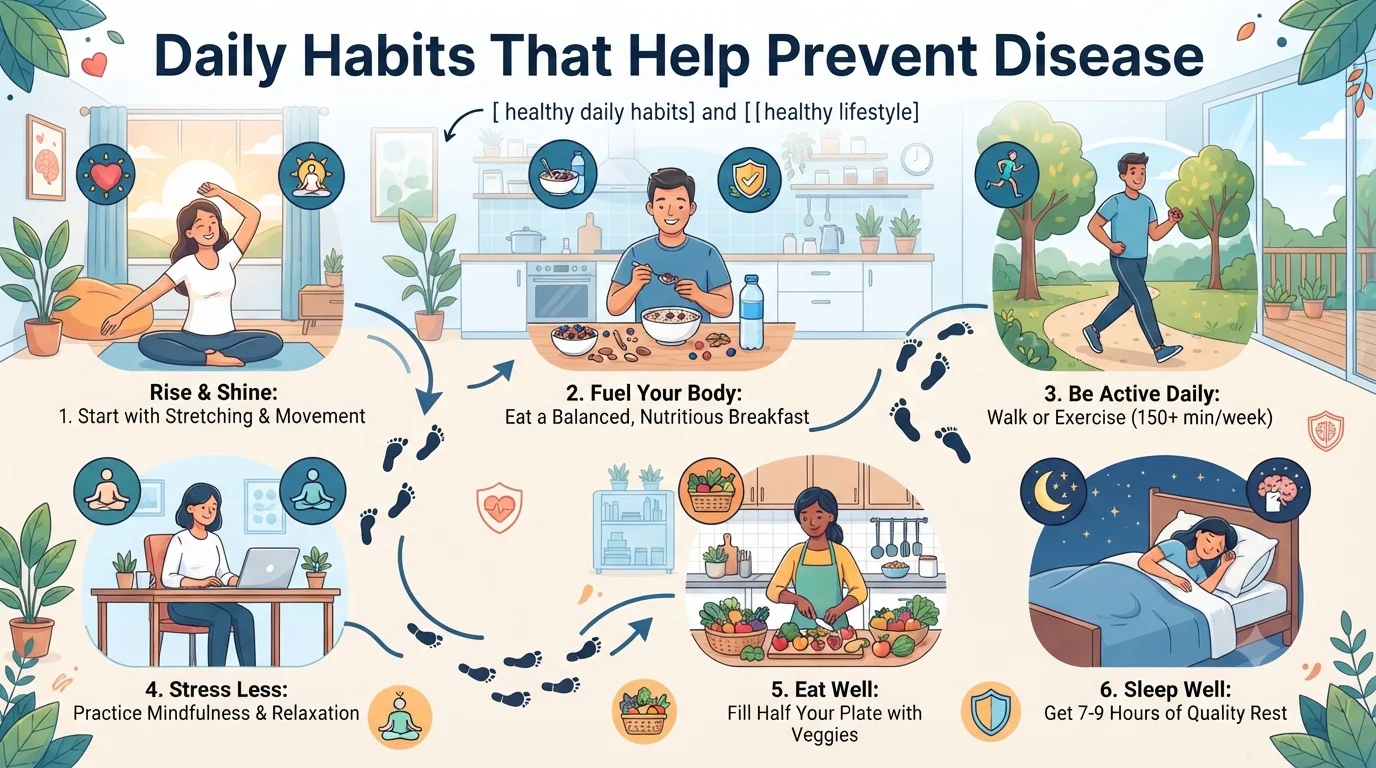
Good health is rarely determined by one dramatic decision. More often, it is shaped by dozens of small choices repeated day after day.
The food you eat, the amount you move, how consistently you sleep, whether you smoke, how you manage stress, how often you wash your hands, and whether you keep up with preventive healthcare can all contribute to your long-term health.
This is why developing healthy daily habits can be more useful than searching for quick solutions or temporary wellness trends.
A healthy lifestyle does not require perfection. It does not mean eating an extremely restrictive diet, exercising for hours every day, or eliminating every source of stress. Instead, it means creating routines that support the body’s basic needs consistently.
Many chronic diseases develop through a combination of factors, including genetics, age, environment, lifestyle, and behaviors. Not every illness can be prevented, but many risk factors can be modified. Healthy habits can therefore play an important role in disease prevention and overall well-being.
The most effective routines are usually simple enough to repeat.
Drinking enough water, eating a balanced diet, moving regularly, sleeping adequately, maintaining a healthy weight, avoiding tobacco, protecting yourself from excessive sun exposure, maintaining good hygiene, and attending appropriate health screenings can all become parts of a practical wellness routine.
This guide explores these habits in detail and explains how to turn them into sustainable everyday behaviors.
read more about cold air and joint pain
What Does a Healthy Lifestyle Actually Mean?
Health Is More Than the Absence of Disease
A healthy lifestyle is not simply about avoiding illness.
It also involves supporting:
- Physical fitness.
- Mental well-being.
- Healthy relationships.
- Emotional resilience.
- Good sleep.
- Healthy nutrition.
- Preventive healthcare.
- A safe living environment.
These areas influence one another.
For example, poor sleep can make it harder to exercise. Stress can influence eating habits. A sedentary lifestyle can affect weight and cardiovascular health. Poor nutrition can make maintaining energy more difficult.
Health therefore works as a system rather than a collection of unrelated habits.
Small Changes Can Be Easier to Maintain
People often try to transform their entire lifestyle overnight.
They may suddenly:
- Start an intense exercise program.
- Eliminate many foods.
- Wake up extremely early.
- Follow a complicated supplement routine.
- Create an unrealistic schedule.
The problem is that dramatic changes can be difficult to sustain.
A better strategy is to identify a few high-impact behaviors and gradually build them into your normal routine.
Start the Day With a Consistent Morning Routine
Your Morning Can Set the Tone for the Day
A morning routine does not have to involve waking up at a specific hour or following an elaborate wellness ritual.
A practical morning routine might include:
- Getting up at a consistent time.
- Drinking water when thirsty.
- Eating a nutritious breakfast if you enjoy breakfast.
- Getting some natural daylight.
- Moving your body.
- Planning the most important tasks of the day.
The purpose is not to create a perfect morning.
It is to begin the day with behaviors that support your physical and mental health.
Get Some Natural Light
Exposure to natural light during the day helps support the body’s circadian rhythm, the internal timing system that influences sleep and wakefulness.
Getting daylight earlier in the day can be especially useful for people who spend most of their time indoors.
A short walk outside can combine several beneficial habits at once:
- Daylight exposure.
- Physical activity.
- Fresh air.
- Mental relaxation.
Make Physical Activity Part of Everyday Life
Movement Is One of the Most Important Wellness Habits
Regular physical activity is associated with numerous health benefits.
It can support:
- Cardiovascular health.
- Muscle strength.
- Bone health.
- Mobility.
- Weight management.
- Mental well-being.
- Sleep quality.
You do not need to become an athlete to benefit from movement.
Walking, cycling, swimming, dancing, household activities, and recreational sports can all contribute to a more active lifestyle.
Avoid Thinking of Exercise as Punishment
Exercise becomes easier to maintain when it is enjoyable.
Instead of asking:
“Which workout burns the most calories?”
consider asking:
“What type of movement can I realistically enjoy doing several times a week?”
The answer might be walking rather than running, swimming rather than weightlifting, or dancing rather than using a traditional gym.
Consistency matters.
Break Up Long Periods of Sitting
A Workout Does Not Cancel an Entirely Sedentary Day
Someone may exercise for thirty minutes and then sit for many hours.
Regular movement throughout the day is therefore valuable.
If you work at a desk, try to:
- Stand periodically.
- Walk during short breaks.
- Stretch.
- Take stairs when practical.
- Walk while making phone calls.
These small changes can increase daily activity without requiring a separate workout.
Create Movement Triggers
A useful strategy is connecting movement to existing routines.
For example:
- Stand whenever you finish a meeting.
- Walk after lunch.
- Stretch while waiting for coffee.
- Take a short walk after completing a work task.
This makes physical activity part of your routine rather than another item on a to-do list.
Walk More Every Day
Walking Is Simple and Accessible
Walking is one of the easiest ways to increase daily movement.
You can walk:
- To nearby stores.
- During lunch.
- After dinner.
- While talking on the phone.
- With friends or family.
- While exploring your neighborhood.
You do not need to hit a magical daily step number to benefit from walking.
The important principle is to avoid unnecessary inactivity and gradually increase movement according to your abilities.
Build Strength Into Your Routine
Muscle Health Matters
Strength training can support:
- Muscle mass.
- Bone health.
- Physical function.
- Balance.
- Independence as you age.
Strength training does not necessarily require expensive equipment.
Depending on your fitness level, it can include:
- Bodyweight exercises.
- Resistance bands.
- Free weights.
- Machines.
- Functional movements.
If you are new to strength training or have health concerns, professional guidance may be appropriate.
read more about healthy diet
Protect Your Heart Through Everyday Choices
Cardiovascular Health Is a Long-Term Project
Heart health is influenced by many factors.
Important lifestyle behaviors include:
- Regular physical activity.
- Not smoking.
- Maintaining a healthy diet.
- Managing blood pressure.
- Managing cholesterol.
- Maintaining a healthy weight.
- Getting adequate sleep.
No single habit guarantees protection against cardiovascular disease.
Instead, multiple healthy behaviors work together.
Eat a Balanced Diet
Nutrition Is a Foundation of Healthy Daily Habits
A balanced diet provides the nutrients your body needs for normal function.
Rather than focusing on one “superfood,” build meals around a variety of foods.
A generally balanced eating pattern can include:
- Vegetables.
- Fruits.
- Whole grains.
- Beans and legumes.
- Nuts and seeds.
- Fish or other protein sources.
- Lean meats where appropriate.
- Eggs.
- Dairy or suitable alternatives.
The exact diet can vary according to culture, preferences, budget, allergies, and medical needs.
Add More Vegetables
Vegetables provide:
- Fiber.
- Vitamins.
- Minerals.
- Plant compounds.
Try to include different colors throughout the week.
You do not need to completely change your diet.
Adding one extra serving of vegetables to a meal can be a simple starting point.
Choose Fruits as Part of a Balanced Diet
Whole Fruit Offers Nutritional Benefits
Whole fruits provide:
- Fiber.
- Vitamins.
- Minerals.
- Naturally occurring carbohydrates.
Different fruits provide different nutrients, so variety is useful.
Fresh, frozen, and appropriately prepared fruits can all fit into a healthy diet.
Increase Dietary Fiber
Fiber Supports Digestive Health
Fiber is found in foods such as:
- Vegetables.
- Fruits.
- Whole grains.
- Beans.
- Lentils.
- Nuts.
- Seeds.
Adequate fiber can support normal digestion and may contribute to cardiovascular and metabolic health.
If your current diet is low in fiber, increase it gradually and drink adequate fluids.
Choose Whole Grains More Often
Whole Grains Provide More Than Energy
Whole grains retain more of the grain’s natural components than refined grains.
Examples include:
- Oats.
- Brown rice.
- Whole-grain bread.
- Barley.
- Whole-grain pasta.
Replacing some refined grain products with whole-grain alternatives can be a practical nutritional improvement.
Include Healthy Protein Sources
Protein Supports Body Functions
Protein is important for:
- Muscle maintenance.
- Tissue repair.
- Enzymes.
- Hormones.
- Immune function.
Protein can come from:
- Fish.
- Eggs.
- Poultry.
- Lean meats.
- Beans.
- Lentils.
- Yogurt.
- Milk.
- Nuts.
- Seeds.
- Other plant-based sources.
The best choices depend on individual nutritional needs and preferences.
Pay Attention to Highly Processed Foods
Convenience Is Not the Same as Nutrition
Processed foods vary greatly.
Some are nutritious and convenient.
Others are high in:
- Added sugars.
- Sodium.
- Saturated fats.
- Calories.
You do not necessarily need to eliminate processed foods.
Instead, consider how frequently they appear in your overall diet.
A healthy lifestyle can include occasional treats without turning them into everyday staples.
Limit Excessive Added Sugar
Sweet Foods Can Become an Everyday Habit
Frequent consumption of foods and beverages high in added sugars can contribute to excessive calorie intake and may increase the risk of certain health problems.
Practical strategies include:
- Choosing water more often.
- Reducing sugary drinks.
- Checking food labels.
- Choosing less-sweet snacks.
- Keeping highly sugary foods as occasional choices.
The goal is balance rather than perfection.
Watch Sodium Intake
Too Much Sodium Can Be a Concern
High sodium intake can contribute to elevated blood pressure in some people.
A practical strategy is to limit frequent consumption of highly processed and heavily salted foods.
You can also use:
- Herbs.
- Spices.
- Garlic.
- Lemon.
- Vinegar
to add flavor without relying entirely on salt.
Drink Enough Fluids
Hydration Supports Normal Body Functions
Water is essential for many processes, including:
- Temperature regulation.
- Digestion.
- Circulation.
- Normal cellular function.
Fluid requirements vary according to:
- Temperature.
- Activity level.
- Body size.
- Diet.
- Pregnancy.
- Health conditions.
Instead of forcing a fixed amount of water regardless of circumstances, pay attention to thirst and your individual needs.
People who lose significant fluids through exercise, heat, vomiting, or diarrhea may have different hydration needs.
Be Careful With Sugary Beverages
Liquid Calories Can Add Up
Soft drinks, sweetened juices, energy drinks, and heavily sweetened coffee beverages can contribute significant amounts of added sugar.
Replacing some of these drinks with water or unsweetened beverages is a simple healthy habit.
Limit Excessive Alcohol
Moderation and Individual Risk Matter
Alcohol consumption is associated with several health risks, and less alcohol generally means lower risk.
Some people should avoid alcohol completely, including certain people who are pregnant, taking particular medications, recovering from alcohol use disorder, or have medical conditions that make alcohol unsafe.
If you drink, understand that alcohol is not required for a healthy lifestyle.
Never Smoke
Tobacco Avoidance Is a Powerful Prevention Strategy
Avoiding tobacco is among the most important steps a person can take to protect long-term health.
Smoking is associated with numerous diseases, including:
- Heart disease.
- Stroke.
- Lung disease.
- Multiple cancers.
Secondhand smoke also presents health risks.
If you smoke, quitting can provide substantial health benefits at any age.
Avoid Secondhand Smoke
Protect Your Environment
If someone around you smokes, reducing exposure is important.
Make homes and vehicles smoke-free whenever possible.
This protects not only adults but also children and other household members.
Prioritize Sleep
Sleep Is a Core Health Behavior
Sleep is not wasted time.
Adequate sleep supports:
- Memory.
- Concentration.
- Mood.
- Immune function.
- Metabolic health.
- Physical recovery.
Adults generally need around seven or more hours of sleep per night, although individual requirements vary.
Maintain a Consistent Sleep Schedule
Going to bed and waking up at approximately consistent times can support your circadian rhythm.
Try to maintain a relatively stable schedule even on weekends.
Create a Better Bedroom Environment
Make Sleep Easier
Your bedroom can influence sleep quality.
Helpful practices may include:
- Keeping the room comfortably cool.
- Reducing excessive light.
- Limiting disruptive noise.
- Using a comfortable mattress and pillow.
- Keeping electronic distractions away when possible.
Reduce Late-Night Screen Use
Technology Can Interfere With Bedtime Routines
Phones and laptops can encourage stimulating activities late at night.
Notifications, social media, work messages, and entertainment can make it harder to wind down.
Try creating a short transition period before bed.
For example:
- Dim the lights.
- Put away work.
- Read a physical book.
- Take a warm shower.
- Practice relaxation.
Manage Stress Regularly
Stress Is Part of Life
Stress cannot always be eliminated.
Work, finances, family responsibilities, illness, and unexpected events can all create pressure.
The goal is not to eliminate every stressful experience.
Instead, develop healthier ways of responding.
Simple Stress-Management Habits
Use Small Daily Practices
Useful strategies can include:
- Walking.
- Breathing exercises.
- Meditation.
- Journaling.
- Talking with friends.
- Spending time outdoors.
- Listening to music.
- Practicing hobbies.
Different techniques work for different people.
Schedule Recovery Time
Many people schedule work but do not schedule rest.
Rest should not be treated as a reward for finishing everything.
A sustainable routine includes periods of recovery.
Maintain Social Connections
Relationships Are Part of Wellness
Healthy social relationships can support emotional well-being.
Make time for:
- Family.
- Friends.
- Community.
- Meaningful conversations.
Social connection does not have to mean attending large gatherings.
A phone call with someone you care about can also be valuable.
Make Time for Hobbies
Enjoyment Supports Sustainable Wellness
Healthy living should not feel like an endless list of restrictions.
Hobbies can provide:
- Relaxation.
- Creativity.
- Social interaction.
- Mental stimulation.
Reading, gardening, cooking, art, music, sports, and crafts can all become positive parts of everyday life.
Maintain Good Hand Hygiene
A Simple Habit With a Major Purpose
Handwashing is one of the simplest ways to reduce the spread of many infections.
Wash your hands especially:
- Before eating.
- After using the bathroom.
- After coughing or sneezing.
- After caring for someone who is sick.
- After handling potentially contaminated materials.
Use soap and clean running water when available.
Practice Respiratory Hygiene
Reduce the Spread of Respiratory Infections
When coughing or sneezing:
- Cover your mouth and nose.
- Use a tissue when possible.
- Dispose of tissues properly.
- Wash your hands afterward.
Staying home when sick, when practical, can also reduce transmission to others.
Keep Your Home Clean Without Becoming Obsessed
A Healthy Home Does Not Need to Be Sterile
Regular cleaning can reduce:
- Dust.
- Allergens.
- Certain pathogens.
- Pest problems.
Focus on frequently touched surfaces and areas that become visibly dirty.
However, excessive cleaning or disinfecting everything constantly is generally unnecessary for ordinary household life.
Improve Indoor Air Quality
Your Indoor Environment Matters
People spend substantial amounts of time indoors.
Indoor air quality can be influenced by:
- Tobacco smoke.
- Cooking fumes.
- Dust.
- Mold.
- Poor ventilation.
- Outdoor pollution.
Practical measures include:
- Ventilating when appropriate.
- Using kitchen exhaust ventilation.
- Keeping indoor spaces dry enough to discourage mold.
- Maintaining heating and cooling systems.
- Avoiding indoor smoking.
read more about weak immune system
Address Mold and Persistent Dampness
Moisture Problems Should Not Be Ignored
Persistent moisture can encourage mold growth.
Look for:
- Water leaks.
- Damp walls.
- Condensation.
- Musty odors.
Fix the underlying moisture problem rather than simply cleaning visible mold.
Protect Your Skin From Excessive Sun Exposure
Sun Protection Is a Long-Term Habit
Ultraviolet radiation can contribute to:
- Premature skin aging.
- Sunburn.
- Skin cancer.
Protective habits can include:
- Seeking shade.
- Wearing protective clothing.
- Using sunscreen appropriately.
- Avoiding unnecessary intense sun exposure.
Make Sun Protection Routine
Do not think of sunscreen as something only needed during vacations.
Daily exposure can accumulate over time.
The appropriate level of protection depends on your environment, skin type, outdoor activity, and UV exposure.
Maintain a Healthy Weight Without Extreme Dieting
Focus on Sustainable Behaviors
Body weight is influenced by many factors.
These include:
- Genetics.
- Diet.
- Activity.
- Sleep.
- Medications.
- Medical conditions.
- Environment.
Instead of pursuing extreme short-term weight loss, focus on sustainable habits.
These might include:
- Regular movement.
- Balanced meals.
- Adequate sleep.
- Portion awareness.
- Reduced sugary drinks.
- Consistent routines.
Avoid Crash Diets
Fast Results Are Not Always Sustainable
Highly restrictive diets may be difficult to maintain and can create unhealthy relationships with food.
A sustainable eating pattern should provide adequate nutrition while fitting your lifestyle.
If you need significant weight loss or have a medical condition, working with an appropriate healthcare professional can provide personalized guidance.
Monitor Your Blood Pressure
Prevention Includes Knowing Your Numbers
High blood pressure can exist without obvious symptoms.
Regular blood pressure checks can help identify elevated readings.
Your appropriate screening schedule depends on age, risk factors, and medical history.
If readings are repeatedly high, discuss them with a healthcare professional.
Pay Attention to Cholesterol
Cholesterol Can Influence Cardiovascular Risk
Blood cholesterol levels can contribute to cardiovascular disease risk.
Lifestyle habits such as:
- Healthy eating.
- Physical activity.
- Weight management.
- Not smoking
can support cardiovascular health.
Some people also require medication based on their overall risk.
Manage Blood Sugar Risk
Healthy Habits Support Metabolic Health
Regular activity, balanced nutrition, adequate sleep, and maintaining a healthy weight can help support healthy blood sugar levels.
People with risk factors for diabetes should discuss appropriate screening with a healthcare professional.
Keep Up With Preventive Healthcare
Prevention Is More Than Lifestyle
Healthy habits do not replace medical care.
Preventive healthcare can include:
- Routine checkups.
- Vaccinations.
- Cancer screenings.
- Dental examinations.
- Eye examinations.
- Blood pressure checks.
- Cholesterol testing.
The appropriate schedule depends on age, sex, family history, risk factors, and local healthcare guidance.
Stay Up to Date With Vaccinations
Vaccination Is an Important Prevention Tool
Vaccines can protect against serious infectious diseases.
Recommended vaccines vary according to:
- Age.
- Country.
- Medical conditions.
- Occupation.
- Travel.
- Pregnancy.
Discuss your vaccination status with an appropriate healthcare professional.
Take Care of Your Teeth
Oral Health Is Part of Overall Wellness
Brush your teeth regularly with fluoride toothpaste and clean between teeth using appropriate methods.
Routine dental visits can help identify:
- Cavities.
- Gum disease.
- Other oral health problems.
Do not wait until severe pain develops before seeking dental care.
Protect Your Eyes
Digital Life Makes Eye Care Important
If you spend many hours looking at screens, practice habits that reduce eye strain.
For example, periodically look away from the screen and focus on something farther away.
Maintain appropriate screen distance and lighting.
Regular eye examinations may be appropriate depending on your age and vision needs.
Use Medicines Responsibly
Avoid Self-Medicating Carelessly
Over-the-counter medications can still have risks.
Read labels carefully.
Pay attention to:
- Dosage.
- Drug interactions.
- Contraindications.
- Age restrictions.
If you take multiple medications, ask a pharmacist or healthcare professional about potential interactions.
Do Not Overuse Antibiotics
Antibiotics Do Not Treat Viral Infections
Antibiotics are designed to treat certain bacterial infections.
Using them unnecessarily can contribute to antimicrobial resistance.
Take antibiotics only when appropriately prescribed and follow the instructions given by your healthcare professional.
Practice Food Safety
Healthy Eating Also Means Safe Eating
Foodborne illness can be prevented through basic habits.
Remember to:
- Wash appropriate produce.
- Keep raw and cooked foods separated.
- Cook foods adequately.
- Refrigerate perishable foods appropriately.
- Wash hands before food preparation.
Food safety becomes particularly important for vulnerable groups such as young children, older adults, pregnant people, and individuals with weakened immune systems.
Be Careful With Food Storage
Temperature Matters
Perishable foods should not be left at unsafe temperatures for extended periods.
When in doubt about food safety, follow established food-safety recommendations rather than relying solely on smell or appearance.
Build a Healthy Work Routine
Your Workplace Is Part of Your Daily Environment
If you spend many hours working, create habits that support your health.
Try to:
- Take movement breaks.
- Maintain good posture.
- Adjust your workstation.
- Drink water.
- Eat balanced meals.
- Protect your eyes from excessive screen strain.
Practice Good Ergonomics
Reduce Unnecessary Physical Strain
An ergonomic setup can include:
- Appropriate chair height.
- Screen positioned comfortably.
- Keyboard and mouse positioned naturally.
- Feet supported.
- Regular position changes.
There is no single perfect posture that you must maintain all day.
Movement and changing positions are also important.
read more about hard water effects
Avoid Excessive Screen Time Outside Work
Technology Should Support Your Life
Screens are useful for:
- Communication.
- Education.
- Work.
- Entertainment.
But excessive recreational screen time can reduce opportunities for:
- Physical activity.
- Sleep.
- Social interaction.
- Outdoor time.
Instead of focusing only on a specific screen-time number, consider what screen use is replacing.
Spend Time Outdoors
Nature Can Support Well-Being
Outdoor time can encourage:
- Walking.
- Relaxation.
- Daylight exposure.
- Social activity.
You do not need to go hiking in a remote forest.
A neighborhood park can be enough.
Keep Your Brain Active
Mental Stimulation Matters
Healthy aging involves more than physical fitness.
Keep your brain engaged through:
- Reading.
- Learning languages.
- Puzzles.
- Music.
- Writing.
- New skills.
- Social interaction.
Learning something new can provide mental stimulation and a sense of progress.
Create a Sustainable Weekly Routine
Daily Habits Work Better When They Fit Together
Instead of treating health as a series of isolated tasks, build routines that combine several benefits.
For example:
Morning:
Wake consistently, get daylight, drink water, and take a short walk.
Midday:
Eat a balanced meal and take movement breaks.
Afternoon:
Stay hydrated and avoid prolonged sitting.
Evening:
Eat a nutritious dinner, relax, limit unnecessary screen stimulation, and prepare for sleep.
This structure does not need to be followed perfectly every day.
Focus on Consistency Rather Than Perfection
Missing One Day Does Not Ruin Your Progress
Everyone has difficult days.
You may:
- Skip exercise.
- Eat fast food.
- Sleep poorly.
- Work longer than expected.
That does not mean your healthy lifestyle has failed.
The goal is to return to your normal routine rather than giving up completely.
Use Habit Stacking
Connect New Habits to Existing Habits
Habit stacking means attaching a new behavior to something you already do.
For example:
After brushing your teeth → take your medication if prescribed.
After lunch → walk for ten minutes.
After finishing work → prepare tomorrow’s healthy meal.
Before bed → put your phone away.
This makes new behaviors easier to remember.
Make Healthy Choices Convenient
Your Environment Influences Your Behavior
If healthy food is easy to access, you may be more likely to eat it.
If walking shoes are near the door, you may be more likely to walk.
If your phone stays beside your bed, you may be more likely to check it at night.
Change your environment so healthy choices require less effort.
Prepare Food Ahead of Time
Planning Reduces Impulsive Choices
Preparing some meals or ingredients in advance can make healthy eating easier during busy days.
You might prepare:
- Chopped vegetables.
- Cooked grains.
- Beans.
- Protein sources.
- Healthy snacks.
This does not mean eating the same meal every day.
It simply reduces the amount of work required when you’re hungry.
Keep Healthy Snacks Available
Make the Easy Choice the Healthy Choice
Instead of relying entirely on willpower, keep convenient options available.
Examples include:
- Fruit.
- Yogurt.
- Nuts.
- Vegetables.
- Whole-grain snacks.
The best options depend on your dietary needs.
Learn to Read Food Labels
Nutrition Information Can Help
Food labels can help you compare:
- Calories.
- Protein.
- Fiber.
- Sodium.
- Added sugars.
- Saturated fat.
Do not become obsessed with individual numbers.
Look at the overall nutritional pattern.
Eat Mindfully
Slow Down During Meals
Eating while distracted can make it harder to notice hunger and fullness cues.
Try occasionally eating without:
- Television.
- Phone scrolling.
- Work.
Pay attention to taste, texture, and how satisfied you feel.
Maintain Healthy Relationships With Food
Avoid Labeling Foods as Morally Good or Bad
A sustainable healthy lifestyle leaves room for flexibility.
One dessert does not make your diet unhealthy.
One salad does not make your diet healthy.
Overall patterns matter much more than individual meals.
Create a Simple Disease Prevention Checklist
Daily
Try to prioritize:
- Regular movement.
- Balanced meals.
- Adequate fluids.
- Good hygiene.
- Avoiding tobacco.
- Managing stress.
- Getting adequate sleep.
Weekly
Consider:
- Exercise and strength activities.
- Meal planning.
- Social connection.
- Outdoor activities.
- Personal relaxation.
Periodically
Review:
- Vaccinations.
- Dental care.
- Vision care.
- Blood pressure.
- Recommended health screenings.
- Medication needs.
When Healthy Habits Are Not Enough
Genetics and Medical Conditions Matter
Lifestyle choices are important, but they cannot eliminate every health risk.
A person can follow an excellent routine and still develop:
- Diabetes.
- Cancer.
- Heart disease.
- Autoimmune conditions.
- Genetic disorders.
This is why prevention includes both healthy behavior and appropriate medical care.
Know Your Family History
Family history can influence disease risk.
If close relatives have experienced certain conditions, tell your healthcare professional.
This information may influence screening or prevention recommendations.
Listen to Your Body
Do Not Ignore Persistent Symptoms
Healthy living does not mean dismissing symptoms.
Seek appropriate medical advice if you experience:
- Persistent pain.
- Unexplained weight changes.
- Ongoing fatigue.
- Difficulty breathing.
- Persistent digestive problems.
- Unusual bleeding.
- New or worsening symptoms.
Urgent symptoms should receive urgent medical attention.
Healthy Daily Habits for Long-Term Health
The most powerful routines are often ordinary.
They may not look impressive on social media.
They include:
- Walking.
- Sleeping regularly.
- Eating vegetables.
- Drinking water.
- Not smoking.
- Washing hands.
- Going to the dentist.
- Taking prescribed medications correctly.
- Getting recommended vaccinations.
- Managing stress.
- Maintaining relationships.
These habits may seem simple, but their value comes from repetition.
read more about healthy home
Build Health One Habit at a Time
Developing healthy daily habits does not require creating a perfect lifestyle.
You do not need to change everything at once.
Start with a few behaviors that provide meaningful benefits and fit naturally into your life.
Move your body regularly.
Eat a varied and balanced diet.
Drink adequate fluids.
Sleep consistently.
Avoid tobacco.
Protect yourself from excessive sun exposure.
Maintain good hygiene.
Manage stress.
Stay connected with people who matter to you.
Keep up with preventive healthcare.
Pay attention to symptoms rather than ignoring them.
These habits can support a broader healthy lifestyle and contribute to long-term disease prevention.
The most important principle is consistency.
A healthy meal today is useful.
A walk today is useful.
A good night’s sleep tonight is useful.
But when these choices become repeated behaviors over months and years, they can have a much greater influence on overall health.
You do not have to become perfect.
You simply need to make healthier choices more often, create an environment that supports those choices, and return to your routine whenever life disrupts it.
Health is not a single destination reached through one major decision. It is an ongoing process built through ordinary actions repeated over time.